
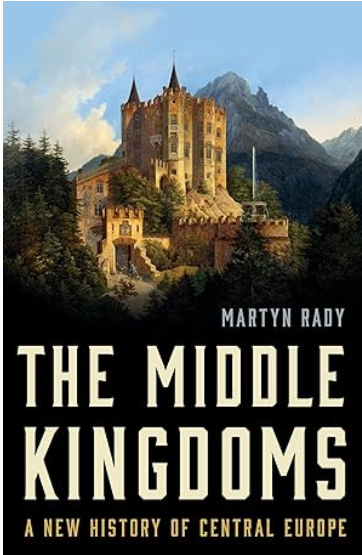
MAIN IDEA:
“The Middle Kingdoms: A New History of Central Europe” by Martin Rady explores the historical narrative of Central Europe, from its ancient beginnings to the modern era. The main idea of the book is to provide a comprehensive and nuanced understanding of this region, often overlooked or misunderstood in broader European histories. Here are key points of the book’s focus:
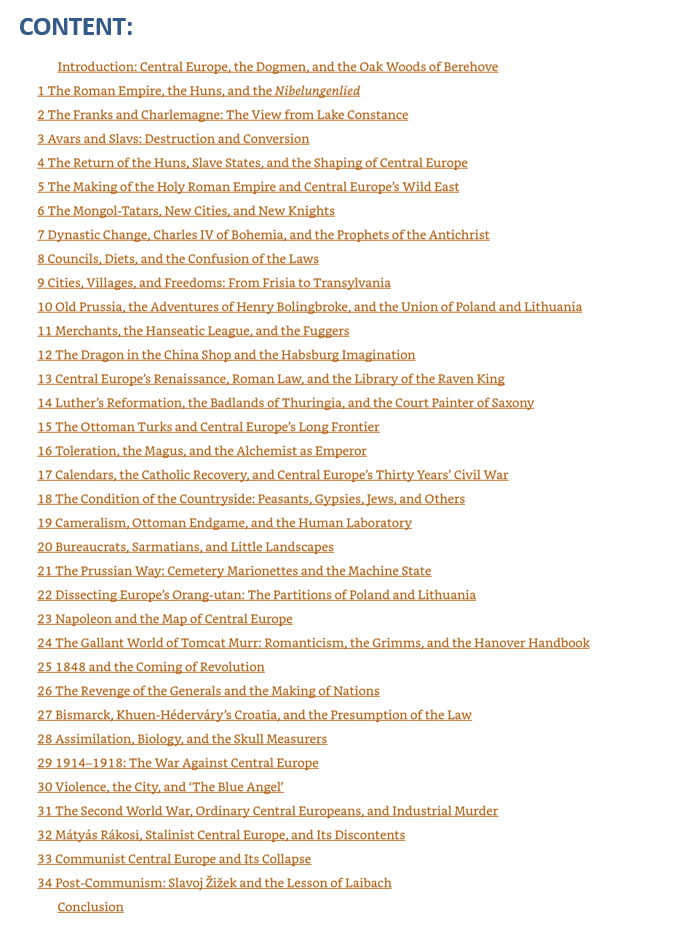
- Geographical and Cultural Definition: Rady challenges traditional views by defining Central Europe not just geographically but through its unique cultural, linguistic, and historical interactions. He includes countries like Poland, Hungary, the Czech Republic, Slovakia, and parts of Austria and Germany in this definition.
- Historical Complexity: The book delves into the complex history of the region, marked by numerous invasions, migrations, empires, and state formations. It covers the rise and fall of various kingdoms, the influence of the Habsburgs, the impact of the Ottoman Empire, and the tumultuous 20th century with its wars and shifts in power.
- Multiethnicity and National Identity: A significant theme is the multiethnic nature of Central Europe, where multiple nationalities, languages, and religions have coexisted, often leading to both rich cultural development and conflict. Rady explores how these identities have evolved, sometimes leading to nationalism and the reshaping of borders.
- Political and Social Transformations: The narrative includes how Central Europe has been a battleground for ideologies, from feudalism to communism, and then to democracy. It examines pivotal moments like the Reformation, the Thirty Years’ War, the Austro-Hungarian Compromise of 1867, the interwar period, World War II, and the fall of communism.
- Cultural Contribution: Beyond the political and military history, Rady highlights the cultural contributions of Central Europe to the world, including literature, music, art, and science, providing a cultural context to the political history.
- Modern Context: The book also considers how historical legacies continue to shape current political, social, and economic realities in Central Europe, providing a backdrop for understanding contemporary issues in the region.
In summary, Martin Rady’s “The Middle Kingdoms” aims to give readers a deeper, more layered understanding of Central Europe, emphasizing its pivotal role in European history while correcting misconceptions and celebrating its unique cultural tapestry.
MY TAKE ON IT:
“Central Europe—the Middle Kingdoms—is a relentless churn of chaos, unlike the West’s democracies like Britain and the Netherlands, which stumble along in their own messy way, or Russia’s unyielding autocratic grip. It’s a fractured mess of small nations—squabbling, splintering, or grudgingly banding together to scrap for dominance. I pin it on a toxic overdose of diversity: cultures, languages, and stubborn attitudes that can’t align on anything lasting. The EU’s heavy-handed dream of a unified superstate only fans the flames, proving top-down control is a delusion here. And the elite’s wild scheme—swamping the region with Muslim immigrants to smother the old Christian-national soul and shore up a loyal voting base—is imploding. Islam doesn’t settle for a seat at the table; it wants the whole damn stage. Even in the West, where democracy’s supposed to be stable, the same Islamic influx exposes the cracks—hardly orderly when borders dissolve and identity erodes. No central authority can brute-force this patchwork into unity without bloodshed; history screams that lesson. Rady’s Middle Kingdoms has me convinced: the only fix is a sharp break from suffocating oversight. Go for a rugged federalism—beyond America’s tame version—where each nation grabs real power over its economy, borders, and who crosses them. Let these jagged pieces trade and coexist, free from Brussels’ overreach. Otherwise, Central Europe stays what it is: a volatile, shattered core, forever lurching toward the next rupture.”
 Equal Rights Libertarian