
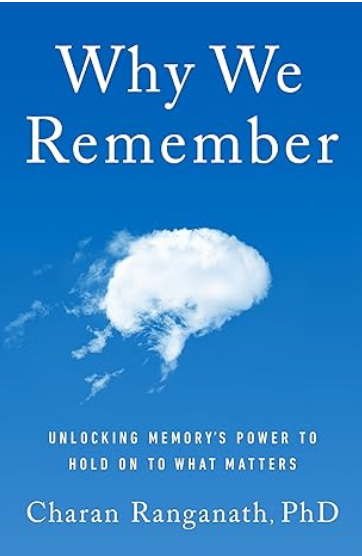
MAIN IDEA:
This is the look at memory from the point of view of human evolution. The author’s main point is that memory is nothing like computer memory with write/read features, albeit not as reliable and photographic. Here are the two most important author’s definitions:
- Memory is much, much more than an archive of the past; it is the prism through which we see ourselves, others, and the world. It’s the connective tissue underlying what we say, think, and do.
- We forget because we need to prioritize what is important so we can rapidly deploy that information when we need it. Our memories are malleable and sometimes inaccurate because our brains were designed to navigate a world that is constantly changing: A place that was once a prime foraging site might now be a barren wasteland. A person we once trusted might turn out to pose a threat. Human memory needed to be flexible and to adapt to context more than it needed to be static and photographically accurate.
The author also provides an excellent technical description:” I think of memory as the process by which our brains change over time. As we go about our lives, connections between neurons are constantly formed and modified, resulting in cell assemblies that help us sense, interact with, and understand the world around us. These intricately connected neural networks give us the ability to weave together the threads of the past so that we may envision how the future will unfold.”

MY TAKE ON IT:
I fully agree with the author that human memory has developed as an effective tool for survival and, as such, provides not an accurate picture of the past but rather a presentation of reality compiled from a combination of previous presentations and current inputs from both the external environment and the body’s internal conditions. This presentation serves one and only one purpose: to prompt such action or inaction that in the past was beneficial for survival and procreation. For conscientious beings such as humans, memory defines the notion of self and where this self belongs in relation to other selves and within the universe.
From this, I’d like to draw the important conclusion that we cannot rely on human memory in many important areas, from witness evidence to a view of past events and interactions.
Luckily, we have technology that allows us to save audio and visual information in just about any conceivable circumstance, and this technology improves constantly. So, any review and analysis of past events, whether a crime or who said and did what and where, should be based not on witness evidence but on technical recordings. However, it also contains the danger of modifying the recording using AI. The only way it could be prevented is by continuing blockchain postings of everything from everybody. It would be absolutely inconceivable back in the 1970s when we saved 2 bytes on a timestamp of the year, but it is conceivable now when we can carry terabytes of data on keychains in our pockets.
 Equal Rights Libertarian