
MAIN IDEA:
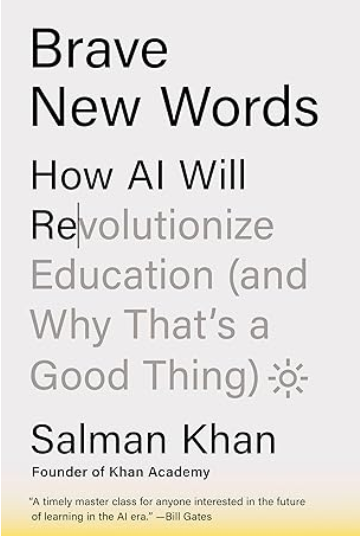
This book presents some of Khan Academy’s history, but it is mainly about how the AI tool ChatGPT is used to improve its online courses. Based on this experience, the author defines the opportunity provided in this way:” What might it be like if every student on the planet had access to an artificially intelligent personal tutor: an AI capable of writing alongside the student; an AI that students could debate any topic with; an AI that fine-tuned a student’s inherent strengths and augmented any gaps in learning; an AI that engaged students in new and powerful ways of understanding science, technology, engineering, and mathematics; an AI that gave students new ways of experiencing art and unlocking their own creativity; an AI that allowed for students to engage with history and literature like never before?”
The author clearly understands that the old structure of labor and management as a pyramid is going away due to the automatization of everything everywhere with AI tools and envisions a solution in reforming education:” The real solution is to invert that labor pyramid so that most people can operate at the top and use AI and other technology for their own productivity and entrepreneurship. The only way we have a hope of doing this is to use the same AI technology to lift the skills of a large chunk of humanity in the coming decades.”

MY TAKE ON IT:
This is a very good report from the trenches of the fight for real education vs indoctrination. The author is absolutely correct that only switching to an AI-supported education process could provide the knowledge and skills necessary to maintain competitiveness in the labor market. However, if one rises above the narrow field of education and looks at the bigger picture of the economy, it would be obvious that the very need for human labor becomes obsolete, similar to the need for animal muscles for transportation. All human activities necessary to produce goods and services will become automated within the next 50 to 100 years because no human can compete with machines in producing goods and services, regardless of how complicated the production process is. So, the objective of education should switch from molding human beings who are good, reliable, and effective pieces of business or government hierarchy into individuals possessing the knowledge and skills necessary for self-fulfillment and the pursuit of happiness. It does not mean there will be nothing to do for individuals with scientific curiosity or entrepreneurial drive. It just means that such people will be able to satisfy their needs without other people spending their lives doing soul-killing routine jobs. Just imagine Henry Ford without the need for assembly line workers and engineers because AI-controlled automated tools can not only manufacture cars but also design these cars and do everything else necessary. In this case, we can have a wide variety of ideas for transportation that could be analyzed and processed in cyberspace, with actual production implemented only as needed. Obviously, it will require restructuring of society’s organization and resource allocation, which I believe will move in the direction of increasing individual freedoms via the expansion of private property in such a way that it would be available to everybody without diminishing rewards for the individuals most effective in creating something that other people need.
 Equal Rights Libertarian