
MAIN IDEA:
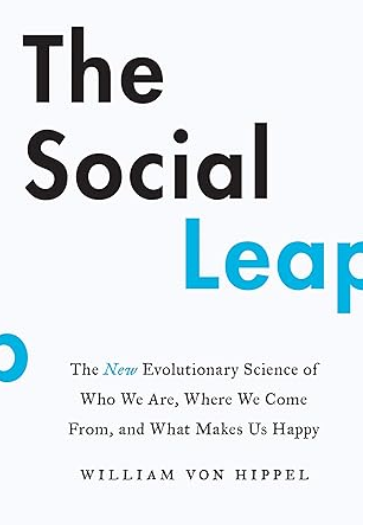
This book discusses the evolutionary development of humans a bit differently than usual. Here is the author’s main point:” What’s less obvious is the role that evolution played in shaping our psychology. We tend to think of evolution in terms of anatomy, but attitudes are just as important for survival as body parts. Preferences that don’t fit your abilities are as debilitating as limbs that don’t suit your lifestyle. Our bodies changed a little over the last six or seven million years, but our psychology changed a lot. Indeed, our evolution away from chimpanzees is marked primarily by adaptations to our mind and brain. The most important changes in our psychology concern our social functioning, particularly our capacity to work together.”
There is also a fascinating discussion about acquiring historical knowledge when there is little to no material evidence. A good example is the history of clothing based on an analysis of the genetic evolution of human louse. “The Social Leap” under discussion is the environmental change in human habitat from forest to savanna that directed evolution to the development of unprecedented levels of cooperation between individuals that made us human.
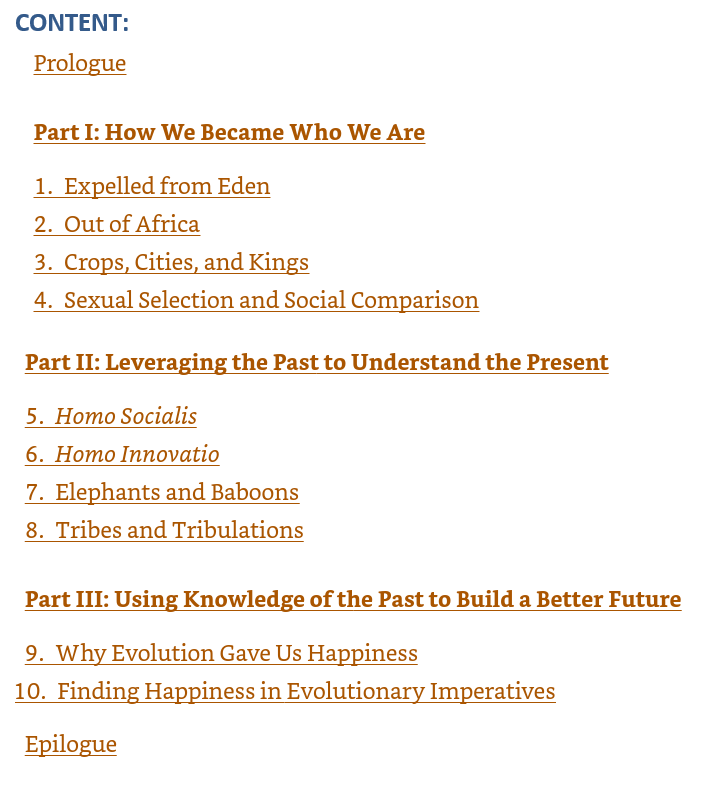
The book also goes on to discuss further human developments in cooperation, self-control, and innovation that made us the dominant species on this planet. There is also a high level of intellectual diversity generated by the need for different skill sets for the effective functioning of complex societies. Here is a very nice graph for the diversity of social orientations:

The book’s final part discusses the application of evolutionary knowledge to the pursuit of happiness.
MY TAKE ON IT:
I like this book’s approach to understanding human nature in light of the analysis of evolutionary conditions of human development. Such an approach is the only valid approach, unlike a typical approach from a moralistic or ideological point of view, either secular or religious. This is also necessary because the effective pursuit of happiness is only possible by understanding what makes us happy, which understanding could come only from understanding human nature formed by evolutionary pressures for survival.
 Equal Rights Libertarian