

MAIN IDEA:
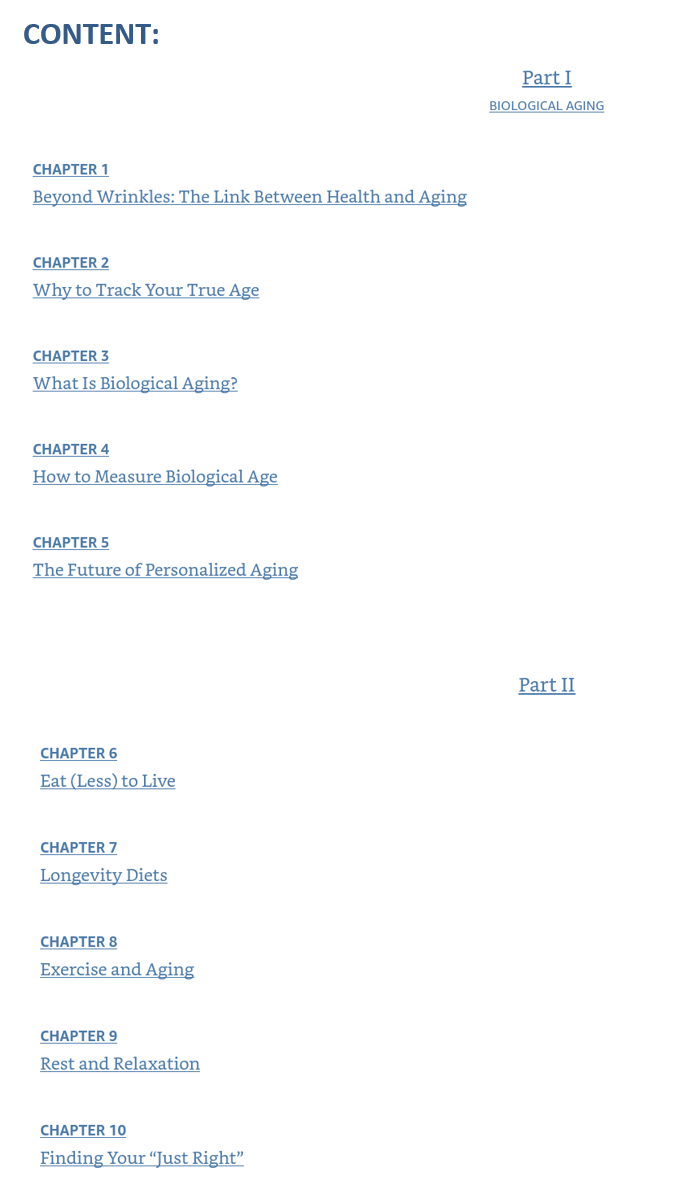
The author’s main point in this book is that there is an essential difference between chronological and biological age. The chronological age is easily defined by dates and moves in one direction when every second an organism becomes one second older and never it becomes one second younger. Contrary to this, biological age is defined by the condition of an organism relative to the typical condition for organisms of the same chronological age and can move in both directions.
Since the condition of an organism, at least to some extent, is defined by its behavior, it is possible to become a bit younger biologically by behaving correctly. So, the author allocates a big part of this book to describing proper behavior and discussing how one can implement it. The author also presents some relevant research results and discusses methods of identifying biological age, which opens the possibility of controlling the aging process, albeit in a limited way.
MY TAKE ON IT:
The most interesting part of this book for me is the information about research results and practical implementation of tools for defining biological age by collecting biomaterials in a way similar to DNA analysis. I will probably try this Elysium test at some point. The book’s advice on maintaining a younger biological age is pretty standard and consistent with typical recommendations: control weight, diet, and exercise.
 Equal Rights Libertarian