
MAIN IDEA:
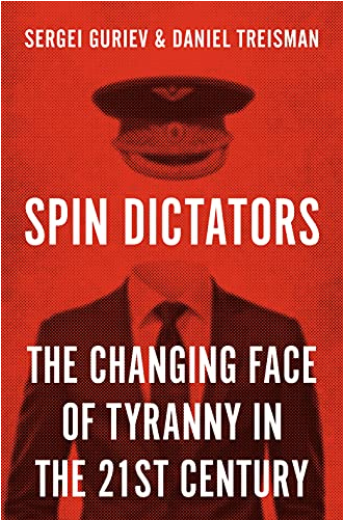
This book explores the massive changes that occurred over the last century in such traditional human endeavors as the capture of dictatorial power and control over people. The main difference is the methodology of dictatorship’s processes, from ones based on fear and direct violence to ones based on spin. The authors provided a handy comparative table of the use of the main features of these two methods:


MY TAKE ON IT:
I do not think that spin dictatorship is something really new. I suggest it is a well-known phenomenon, which is most recently called democracy. The power is always applied by a hierarchy of people who comply with orders depending on their beliefs and perception of reality. The only way to achieve such compliance is to use spin, a necessary part of every human culture. This spin applied to reality to form human beliefs in “us” being good guys and “them” being the bad ones, our leaders wise and honest while theirs just plain evil. The “them” could be anything from the other political party in democracies to hidden “enemies of the people” in totalitarian regimes to witches in medieval societies.
The popular variation that has a history of especially effective use in Russia is the idea of the leader (czar, general secretary, or president) being perfect in his thoughts and actions, so everything good in life comes from him. At the same time, people at lower levels of the hierarchy are stupid and evil, so everything wrong comes from them.
The authors end on an optimistic note that spin dictators are not that powerful after all:” In more developed, highly educated societies, what holds back aspiring spin dictators, we have argued, is the resistance of networks of lawyers, judges, civil servants, journalists, activists, and opposition politicians. Such leaders survive for a while, lowering the tone and eroding their country’s reputation. But so far they have all been voted out of office to face possible corruption prosecutions.” I do not think that the optimism based on these types of people is justified because all of them are parts of ruling hierarchies, whether it is one openly dictatorial, as is typical for Russia, or one of a few semi-competing / semi-cooperating hierarchies as it is usual in Western democracies. I am also optimistic, but my optimism is derived from my belief in two forces: one is the culturally defined psychological need for the majority of people to be free from the control of others, and another one is: the certainty of the constant competition of aspiring dictators between themselves, which periodically opens the gate for change when dictatorship weakens, and people driven by the need to be free improve the system.
 Equal Rights Libertarian