

MAIN IDEA:
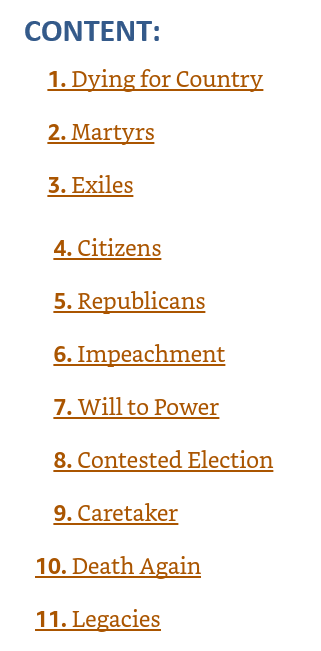
This book is about the aftermath of the Civil War. It provides historical data about people and events that followed the war in such a way as to demonstrate how exactly it happened that after the military victory and its formal political affirmation in the 13th, 14th, and 15th constitutional amendments, the South actually won peace. This cultural and political victory after the war was military loss was demonstrated by the transformation of rebel losers into the heroes fighting for the “noble Lost Cause” and the Union winners into insignificant participants, at best or even into villains at worst. It was also demonstrated in legislative and judicial forms by establishing racial segregation. Finally, an essential part of this Southern Victory of the peace was the rehabilitation of the Southern leaders at all levels and their return to power by the late 1870s.
MY TAKE ON IT:
This book is an excellent example of how complicated change is in society and its culture and how difficult it is to impose something on people if they do not want it in a somewhat democratic republic such as the USA. The truth is that American society, despite its political novelty, was still a pretty much traditional society and, like all conventional societies, had racism and class stratification deeply embedded in its culture, therefore requiring generational changes that took about a hundred years. An interesting fact that the author does not mention, but I think was significant, is that U.S. Grant suggested a much better road for development as the president at the time. It included the creation of a black majority state by including Haiti in the USA. Such a state would open an opportunity for black Americans to control their fate by moving away and depriving the South of their labor and input. The result would be a dramatic economic impact on the lives of white Southerners, forcing them to choose between racism and economic well-being. It would become inevitable because assuring economic well-being would require providing sufficiently better conditions for black labor than it could find in a black-majority state. Typically, such a choice results in a preference for well-being so that the racists who wanted prosperity would suppress their racism in a much shorter period than it happened and with much less pain and suffering than it caused.
 Equal Rights Libertarian