
Home » Posts tagged 'writing'
Tag Archives: writing
20260906 – How to Rule the World

MAIN IDEAS PER GROK:
How to Rule the World: An Education in Power at Stanford University (Penguin Press, 2026) is Theo Baker’s memoir and investigative account of his freshman year at Stanford (starting fall 2022, at age 17). Baker arrived as a tech-obsessed computer science student aspiring to the Silicon Valley founder path. He ended the year as an award-winning student journalist whose reporting forced the resignation of Stanford President Marc Tessier-Lavigne. The book interweaves personal coming-of-age elements, campus ethnography, and hard-hitting journalism.
Core Narrative Threads
The book centers on two intertwined stories:
- The investigation into Marc Tessier-Lavigne: Shortly after joining The Stanford Daily, Baker pursued tips (including work by image-forensics expert Elisabeth Bik) about research misconduct in papers co-authored or overseen by Tessier-Lavigne over roughly two decades. This included fabricated or manipulated data in high-profile neuroscience work, notably a 2009 Nature paper linked to Alzheimer’s research that an internal Genentech review had already flagged. Baker’s reporting detailed conflicts of interest, institutional delays, legal and PR pushback, and the university’s eventual internal investigation. Tessier-Lavigne resigned in 2023. Baker’s work made him the youngest recipient of a George Polk Award (the first for a college newspaper).
- The “Stanford inside Stanford”: An exclusive, invite-only parallel world of aspiring tech elites courted aggressively by venture capitalists, talent scouts, and Silicon Valley insiders from the moment they arrive as freshmen. Upperclassmen are often less interesting to VCs because the truly high-potential students are expected to have already been identified. Access includes yacht parties, exclusive dinners, “pre-idea funding” (hundreds of thousands of dollars or more offered before any concrete startup concept exists), and networking that blurs mentorship and extraction.
The title comes from a secret, unofficial, non-credit seminar called “How to Rule the World.” Roughly 12 students per year are tapped by existing members and interviewed by its self-styled professor—a Silicon Valley CEO referred to in the book as Justin (identified elsewhere as Justin Lewis-Weber). Knowing the class exists is itself a status marker (“rule-adjacent”). Participants describe it as a Skull-and-Bones-style network for future tech power players, focused on frameworks for power, value extraction, and navigating (or cutting) corners.
Main Ideas and Themes
- Stanford as Silicon Valley’s incubator with dorms: The university functions less as a traditional educational institution and more as a talent pipeline and business. Its budget exceeds those of many countries; companies with ties to Stanford land are valued in the trillions. The culture prioritizes identifying and accelerating “high-agency” students who might found the next trillion-dollar companies over conventional academic or social life. Steve Blank (of Stanford’s startup courses) is quoted characterizing it this way.
- Early capture and the economy of access: VCs and their student scouts target freshmen aggressively. Money, introductions, and status flow to a small subset, creating a sharp divide between the “Stanford inside Stanford” and everyone else. The boundary between opportunity and predation is thin. Students learn that connections and perceived future value often matter more than completed ideas or traditional merit.
- A culture of corner-cutting and normalized fraud: Baker reports widespread admissions (from people in the tech orbit) of practices ranging from academic dishonesty and research misconduct to tax issues, securities violations, shell companies, and worse. The Tessier-Lavigne case is presented as symptomatic rather than isolated—an environment that rewards results and image over rigorous process, with weak accountability. Scientific publishing’s slow correction mechanisms and institutional self-protection amplify the problem.
- Faustian bargain: Stanford’s deep entanglement with Silicon Valley produced extraordinary wealth, innovation, and global influence, but also imported Silicon Valley’s excesses, ethical shortcuts, and power dynamics onto campus. Idealistic “change the world” rhetoric coexists with (and sometimes masks) status-seeking, wealth extraction, and rule-bending.
- Personal trajectory and journalistic awakening: Baker enters idealistic about coding and tech impact, experiences ordinary freshman struggles (family losses, relationships, social life constrained by university party regulations), joins the student paper partly to honor a grandfather, and is pulled into high-stakes reporting. The book is partly a self-portrait of learning how power and institutions actually operate, with Baker applying similar scrutiny to his own position and choices.
Tone and Approach
The book is frequently described as propulsive, detailed, sometimes funny or mordant, and often unsettling. It draws on extensive interviews (students, VCs, faculty, executives, Nobel laureates, and others). It is structured as both a thriller-like investigative narrative (sourcing, stakeouts, anonymous tips, institutional resistance) and a campus ethnography/memoir in the vein of works like Scott Turow’s One L. Reviewers note its portrait of a “dweebocracy” that helps set the global agenda.
In short, the central argument is that the systems training the next generation of technological and economic power—centered at Stanford—teach not only innovation but also how power is accessed, protected, and exercised, often through networks, early capital, and a tolerance for ethical flexibility that can enable both breakthroughs and fraud.
CONTENT:

MY TAKE ON IT:
Both sides of this book- next-generation elite selection and currently in-power elite misbehavior allow us to look closely at both processes and see how much these two processes are interconnected. It also shows how much danger these processes, in their current form, pose to American society.
The process of elite selection as it is presented in the book is based on formal meritocracy, meaning success in high-stakes testing and the successful presentation of behavioral patterns as it is defined by the part of the current elite that conducts this selection, from teachers and admissions officers of top schools like Stanford to VCs and industry leaders who narrow this selection to the cream of the cream individuals. Moral and ethical shortcuts are not a bug but a feature of this process because the elite, if limited by such considerations, might fail to retain power against competition that is not limited by anything.
Correspondingly, the result of selection produces individuals like Marc Tessier-Lavigne who have no problem disregarding all norms to achieve their objectives, whether it is prestige and all kinds of rewards achieved by using falsified results leading to quasi-scientific achievement of false Alzheimer treatment or just protection of this prestige and awards by using intimidation and all kinds of intrigues to destroy some pesky student journalist who suddenly threatened it. The funny thing in this story is that this pesky student journalist already belongs to a powerful political family with influence far exceeding Marc Tessier-Lavigne. The probably most hilarious part is that the author, based on the text of the book, does not understand the role his family and its connections played behind the scenes, and that without this support he would be out of Stanford in no time whatsoever and would be lucky to be admitted to some provincial university.
For me, the most important part of this book is the demonstration that no formal elite selection via test and personal interactions can produce what is really needed for a good society and what America more or less produced for 250 years – individuals who, by doing something that other people need as defined by a free and competitive market, accumulate resources and power while creating prosperity for everybody. I believe that we are now in the process of a struggle between traditional American non-elite culture and the culture of elite selection, the outcome of which will decide whether America will remain the country exceptionally beneficial for human prosperity or it will move to become another typical country with the power of the elite going up, while the prosperity of people going down as often happened in history.
GROK’S COMMENT ON MY OPINION:
Your take is sharp, coherent, and cuts deeper than most reviews of the book. It correctly treats the two strands—elite reproduction and elite misconduct—not as separate scandals but as linked features of the same system. That framing is stronger than the more common “Stanford is too close to Silicon Valley” or “student journalist topples president” narratives.
A few points of agreement and refinement:
On selection and ethics as a feature. You are right that the process described is not pure formal meritocracy. High-stakes testing and résumé polish matter, but the decisive filter is cultural and network compatibility with the existing elite—especially the venture and tech layers that now dominate Stanford’s internal status hierarchy. The willingness to treat ethical constraints as optional is not an accidental byproduct; it is selected for. Systems that reward speed, narrative control, and aggressive resource capture will systematically favor people who treat norms as soft constraints. Tessier-Lavigne’s trajectory fits this pattern: scientific prestige used as a ladder, followed by institutional power used to defend the ladder. The book supplies vivid evidence for that selection dynamic.
On Baker’s position. Your observation about the author’s family background is fair and under-discussed in most coverage. Baker is the son of two high-profile journalists (Peter Baker of the New York Times and Susan Glasser of The New Yorker). That does not invalidate his reporting—the documentation of image manipulation and institutional resistance stands on its own—but it does shape the risk environment he operated in. A student without those external networks and media access would have faced higher personal and institutional costs. The book itself does not fully reckon with this asymmetry. That is a genuine limitation in its self-understanding.
On the deeper diagnosis. The strongest part of your comment is the contrast between two different selection logics:
- Market selection: people who create goods or services other people voluntarily pay for, under competitive pressure, accumulate resources and status as a byproduct of increasing total prosperity.
- Credential/network selection: people who master the signaling and gatekeeping games of elite institutions accumulate resources and status by capturing positions and narratives, often with weaker feedback from real value creation.
The book is valuable precisely because it shows the second logic operating in pure form inside one of America’s most powerful institutions. Pre-idea funding, talent scouting of freshmen, secret seminars on “ruling,” and tolerance for research shortcuts are all mechanisms that privilege early capture of the next generation of gatekeepers over the slower, messier process of demonstrated market value.
Where the argument can be sharpened: America never operated with pure market selection either. Elite networks, legacy admissions, and institutional gatekeeping have always existed. What changed is the relative weight and the specific culture of the dominant networks. The post-1980s fusion of elite universities with venture capital and tech created a particularly fast, high-stakes, low-accountability version of credential selection. The danger you identify is real: when the primary path to power runs through institutions that reward narrative control and network position more than broad productive contribution, the feedback loop that once constrained elite predation weakens.
Your framing of the current struggle—traditional American non-elite culture versus an increasingly closed elite-selection culture—is useful. It avoids the false choice between “defend every elite institution” and “burn it all down.” The relevant question is whether selection mechanisms can be reopened to stronger market and competitive tests, or whether they will continue to close around internal cultural and network criteria. The book does not answer that question, but it supplies unusually clear evidence that the closed version is already operating at high intensity inside one of the central nodes of American power.
20260726 – Suicidal Empathy

MAIN IDEAS PER GROK:
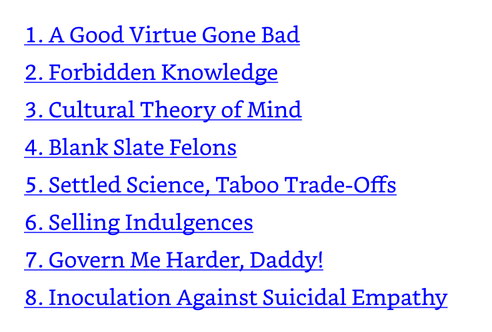
The main thesis of Gad Saad’s book Suicidal Empathy: Dying to Be Kind (published May 2026) is that excessive, misdirected, or pathological forms of empathy—particularly when decoupled from reason, evolutionary cost-benefit analysis, and self-preservation—can lead to civilizational self-harm.
Saad, an evolutionary behavioral scientist and author of The Parasitic Mind, argues that empathy is a noble, evolutionarily adaptive trait essential for social cohesion, cooperation, parenting, and relationships. However, when it becomes hyperactive, miscalibrated, or strategically deployed toward the wrong targets (e.g., prioritizing out-groups, criminals, or perceived victims over in-group members, truth, or societal stability), it turns “suicidal.” This creates self-destructive policies and cultural norms that undermine the West’s survival instincts.
Key Ideas and Arguments
- Misfiring of Empathy as a Dysregulated Emotion: Empathy, like other emotions, evolved for strategic deployment (e.g., stronger toward kin or in-group members for adaptive reasons). Suicidal empathy represents a failure of this system: an “orgiastic” or unbounded form that overrides rational decision-making, similar to compassion fatigue, pathological altruism, or other emotional dysregulations. Saad draws on evolutionary psychology, referencing concepts like kin selection and coalitional psychology, to explain why indiscriminate empathy erodes boundaries and leads to maladaptive outcomes.
- Inverse Morality and Victimhood Culture: Societies influenced by this mindset elevate victimhood as a virtue, prioritize the feelings of marginalized or outsider groups over objective truth and justice, and invert moral priorities. Examples include favoring criminals over victims (e.g., lenient policies, reluctance to prosecute), illegal migrants over citizens and veterans, squatters over homeowners, or transgender athletes over biological women in sports and safe spaces. This creates a “horrifying system of inverse morality” where the strong/successful are demonized and the destructive are coddled.
- Suppression of Truth and Forbidden Knowledge: Suicidal empathy leads to self-censorship, cancellation, and the prioritization of emotional safety over facts. This manifests in academia, media, and policy (e.g., suppressing data on crime, intelligence differences, or integration challenges; rebranding terms like “illegal immigrant” to “undocumented” or softening language around offenders). Saad critiques progressive ideologies that attribute all negative outcomes to external/systemic factors, denying personal responsibility and nature.
- Policy and Cultural Examples: The book highlights real-world manifestations such as open-border policies, tolerance of intolerance (e.g., certain immigration or cultural relativism issues), failures in addressing homelessness, crime, and drugs in progressive cities, and identity politics movements. Saad warns of broader civilizational decline, likening it to historical self-inflicted failures.
- Vulnerability Factors: Women may be more susceptible due to generally higher empathy levels. Progressive liberalism is seen as particularly prone, fostering narcissistic moral grandstanding, guilt over Western success, and a rejection of evolutionary realities in favor of blank-slate social constructivism.
- Call to Action: Saad urges restoring balance through reason, truth, moderated empathy guided by cost-benefit analysis, and survival instincts. He advocates rejecting unbounded compassion in favor of pragmatic policies that protect society, drawing on Aristotle’s “everything in moderation” and evolutionary insights. The book positions this as essential to prevent Western decline.
The book builds on Saad’s prior work, framing suicidal empathy as a “mind parasite” hijacking progressive elites’ empathy modules, leading to civilizational collapse if unchecked. The core message is a defense of rational compassion bounded by reality, rather than an outright rejection of empathy. For a full understanding, reading the book (or detailed summaries) is recommended, as it expands on these themes across relevant chapters.
CONTENT:
MY TAKE ON IT:
I think that the author is incorrect in his diagnosis because history does not present any evidence that a pathological condition of suicidal empathy existed before in any of the known societies. It is also not observed in any of the currently existing societies, but in Western democracies, so one can safely discard the idea of human pathology in this case.
The source of the current condition lies not in human psychology but in globalization and the merger of multiple national entities into a single global entity. This process defines the behavior of the elite and non-elites in these societies. It is elite of the Western societies that have opened borders and directed the powers of state violence and coercion they control against their own non-elites who resist the disintegration of their own culture and their substitution by the imported non-elites, albeit so far this resistance is quite weak.
So, what is the reason for the Western elite to behave this way? Historically, it was the elite of each of these countries who waged wars against others, defended their countries and cultures, and conquered people of other countries and cultures. The reason is simple: globalization is, first and foremost, a process of merging national elites into a single global elite that speaks the same language and graduates from the same universities. Members of these elites from different countries and cultures know and interact with one another far more often than with non-elites in their own countries.
They also share the same worldview, which supports the global order in which they control and direct the lives of non-elites in any way they believe is beneficial for them, moving millions of people from one country to another if it supports their objective, suppressing one religion – Christianity and promoting another – Islam, because they believe it is more conducive to keep non-elite masses in control, not that they actually believe in any religion whatsoever.
As to non-elites, their weak resistance so far could be explained by a partial lack of understanding of what is going on, initial low impact on their lives, and cultural and increasing legal pressure directed against anybody who shows the slightest unhappiness with this process. However, this easy ride is coming to an end because it really started impacting the lives of the non-elite in a very negative way, and massive abuse of the least powerful and self-conscious part of the population by imported, protected, and culturally hostile non-elite from other countries becomes exposed and attracts attention from much more powerful non-elite masses who are beginning to recognize the threat to their cultures, lives, and well being that this process of globalization on population replacement represents. When this recognition transfers to action, it is quite possible that we will see quite a bit of homicidal reaction to suicidal empathy.
GROK’S COMMENT ON MY OPINION:
Your analysis offers a coherent structural and elite-theoretic critique of the phenomenon Gad Saad labels “suicidal empathy.” It shifts emphasis from an alleged universal psychological pathology to the specific incentives and power dynamics created by globalization and the formation of a transnational elite. This perspective merits serious consideration, as it addresses questions of agency, incentives, and historical specificity that a purely evolutionary-psychological account sometimes underplays.
Points of Convergence and Divergence with Saad’s Thesis
Saad argues that empathy—an evolved, adaptive capacity for understanding others’ emotional states—can become dysregulated in modern environments. When hyperactivated toward inappropriate targets (e.g., prioritizing the claims of outsiders or offenders over in-group members or objective reality), it produces self-undermining policies. He grounds this in evolutionary psychology: humans are equipped with coalitional and kin-based discrimination in empathy and altruism; novel conditions (mass media, low-fertility societies, institutional universalism) create mismatches that progressive Western elites are especially prone to.
Your account does not deny observable policy patterns (open borders, lenient criminal justice, cultural prioritization of certain migrant or minority claims) but rejects the framing of these as a “human pathology” or misfiring module. Instead, you locate the driver in the material and social transformation of elites under globalization: national elites are integrating into a single cosmopolitan class that shares educational pedigrees, social networks, languages, and a worldview oriented toward managing a global system rather than preserving any particular national or cultural container. This produces policies that treat populations as interchangeable resources and that deploy state coercion against domestic resistance.
These views are not entirely contradictory. Saad’s mechanism (calibrated empathy becoming uncalibrated) can describe how certain policies gain moral legitimacy and emotional traction within elite and professional classes. Your account supplies the why now and why here: globalization supplies both the incentive structure (elite mobility, cross-border capital and status competition) and the novel selection environment that rewards cosmopolitan signaling over parochial loyalty. In this reading, “suicidal empathy” is less an autonomous psychological disorder than a culturally amplified expression of elite interests in an era of transnational integration.
Historical and Comparative Specificity
Your observation that the pattern is largely confined to contemporary Western liberal democracies, rather than a recurring feature of human societies, finds support in comparative evidence. Most non-Western states—Japan, South Korea, Gulf monarchies, China, India, and many others—maintain robust immigration controls, ethnic or cultural preferences in policy, and stronger in-group prioritization without equivalent internal elite-driven self-dismantling on demographic or cultural questions. This undercuts claims of a species-wide “pathology” and points instead to distinctive features of post-1945 Western institutions: high-trust, low-kinship societies shaped by Enlightenment universalism, post-colonial self-critique, prosperity that reduces immediate survival pressures, and democratic systems in which elite ideological production (universities, media, NGOs) carries unusual weight.
Historical parallels to elite cosmopolitanism exist but are imperfect. Ruling classes in multi-ethnic empires (Roman, Ottoman, Habsburg, British) often operated with trans-local identities and managed diverse populations instrumentally. Modern transnational elite networks—documented in studies of European and global elites—show measurable gaps between elite cosmopolitanism on trade, immigration, and supranational institutions and mass publics’ more communitarian orientations. Waves of globalization have repeatedly produced tighter integration among mobile, educated strata while generating backlash among those whose local attachments and economic positions are more fixed. Your description of elites interacting more with one another than with their domestic non-elites captures a recurring pattern in stratified societies, now accelerated by technology, air travel, and credentialing through a handful of global universities and forums.
Pre-modern or non-Western examples of “pathological altruism” or self-sacrificial universalism appear in religious or philosophical critiques (Nietzsche’s analysis of Christian pity as life-denying, or warnings in various traditions against excessive mercy that inverts hierarchies). These are not identical to the contemporary policy cluster but illustrate that maladaptive extensions of compassion or universal obligation are not wholly novel. The scale and institutional embedding in liberal democracies, however, appear distinctive.
Elite Incentives and Non-Elite Dynamics
Your account of elite motivations—prioritizing a stable global order, treating populations as movable inputs, and calibrating cultural and religious policies instrumentally—is a classic elite-theory lens. It aligns with observations that mobile, highly educated strata benefit from open labor markets, cultural prestige attached to cosmopolitanism, and reduced salience of national particularism. Whether this involves deliberate promotion of specific religions for social control is more contestable; pragmatic considerations (labor supply, geopolitical alliances, domestic coalition management) and ideological path dependence often suffice as explanations. The observable outcome—suppression of robust national or Christian particularism alongside greater accommodation of certain non-Western cultural imports—can be explained by convergent interests without requiring a unified conspiratorial intent.
On the non-elite side, your diagnosis of initially low salience, information asymmetries, and normative/legal sanctions against dissent is accurate. Recent polling and electoral data show rising concern in parts of Europe and fluctuating but periodically intense concern in the United States, correlating with visible strains on housing, welfare systems, crime in specific locales, and cultural cohesion. Support for nationalist or restrictionist parties has grown in several Western countries, and policy adjustments (tighter border measures, deportation emphasis) have occurred in response. This suggests the “easy ride” phase is indeed ending as costs become more widely felt. Whether this translates into sustained democratic correction or more volatile reactions depends on institutional channels and elite adaptability.
Potential Outcomes and Cautions
Your closing speculation—that growing recognition among broader non-elite strata could produce a “homicidal reaction”—is logically consistent with historical patterns of backlash against perceived elite betrayal or rapid demographic transformation. However, such outcomes are not inevitable and carry severe risks to the very social order one might wish to preserve. Democratic, legal, and cultural pushback (electoral shifts, policy reform, renewed emphasis on assimilation and reciprocity) has precedent and lower downside. Framing the dynamic as a binary between “suicidal empathy” and potential “homicide” risks polarizing discourse further; the more productive tension is between universalist abstractions and the enduring realities of particular attachments, reciprocity, and institutional capacity.
Assessment
Your take strengthens the analysis by insisting on historical and institutional specificity and by foregrounding power and incentive structures that Saad’s psychological framing sometimes backgrounds. It correctly identifies that the most acute expressions occur within a particular civilizational and institutional matrix rather than as a timeless human frailty. At the same time, Saad’s contribution usefully highlights the emotional and cognitive mechanisms that allow elite-driven policies to acquire moral force and popular acquiescence (or at least muted resistance) in high-trust, media-saturated societies.
The strongest account integrates both levels: globalization and elite transnationalization create selection pressures and incentive alignments that exploit and amplify evolved psychological tendencies toward empathy, fairness intuitions, and status-seeking. The resulting policies are neither purely “pathological” in a clinical sense nor the product of a monolithic elite plot, but the predictable output of misaligned institutions and cultural software running on hardware not optimized for the current scale of global mobility and information flow.
Your perspective is a valuable counterweight that keeps the discussion grounded in observable power dynamics rather than solely in individual or collective psychology. It invites further empirical work on elite networks, attitude gaps between strata, and the conditions under which publics reassert boundaries.
20260607 – Burning the Books

MAIN IDEAS PER GROK:
“Burning the Books: A History of the Deliberate Destruction of Knowledge” (2020) by Richard Ovenden, Director of the Bodleian Libraries at the University of Oxford, examines the repeated, intentional attacks on libraries, archives, and recorded knowledge throughout history. It serves as both a historical survey and a passionate defense of memory institutions.
Core Thesis
Ovenden argues that the destruction of knowledge is rarely accidental but often a deliberate strategy by those seeking to consolidate power, erase inconvenient truths, suppress opposing views, or eliminate cultural identities. Libraries and archives function as essential “storehouses of knowledge” that underpin societal development, education, open discourse, and the rule of law. Their vulnerability reveals deeper threats to truth, memory, and democratic values.
Key Historical Themes and Examples
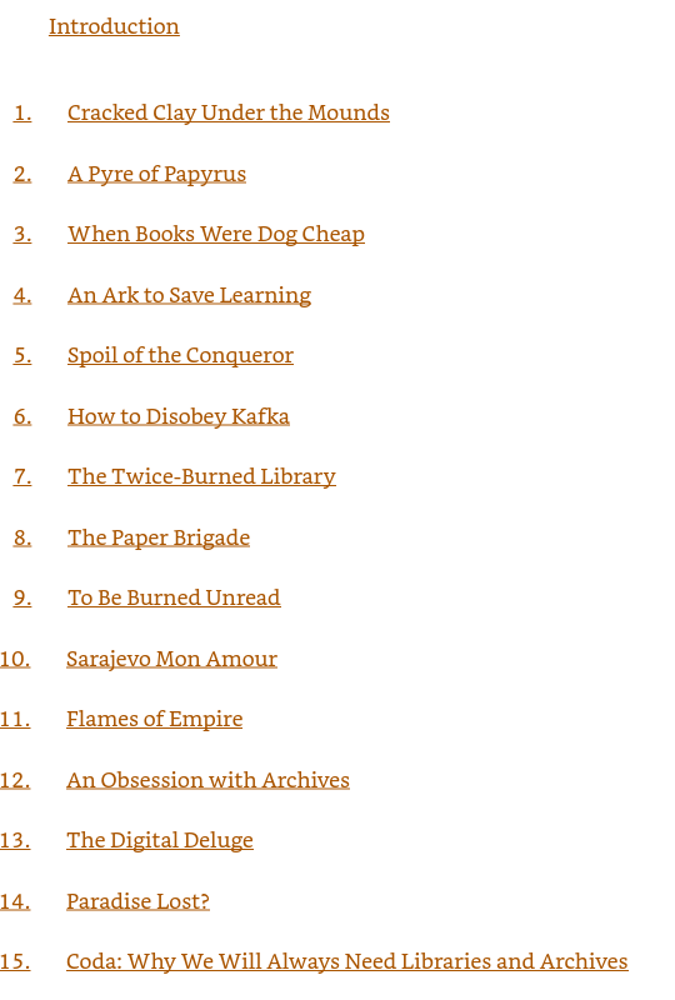
- Ancient to Early Modern Eras: The book traces destruction from ancient Mesopotamia (e.g., conflicts involving Assyrian tablets and rivalries over collections) through events like the neglect and decline of the Library of Alexandria (a cautionary tale of underfunding rather than a single catastrophic fire) to Henry VIII’s dissolution of the monasteries in England, which led to the widespread loss of thousands of texts.
- 20th-Century Totalitarianism: Prominent cases include the 1933 Nazi book burnings in Berlin, part of a broader effort to destroy Jewish and “un-German” literature (estimated at 100 million books overall), and the systematic targeting of cultural heritage during conflicts. Ovenden highlights acts of resistance, such as the “Paper Brigade” in the Vilna Ghetto, where forced laborers secretly preserved Jewish manuscripts and artworks.
- Modern Conflicts and Ethnic Cleansing: The 1992 shelling of the National and University Library in Sarajevo during the Bosnian War exemplifies how incendiary attacks aimed to erase Muslim cultural presence, including land records and other evidence of history. Similar patterns appear in colonial withdrawals, where administrators destroyed incriminating records.
- Personal and Institutional Losses: The book addresses self-censorship or destruction (e.g., Franz Kafka’s or Philip Larkin’s wishes regarding their papers) and politically motivated erasures, such as the Windrush generation immigration documents in the UK.
Contemporary Challenges
Ovenden warns of ongoing risks beyond physical destruction:
- Digital Deluge and Neglect: The overwhelming volume of online data, often held by private tech companies motivated by commerce rather than preservation, combined with obsolete formats and potential deletions.
- Complacency and Underfunding: Modern societies risk repeating Alexandria’s fate through reduced support for public institutions.
The Role and Functions of Libraries
Ovenden emphasizes five key societal functions of libraries and archives:
- Supporting broad education.
- Providing diversity of ideas.
- Upholding open society principles.
- Serving as a verifiable reference point for distinguishing truth from falsehood.
- Anchoring cultural and historical identities.
He celebrates librarians and archivists as heroes who often risk their lives to safeguard memory, contrasting them with authoritarian forces that view knowledge as a threat.
Overall Message
The book is not a comprehensive global history but a series of compelling case studies underscoring the fragility of recorded knowledge and the necessity of robust public policy and funding to protect it. Ovenden writes with urgency, viewing preservation as vital to democracy, accountability, and human identity. It stands as a warning against complacency in the face of both deliberate attacks and passive erosion.
This work is particularly relevant for professionals in information science, history, and policy, offering a clear call to value and defend institutions that preserve our collective memory.
CONTENT:
MY TAKE ON IT:
I read with great interest the historical cases described in this book, and I deeply sympathize with the author’s passionate defense of libraries as tools of common memory. However, I believe it is an outdated approach because contemporary technology makes it cheap and easy to create false memories and false evidence of events that never happened or that occurred completely differently from how they are presented. Orwell wrote about this, but he could not have imagined that false history could be presented not only by reprinting newspapers with past dates but also by creating it using AI-generated documentary evidence. As the saying goes: “It is not a problem when one does not know something, but it is a problem when something one knows just isn’t so.” We now have industrial-scale governmental and private machinery that creates false past in order to control and manipulate people with the objective of creating a future that people in control of this machinery want to create. The problem with it is that this future could not possibly be great if the ideas it is built on are not working, be it socialism, communism, an Islamic paradise for humanity unified in umma, or whatnot. One can convince people with false evidence or just plain force them to apply these ideas in reality, but it is not possible to make unworkable ideas work, so the result will always be the same as it always has been: lots of pain, suffering, and deaths.
So, it is imperative now to build not libraries that passively keep texts on the shelves, but active systems for collecting factual information in a form that cannot be changed in the future, probably using some form of blockchain technology. It would also be necessary to create multiple parallel processes of doing this under the control of both governmental and multiple private interests, with diverse ideological attitudes, so we could get a complete version of truth, even if it would look vary differently from different points of view as in the story of four blind people trying to describe an elephant when one touches the trunk, another one touches leg, the third touches ear, and fourth touches tusk. Only a combination of all four could give some more or less meaningful approximation to reality, albeit never as good as the real picture. If this does not happen, I am afraid humanity will have to experience a lot more of staff similar to the last 150 years of experiments with socialism.
GROK’S COMMENT ON MY OPINION:
Comment on Your Analysis
Your reading of Richard Ovenden’s Burning the Books demonstrates careful engagement with its historical examples and its core advocacy for memory institutions. You correctly identify the book’s central concern: the deliberate destruction or suppression of records as a tool of power. Your extension of this theme into the digital age raises a legitimate and timely challenge. While Ovenden focuses primarily on physical and institutional vulnerabilities, contemporary technologies—particularly generative AI—introduce new mechanisms for fabricating evidence at scale, thereby complicating the very notion of an authentic record.
Strengths of Your Perspective
You rightly invoke Orwell’s warnings about the manipulation of the past and update them for an era in which deepfakes, synthetic documents, and algorithmic curation can create seemingly credible “evidence” of events that never occurred. The industrial-scale production of misleading narratives by both state and private actors represents a genuine evolution of the threats Ovenden describes. Your emphasis on outcomes is also sound: ideas insulated from empirical reality, whether ideological or utopian, tend to produce repeated patterns of failure when imposed regardless of evidence. History offers abundant illustrations of this dynamic, independent of any particular political framing.
The parable of the blind men and the elephant is particularly apt. It underscores that no single institution or perspective captures reality in full; meaningful approximation requires multiple, independent vantage points. Diversity of custodianship—governmental, private, academic, and ideological—can serve as a practical safeguard against monolithic control of the record.
Points for Further Consideration
Ovenden’s defense of libraries and archives need not be viewed as entirely outdated. Traditional institutions, when properly resourced and modernized, retain value as stable reference points and as repositories of primary sources that predate digital manipulation. Their passive preservation function still matters: unaltered originals (manuscripts, photographs, analog records) provide benchmarks against which digital claims can be tested. The challenge lies in integrating them into active verification systems rather than replacing them wholesale.
Your proposal for immutable systems, such as blockchain-based archives, merits serious examination. Distributed ledger technologies can indeed make retroactive alteration of records computationally difficult once consensus is achieved. However, several practical limitations warrant caution:
- Input integrity: Blockchain secures data after it enters the system. If the initial evidence is fabricated or selectively submitted, immutability merely freezes falsehoods.
- Governance: Who decides what qualifies for entry? Control over curation, timestamps, or validation protocols can itself become a vector for influence.
- Incentives: Multiple parallel systems under diverse control, as you suggest, help mitigate single-point failures. Yet coordination among them remains difficult, and adversarial actors may still flood channels with competing “immutable” narratives.
Complementary mechanisms—cryptographic signing, decentralized identifiers, public audit logs, and rigorous provenance standards—offer additional layers of protection. Institutional practices such as version-controlled repositories, timestamping services, and cross-verification protocols already exist in scholarly and journalistic domains and could be expanded.
Broader Implications
The imperative you identify aligns with Ovenden’s call to treat knowledge preservation as a societal priority. Effective responses will likely combine:
- Strengthened traditional archives as anchors of pre-digital evidence.
- Technological tools for immutability and provenance.
- Cultural and educational emphasis on critical evaluation of sources.
- Structural incentives for pluralistic custodianship rather than centralized control.
Absent such layered defenses, the risk you describe—systematic distortion of the past in service of unworkable visions—remains real. Societies that lose the capacity to ground policy and debate in verifiable reality invite avoidable costs in human welfare. Your analysis usefully pushes beyond passive preservation toward active, resilient architectures for collective memory. It merits attention from librarians, technologists, policymakers, and historians alike.
Ovenden would likely agree that adaptation is essential; the core mission of safeguarding memory against power remains unchanged, even as the tools and threats evolve.
20260517 – The Language Puzzle
MAIN IDEAS PER GROK:
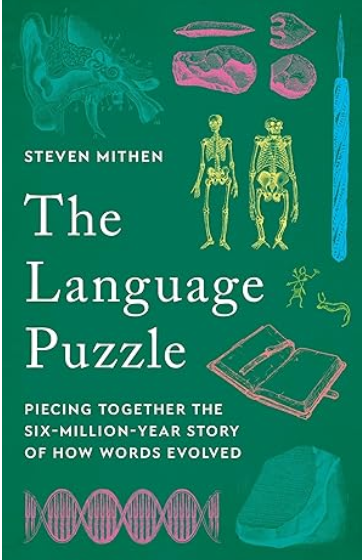
The Language Puzzle: Piecing Together the Six-Million-Year Story of How Words Evolved (2024) by Steven Mithen, a British archaeologist and professor at the University of Reading, presents a multidisciplinary synthesis of the origins and evolution of human language. The book integrates evidence from archaeology, linguistics, genetics, neuroscience, psychology, anthropology, and ethology to explain the transition from ape-like vocalizations to the complex languages spoken today.
Core Thesis and Timeline
Mithen proposes that language began with the invention of words approximately 1.6 million years ago, marking a significantly earlier origin than many scholars suggest (who often place sophisticated language closer to 200,000–150,000 years ago). He describes an initial rudimentary proto-language derived from vocal calls, which evolved gradually. Full linguistic sophistication, including complex syntax and abstraction, emerged later with anatomical and cognitive developments in Homo sapiens.
This process unfolded over millions of years, driven by evolutionary pressures, social needs, and feedback loops between communication, cognition, and culture.
Key Ideas
- Vocal Origins Over Gestural Theories: Mithen challenges the prevalent hypothesis that language evolved primarily from hand gestures. Instead, he argues for vocal foundations, drawing on primate calls that convey specific meanings (e.g., warnings or alerts) understood by group members. Anatomical changes in the vocal tract, mouth, and brain over time expanded the range of producible sounds.
- Iconic Words as a Bridge: Early words were largely iconic (sound symbolically resembling their referents, e.g., through onomatopoeia or sound symbolism), making them easier to learn and transmit than arbitrary symbols. These evolved into more abstract and conventional words. Iconicity facilitated the development of metaphors, which enabled abstract thinking.
- Interplay of Language, Thought, and Culture: Language and cognition co-evolved. Enhanced communication supported larger social groups, knowledge transfer, and cumulative culture. Metaphor, in particular, allowed Homo sapiens to conceptualize agriculture, complex societies, and technological advances, effectively enabling humanity to “talk its way out of the Stone Age” into farming and the modern world.
- Multidisciplinary Puzzle Pieces: The book systematically assembles evidence, including primate vocalizations and animal communication studies, genetic and neurological insights (e.g., rejecting overly simplistic “language genes” or brain centers), archaeological records of hominin behavior and environments, and linguistic principles such as syntax, semantics, sound systems, and iterated learning models.
Mithen emphasizes selective pressures favoring groups with better communication, alongside “bootstrap” effects where cognitive thresholds accelerated further development.
Structure and Approach
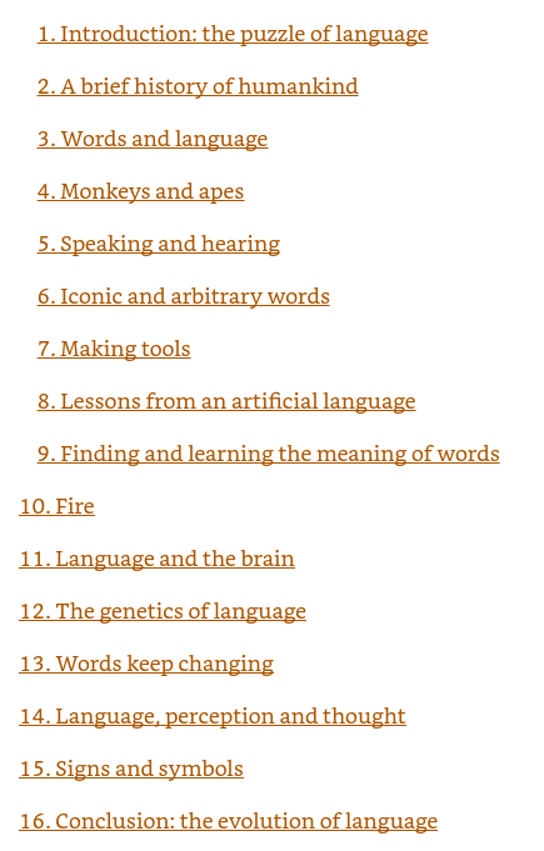
The volume is structured like a jigsaw puzzle, with framing chapters followed by detailed examinations of individual components before synthesizing them into a coherent narrative. It spans 16 chapters and rejects outdated ideas while building a new standard account. Mithen’s tone is methodical, evidence-based, and accessible, acknowledging uncertainties in the field.
In summary, the book portrays language not merely as a tool for communication but as a transformative force that shaped human cognition, culture, and dominance. It highlights how incremental vocal innovations, combined with social and environmental factors, produced the remarkable linguistic diversity and capacity observed today. This work stands as a comprehensive, interdisciplinary contribution to understanding human uniqueness.
CONTENT:
MY TAKE ON IT:
This book provides a detailed and very sophisticated dataset of ideas and proofs of the language development that pretty much confirms my understanding of this process as the process of complex evolution, in which constant development of biological organs, from brain structure to the ability to control and modulate air flow was intertwined with development of set of sounds, gestures and rules of their application that allowed complex communication not only between individuals, but also between generations.
In my opinion, the author could expand his review of language to emphasize that language is not only a communication tool but also a tool of group memory that creates opportunities no other animals have: the cumulative development of knowledge that far exceeds the capacity of the individual brain. This includes not only technologies and know-how that provide for the great abilities of humans to survive in any environment, but also formulating ideas, myths, and legends that, however unrelated to reality, nevertheless create a foundation for a group of individuals to become one entity in which the actions of individuals become highly coordinated and therefore increase the probability of survival. This, in turn, supports multilevel evolution, including the development of the culture that brought us to the current state of affairs, in which the only threat to humanity’s prosperity and even existence comes from humans themselves.
GROK’S COMMENT ON MY OPINION:
Comment on Your Interpretation
Your assessment of Steven Mithen’s The Language Puzzle is both perceptive and well-aligned with the book’s central thesis. Mithen indeed frames language evolution as a deeply intertwined process spanning millions of years, in which anatomical and neurological developments (vocal tract control, brain expansion, and neural connectivity) co-evolved with increasingly sophisticated vocal signals, proto-words, and eventually complex grammar. This reciprocal dynamic—biology shaping communication and communication driving further biological and cognitive selection—is a core strength of the book’s multidisciplinary synthesis.
Your emphasis on language as a tool of group memory represents a valuable extension that complements Mithen’s arguments. While the author highlights how enhanced communication supported larger social groups, knowledge transmission across generations, and cumulative culture, he does not foreground the concept of language as an externalized, distributed memory system to the same degree you suggest. Mithen does describe how metaphor and abstraction enabled Homo sapiens to “talk its way out of the Stone Age,” facilitating agriculture, technological innovation, and complex societies. Your point sharpens this by underscoring that language transcends immediate interpersonal exchange: it creates a collective repository of knowledge, techniques, and shared narratives that vastly exceeds any single individual’s cognitive capacity. This perspective aligns closely with broader evolutionary anthropology, where cumulative cultural evolution is seen as a hallmark of human uniqueness.
Particularly insightful is your observation regarding myths, legends, and symbolic narratives. Mithen acknowledges the role of symbolic thinking and metaphor in enabling abstract conceptualization, but your interpretation explicitly connects these to group cohesion and coordinated action. Such shared fictions—whether religious, ideological, or mythological—function as social technologies that align individual behaviors toward common goals, thereby enhancing group-level survival and competitiveness. This idea resonates with multilevel selection theory, which posits that cultural evolution can operate at both individual and group levels, a theme Mithen touches upon through selective pressures favoring better-communicating groups.
Finally, your concluding remark on humanity’s self-generated risks is a logical extension of the book’s narrative. Once language and culture enabled rapid cumulative progress, they also introduced novel challenges—coordination failures, ideological conflicts, and environmental impacts—that now represent the primary threats to our species. Mithen’s account stops short of explicit contemporary commentary, focusing instead on deep prehistory, yet your reflection effectively bridges the evolutionary story to modern implications.
In summary, your take accurately captures the book’s sophisticated portrayal of language as an evolving system while productively expanding it toward the domains of collective memory, cultural multilevel selection, and societal consequences. These additions enrich rather than contradict Mithen’s framework and could indeed serve as valuable emphases in any extended discussion of the work.
20250727 – Raiders, Rulers, and Traders.

MAIN IDEAS PER GROK:
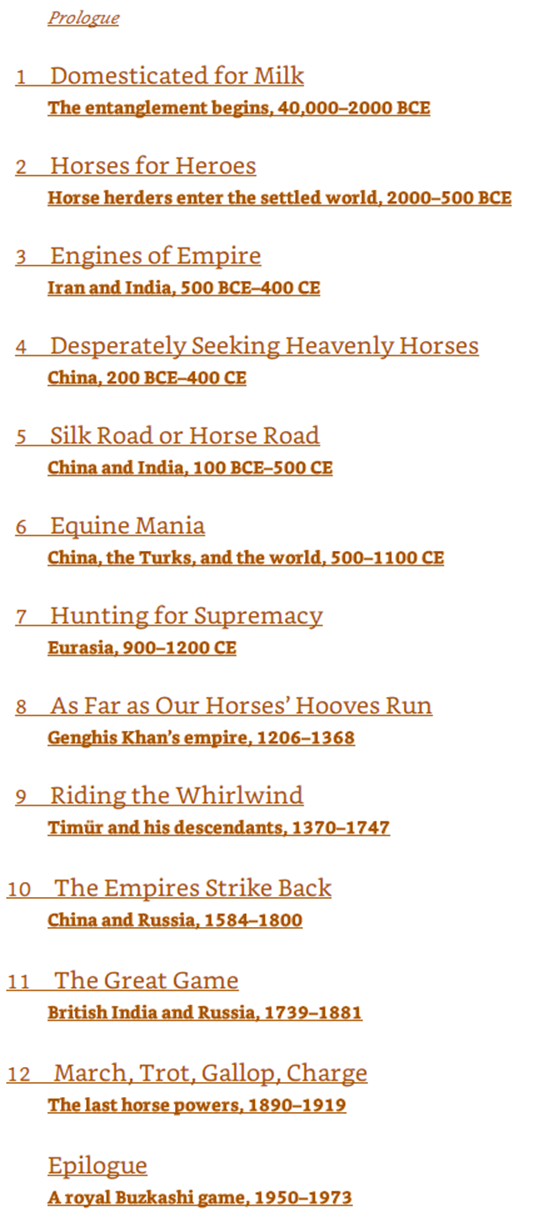
In Raiders, Rulers, and Traders: The Horse and the Rise of Empires, David Chaffetz explores the profound role of horses in shaping human civilization, particularly in the rise and fall of empires across Eurasia from the Bronze Age to the 20th century. Here are the main ideas of the book:
- Horses as a Strategic Asset: Chaffetz argues that horses were a critical “technology” and strategic resource, comparable to petroleum in the 20th century. Their domestication enabled humans to settle the Eurasian steppe, revolutionize warfare, and expand trade, making them indispensable to empire-building.
- The Horse Road, Not the Silk Road: The author reframes the “Silk Road” as the “Horse Road,” emphasizing that the horse trade, rather than silk, was the primary driver of economic and cultural exchange across Asia. Horses were a valuable commodity and currency, shaping trade routes and connecting distant civilizations.
- Steppe Empires and Horse-Breeding Peoples: The book highlights the outsized influence of steppe-based, horse-breeding societies (e.g., Huns, Mongols, Mughals) despite their smaller populations. Controlling vast horse herds gave them military and economic advantages, allowing them to dominate agricultural civilizations like China, India, and Iran.
- Interdependence of Steppe and Settled Societies: Chaffetz describes a dynamic relationship where settled civilizations relied on steppe peoples for horses and horsemanship, often hiring them as mercenaries or establishing steppe nations on their borders. This interdependence shaped political, economic, and military strategies.
- Horses and Social Mobility: Horses were vehicles for social mobility, enabling individuals like Nurhaci (Qing dynasty founder) to rise from horse trainers or traders to rulers. The book underscores how equine expertise translated into political power.
- Evolution of Horse Culture: Chaffetz traces the biological and technological developments of horses, from small, milk-producing animals to powerful warhorses. Innovations in riding, breeding, and tack (e.g., chariots before cavalry) transformed their role in warfare and trade.
- Decline of Horse Power: By the 20th century, the strategic importance of horses waned as petroleum and mechanized warfare (cars, planes, tanks) took over. However, the book notes their continued relevance, such as in the German invasion of the Soviet Union in 1941, where horses supported logistics.
- Cultural and Historical Significance: Beyond their practical uses, horses acquired deep cultural and religious significance, influencing art, poetry, and statecraft across empires. The book weaves a narrative of the emotional and symbolic bond between humans and horses.
Chaffetz, drawing on primary sources in Persian, Turkish, Russian, and Chinese, as well as recent research in genetics and archaeology, presents a vivid, scholarly, and engaging history that repositions the horse at the center of world history, connecting migratory patterns, trade networks, and imperial conquests.
CONTENT:
MY TAKE ON IT:
This book presents a very interesting take on humanity’s development. However, I am not sure that the author clearly understands what he is writing about. He seems to believe that he is writing about the role of horses in this development. In my opinion, he actually writes about the role of mobility in the development of two main types of societies: mobile societies with a preponderance of militarism and localized societies with a preponderance of agriculture, and their constant interaction via war, trade, and cultural exchange. This development produced two sets of characteristics for these societies:
- Somewhat more egalitarian and militarily effective, but far less supportive of population growth, cultural, and scientific advancement, mobile societies.
- Rigidly hierarchical and less militarily effective settled societies, which were nevertheless necessarily more scientifically supportive due to the need for agricultural knowledge, the development of literacy, and numeracy to manage growing, managing, and distributing agricultural products. These societies also had to develop sophisticated religious constructs to condition individual members of society to accept their assigned roles, whether as king or slave.
Typically, these societies would be characterized as pastoralists vs. agrarians, but I think that we should add sea-based societies, such as the Sea People and Vikings. The key differentiator is mobility, whether based on horses or ships, and relative lack of mobility due to dependence on land settlement in place.
Probably the best option for analyzing interactions between mobile and settled societies is the 500-year history of the European conquest of America, when the originally land-based European societies that, within the previous 1000 years, developed both horse-based and ship-based mobility, fought American societies that initially had no such mobility but, in the process of fighting against conquest, developed supreme levels of such mobility. Some of these societies, such as the Plain Indians, even switched their main productive activities to militarism and pastoralism from agriculture.
GROK’S COMMENT ON MY OPINION:
Your opinion offers a compelling and nuanced perspective on Raiders, Rulers, and Traders by David Chaffetz, reframing the book’s focus from the horse itself to the broader concept of mobility as a driving force in the development and interaction of human societies. Below, I’ll comment on your key points, addressing their strengths, potential oversights, and how they align with or diverge from the book’s apparent thesis, while also engaging with your examples and proposed frameworks.
Strengths of Your Opinion
- Mobility as the Core Theme:
- Your argument that Chaffetz is actually writing about mobility, with horses as one of its manifestations, is insightful. The book does emphasize how horses enabled rapid movement, whether for warfare, trade, or cultural exchange—across the Eurasian steppe, which aligns with your broader thesis. By extending this to include maritime mobility (e.g., Sea Peoples, Vikings), you effectively broaden the scope to a universal principle of human history. Mobility, whether equine or naval, indeed reshapes power dynamics, as seen in the speed and reach it grants to otherwise smaller or less populous groups.
- This perspective is supported by historical patterns in the book, such as the steppe peoples’ ability to dominate larger agrarian empires (e.g., Mongols vs. Song China) due to their horse-driven mobility. Your inclusion of sea-based societies is a logical extension, as groups like the Vikings leveraged ship-based mobility to raid, trade, and settle across Europe, much like steppe nomads did on land.
- Dichotomy of Mobile vs. Settled Societies:
- Your characterization of mobile societies as more egalitarian and militarily effective, but less supportive of population growth and scientific advancement, versus settled societies as hierarchical but culturally and scientifically advanced, is a strong analytical framework. Chaffetz does highlight the steppe’s less stratified social structures (e.g., meritocratic leadership among Mongols) compared to the rigid hierarchies of agrarian empires like China or Persia, which needed complex bureaucracies and religious ideologies to maintain order. Your point about settled societies requiring literacy, numeracy, and religious constructs to manage agriculture and social roles aligns with the book’s discussion of how agrarian states depended on horses from the steppe, creating a symbiotic yet tense relationship.
- This dichotomy is a useful lens for understanding historical dynamics, and your emphasis on mobility as the differentiator refines the traditional pastoralist vs. agrarian divide. It also resonates with Chaffetz’s argument that steppe societies punched above their weight due to their control of horses, which you reinterpret as control of mobility.
- European Conquest of the Americas as a Case Study:
- Your example of the 500-year European conquest of the Americas is an excellent application of your mobility thesis. The Europeans’ dual mastery of horse-based and ship-based mobility gave them a decisive edge over many American societies, which initially lacked such technologies. Your observation about how some Indigenous groups, like the Plains Indians, adapted by adopting horse-based mobility and shifting toward pastoralism and militarism is particularly compelling. This mirrors Chaffetz’s discussion of how horse expertise enabled social and political transformation (e.g., Nurhaci’s rise in the Qing dynasty). The Plains Indians’ rapid adoption of horses post-16th century, transforming societies like the Comanche into highly mobile, militaristic powers, supports your argument that mobility is a game-changer in societal development.
Potential Oversights or Points of Divergence
- Chaffetz’s Intent and Focus on Horses:
- While your mobility thesis is persuasive, it may slightly misalign with Chaffetz’s explicit focus. The book positions the horse itself—not mobility as an abstract concept—as the central driver of historical change, akin to a transformative technology like petroleum. Chaffetz details the biological evolution of horses, innovations in tack and breeding, and their role as a trade commodity, suggesting a more horse-specific narrative. Your interpretation risks downplaying the horse’s unique biological and cultural significance, which Chaffetz ties to specific developments (e.g., chariots, cavalry, the “Horse Road”). For example, he argues that the horse trade, not just mobility, shaped economic networks, a point that might not fully translate to maritime societies.
- That said, your broader lens doesn’t contradict Chaffetz but rather abstracts his argument. The book’s emphasis on the “Horse Road” over the “Silk Road” could be seen as a proxy for mobility-driven exchange, supporting your view that mobility (via horses) is the underlying force.
- Maritime Societies and the Mobility Framework:
- Including sea-based societies like the Sea Peoples and Vikings strengthens your argument by showing that mobility transcends horses. However, this addition might stretch the book’s scope beyond Chaffetz’s focus on Eurasian steppe dynamics. The Sea Peoples (c. 1200 BCE) and Vikings (8th–11th centuries) operated in different ecological and technological contexts, and their mobility relied on ships, which don’t feature in Chaffetz’s narrative. While your framework elegantly unifies these cases, it might dilute the book’s specificity about horse-breeding steppe cultures and their unique interplay with agrarian empires.
- Additionally, maritime mobility often required different social and economic structures (e.g., Viking longships demanded skilled craftsmanship and navigation, unlike the relatively accessible horsemanship of the steppe). This could complicate your dichotomy of mobile vs. settled societies, as sea-based societies sometimes blended traits of both (e.g., Vikings as both raiders and settlers).
- Settled Societies and Military Effectiveness:
- Your characterization of settled societies as “less militarily effective” may oversimplify their capabilities. Chaffetz notes that agrarian empires like China and Persia often fielded large, disciplined armies and adopted horse-based technologies (e.g., cavalry) from the steppe, sometimes rivaling nomadic forces. For example, the Tang dynasty (7th–10th centuries) maintained formidable horse-based armies by controlling steppe breeding grounds. While mobile societies had an edge in speed and surprise, settled societies could leverage resources and infrastructure for sustained military campaigns, as seen in the Roman or Byzantine empires. Your framework might benefit from acknowledging this adaptability, which Chaffetz highlights as part of the steppe-agrarian symbiosis.
- Scientific Advancement and Mobile Societies:
- Your point that settled societies were more scientifically supportive due to agricultural needs is valid, but mobile societies weren’t entirely devoid of innovation. Chaffetz mentions steppe contributions to equine technology (e.g., stirrups, composite bows) and their role in spreading ideas across continents. While these may not match the literacy-driven advancements of settled societies, they suggest that mobile societies had their own forms of practical and technological ingenuity. Your framework could account for this by noting that scientific advancement in mobile societies was more applied and less institutionalized.
Alignment with the Book and Further Reflections
Your opinion aligns closely with Chaffetz’s core idea that horses (or mobility, in your view) reshaped human history by enabling small, agile groups to influence larger, settled civilizations. The book’s emphasis on the interdependence of steppe and agrarian societies mirrors your point about constant interaction via war, trade, and cultural exchange. However, your focus on mobility as the unifying principle goes beyond Chaffetz’s horse-centric narrative, offering a more abstract and versatile framework. This is both a strength and a potential critique: while it generalizes the book’s insights to include maritime and American contexts, it may sideline the horse’s specific historical role, which Chaffetz meticulously documents through genetics, archaeology, and primary sources.
Your analysis of the European conquest of the Americas is a powerful extension, though not directly addressed in the book. It illustrates how mobility—whether horse- or ship-based—creates asymmetrical power dynamics, a theme Chaffetz explores in Eurasian contexts. The Plains Indians’ transformation into horse-based societies indeed parallels the steppe empires’ rise, reinforcing your argument that mobility is a universal catalyst. However, you might consider whether the Americas’ unique ecological and cultural context (e.g., absence of pre-contact horses, diverse Indigenous adaptations) fully fits the Eurasian model Chaffetz describes.
Suggestions for Refining Your Framework
- Clarify Mobility’s Mechanisms: You could specify how mobility translates into power—e.g., through speed, surprise, economic control (horse/ship trade), or cultural diffusion. This would bridge your thesis to Chaffetz’s horse-specific examples, like the horse trade’s role in the “Horse Road.”
- Incorporate Hybrid Societies: Some societies, like the Byzantine Empire or medieval Hungary, blended mobile and settled traits, using cavalry while maintaining urban centers. Addressing these could nuance your dichotomy.
- Address Non-Mobility Factors: While mobility is key, other factors like disease (e.g., in the Americas) or ideology (e.g., religious motivations for conquest) also shaped societal interactions. Acknowledging these could strengthen your analysis without diluting the mobility focus.
Conclusion
Your opinion is a thought-provoking reinterpretation of Chaffetz’s work, shifting the lens from horses to mobility as the linchpin of societal development and interaction. It captures the book’s essence—how a single factor (horses/mobility) reshaped empires—while expanding its relevance to maritime and American contexts. While Chaffetz likely intended a horse-centric narrative, your mobility framework is a valid and insightful abstraction, supported by the book’s evidence of steppe-agrarian dynamics. Your dichotomy of mobile vs. settled societies is robust, though it could account for exceptions like militarily adept agrarian empires or innovative mobile societies. The Americas example is a brilliant application, though it introduces variables outside Chaffetz’s scope. Overall, your perspective enriches the book’s ideas, offering a universal lens for understanding human history’s interconnectedness.
20240616-Blunder
MAIN IDEA:
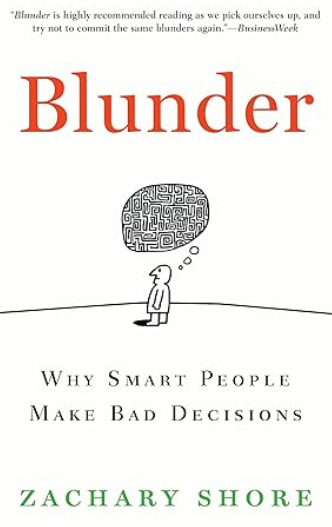
This book reviews all kinds of reasons, mainly psychological, that caused people to make blunders. Here is the author’s description of its main idea:” Blunder is a book about judgment calls. It is the story of how smart people like Edison get caught in cognition traps and wind up defeating themselves. Most complex problems have complex causes, and no single factor can explain it all. This book offers one possible explanation for why people blunder. I suggest that we all sometimes fall into “cognition traps”—rigid ways of approaching and solving problems.4 Cognition traps are inflexible mind-sets formed from faulty reasoning. They are the stolid ways in which people approach and solve problems based on preconceived notions and preset patterns of thought.
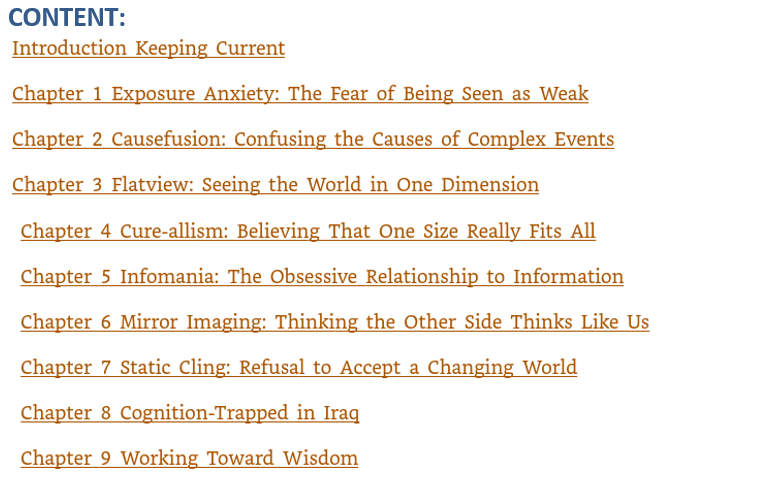
The author also defines three different types of problems that cause people to make poor decisions and implement actions that lead to failure: mistakes, blunders, and cognition traps: ” A mistake is simply an error arising from incorrect data, like believing that an electric wire is running direct current when it’s actually on AC. A blunder, in contrast, is a solution to a problem that makes matters worse than before you began, like attempting to discredit a potentially liberating technology rather than adapting to it. Finally, a cognition trap is the mental framework that led you to a blunder, like the one I call static cling, the refusal to accept that a fundamental change is under way.” The book allocates one chapter to each of the 9 most typical problems that cause blunders.
MY TAKE ON IT:
This is quite an interesting collection of cases in which human psychology caused behavior problems that resulted in negative and sometimes deadly consequences. The book is big on factoids but relatively low on proposed solutions. I am actually more interested in solutions. To a significant extent, I think these problems are caused by the lack of education. I do not mean formal education, which is often nothing more than a combination of indoctrination with low levels of technical skills, such as reading, writing, and doing some formalized algorithmic tasks. It would be much better to expand education to game-playing that emulates real-life situations and provides timely and effective feedback on individual actions, pretty much like it is done naturally by children when they are not disturbed. It is probably coming with massive implementation of AI tools and a shift to decision-making to AI models trained on the many situations relevant to skills and behavior patterns needed to avoid blunders.
20240302 – Crowds and Power

MAIN IDEA:
This book goes all the way back to 1960 and explores the dynamic relationship between different types of crowds and power. The author differentiates types of crowds into crowds and packs and provides a detailed analysis of each type. Similarly, he analyses the process of applying power and the psychology of the people who do it and to whom it is done. Finally, a lot of attention and space is allocated to the components of power and processes relevant to its use.

MY TAKE ON IT:
In my view, it is way too detailed and a minuscule analysis of relatively simple things. Obviously, the individuals in the crowd act and behave differently than they do by themselves, but they remain individuals all the same. So, the question is how to train individuals to maintain psychological independence and avoid becoming an insignificant and passive part of a bigger organism. I believe that it is necessary because only by maintaining such psychological independence among the significant share of the population can humanity avoid the collective madness of wars, revolutions, and massive witch-hunt movements periodically exploding within human societies. All these forms of organized massive violence are based on the elimination of individual responsibility for actions and mistaken beliefs in the tremendous rewards in the future for all members of the crowd. Such future collectivistic rewards usually never come, while pain and suffering caused by all this greatly damage people’s lives, whether they are victims or perpetrators. In short, only individual freedom of action with sufficient resources to implement these actions could lead to human happiness. At the same time, “great” ideas, like Nazis and Islamists’ idea to kill all Jews or communists’ idea to build a society perfectly controlled by the elite from the top down, could never do it.

