
Home » Posts tagged 'business'
Tag Archives: business
20260920 – Inside the Box
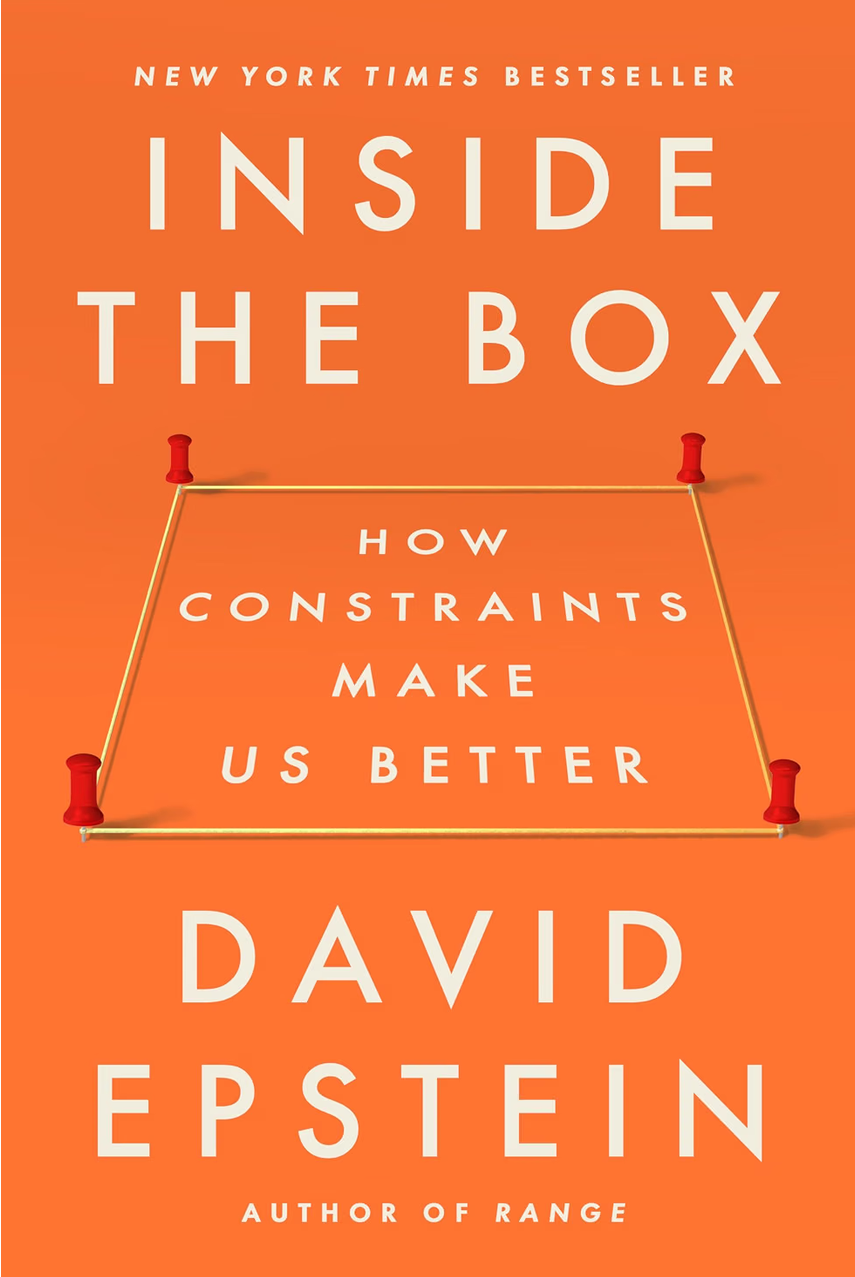
MAIN IDEAS PER GROK:
Inside the Box: How Constraints Make Us Better (published May 2026) by David Epstein (author of Range and The Sports Gene) argues that limits, boundaries, and constraints—rather than unbounded freedom or endless options—are often the key drivers of creativity, innovation, focus, collaboration, learning, and personal satisfaction.
In a culture that constantly urges people to “keep options open” and “think outside the box,” Epstein contends that excess choice and lack of guardrails frequently lead to anxiety, burnout, diluted effort, feature creep, and poor outcomes. Deliberately imposed or embraced constraints can sharpen attention, force deeper problem-solving, encourage subtraction over addition, and produce better results for individuals, teams, organizations, and even societies.
Core Thesis and Supporting Ideas
- Constraints as catalysts, not obstacles: Limitations compel people to engage more deeply, experiment with new approaches, and invent workarounds. Unrestricted freedom often defaults to familiar or additive solutions and can paralyze or scatter effort.
- Additive vs. subtractive thinking: People naturally tend to solve problems by adding features, options, or complexity. Stronger solutions frequently come from removing, simplifying, or narrowing. Deciding what not to do is often the hardest and most valuable part of innovation.
- Structured or “paired” constraints: Effective constraints both block familiar paths (“preclude”) and point toward productive alternatives (“promote”). Creators and organizations succeed by deliberately designing their own useful boxes rather than seeking total freedom.
- Focus on bottlenecks (Theory of Constraints): System output is limited by its single slowest or weakest point. Identifying and widening that bottleneck yields outsized gains; optimizing everything else often wastes effort.
- Satisficing over maximizing: Drawing on Herbert Simon, Epstein emphasizes choosing “good enough” within clear boundaries rather than endlessly searching for the optimal option. Maximizers tend to experience more regret and less satisfaction; commitment and limits support meaning and well-being.
- Constraints improve learning, science, and collaboration: Preregistration of hypotheses, clear decision thresholds, institutional rules, and defined roles reduce noise, bias, and ambiguity while enabling better collective outcomes.
Illustrative Examples
Epstein draws on stories across domains:
- General Magic vs. constrained successes: The early-1990s startup (staffed by Apple veterans with vast resources and talent) essentially envisioned the modern smartphone but collapsed under unbounded ambition, lack of customer focus, and endless feature growth. Alumni later succeeded elsewhere (e.g., Tony Fadell on the iPod and Nest) by imposing tight deadlines, scope limits, and clear priorities. Pixar used deliberate constraints (e.g., the “Three Pitches Rule,” Braintrust feedback without hierarchy domination) to achieve its ambitious animated-film goals incrementally.
- Creativity under restriction: Dr. Seuss’s Green Eggs and Ham (written under a severe word-limit bet); Keith Jarrett’s The Köln Concert (the bestselling solo piano album, performed on a deficient, out-of-tune piano that forced adaptation); Bach’s self-imposed compositional rules in The Art of Fugue; and similar patterns in literature and music.
- Science and discovery: Dmitri Mendeleev’s periodic table arose under textbook-deadline pressure to organize remaining elements, not from pure unbounded inspiration. Preregistration requirements exposed how excess analytical freedom had inflated earlier positive results in research.
- Other cases: Apollo 13 problem-solving with severe resource limits; institutional rules that improved cooperation (e.g., market chiefs in Zambia); designing for the most constrained users sometimes improving outcomes for everyone; and personal commitment devices (e.g., Isabel Allende starting every book on the same date).
The book positions itself as a practical complement to Range: broad exploration and a wide toolkit are valuable, but achievement and contentment require focusing that range through intentional boundaries. Epstein advocates treating constraints as tools to clarify priorities, reduce overwhelm, and unlock focused creativity rather than as pure restrictions to escape.
CONTENT:
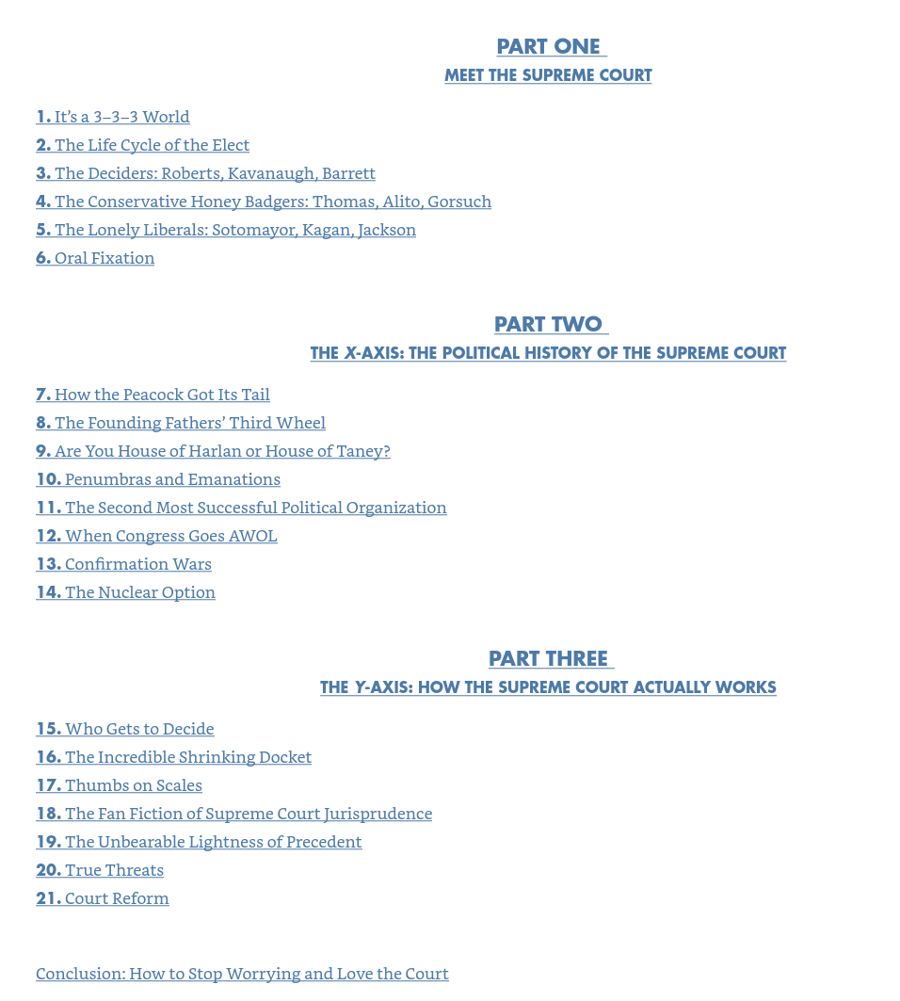
MY TAKE ON IT:
While interesting, the author’s approach to constraints as a positive good seems a bit odd to me. Adding artificial constraints when plenty of constraints already exist wouldn’t help resolve problems. It would only exclude potential solutions, sometimes eliminating an entire class of solutions. It would be like telling Einstein that all theories in physics should be constrained to 3 dimensions, thereby eliminating the possibility of solutions like the theory of relativity.
In my opinion, the constraints by themselves are neither good nor bad. The good approach does not include adding constraints where none exist or pretending that there are no constraints where there are quite a few. In my professional experience as a systems engineer, the best approach is to start with a simple solution in principle while ignoring potential constraints, then add details when constraints inevitably pop up. Making the simple solution in principle quite complicated in practice. This is when the principle of satisficing is very useful by limiting effort to a “good enough” point, consequently avoiding the impact of the law of diminishing returns.
A completely different approach is required when dealing with an existing overcomplicated system, often created by adding bits and pieces of functionality, eventually ending up as some kind of monster that stops working. In this case, bottleneck solutions usually help.
Overall, the best approach is to apply constraints when setting objectives rather than when finding solutions to achieve them, with the caveat that objectives should be clearly constrained but open-ended to avoid keeping oneself in the box.
GROK’S COMMENT ON MY OPINION:
Your take is thoughtful and grounded in practical systems engineering experience. It highlights real risks in how “constraints as a positive good” can be misapplied, and it aligns with Epstein in some places while diverging in others.
Where your critique is strongest
The Einstein-style example is a fair warning. Arbitrarily imposing constraints that close off entire classes of solutions (e.g., “only 3 dimensions”) is not creative discipline – it is intellectual self-sabotage. Epstein does not advocate that kind of rigid, domain-closing restriction. His stronger examples involve productive constraints that focus attention or force recombination within a still-viable space (limited vocabulary for Dr. Seuss, a broken piano for Jarrett, tight deadlines and scope for the iPod team, preregistration in science). The risk you flag is real: if someone reads the book as “add constraints everywhere,” they can easily exclude better solutions. Constraints are tools, not moral goods.
You are also right that constraints are neither inherently good nor bad. Context and quality matter. Epstein’s rhetorical framing sometimes leans toward celebrating them, which can make the argument feel one-sided. A more precise statement is that unexamined freedom and poorly chosen or absent boundaries often produce worse outcomes than well-chosen limits. The book is largely reacting against a cultural bias that treats more options and fewer rules as always better.
Alignment with your systems approach
Your preferred sequence—start with a simple solution in principle, then confront real constraints as they appear—is a classic and effective engineering method. It keeps the ideal solution visible while the practical version gets complicated. Epstein would likely agree that you should not invent artificial barriers at the outset if the problem space is still being explored. Where he pushes back is on the later stages: once constraints inevitably surface (resource limits, time, interfaces, physics, organizational realities), treating them as unwelcome intruders rather than design inputs often leads to the “monster” systems you describe—accumulated features without coherent boundaries.
Your endorsement of satisficing is fully consistent with the book. Epstein draws explicitly on Herbert Simon for the same reason you do: endless optimization hits diminishing returns and consumes cognitive and organizational energy better spent elsewhere. “Good enough within clear bounds” is presented as a feature, not a compromise.
The distinction you draw for overcomplicated legacy systems is also useful. Bottleneck analysis (Theory of Constraints) is one of the cleaner tools Epstein highlights, and it maps well onto the “monster that stops working” problem. In those cases, the system already has too many implicit and explicit constraints; the useful move is identifying the binding one and relieving it rather than adding still more rules.
The objectives vs. solutions distinction
This is one of the sharper parts of your take. Constraining objectives (clear success criteria, non-negotiable requirements, resource envelopes) while keeping the solution space relatively open is often the higher-leverage move. It prevents the twin failures of vague goals (“do something innovative”) and premature solution constraints that lock teams into suboptimal paths. Epstein’s better examples actually operate this way: Pixar and Fadell’s teams set tight bounding boxes around outcomes and process (deadlines, “three pitches,” packaging prototypes) while still iterating on the actual design. The constraint is on the frame, not on every creative degree of freedom inside it.
The open-ended-but-constrained objective is a useful synthesis. Pure open-endedness without any success criteria tends toward the General Magic failure mode. Pure closed objectives without room for discovery tend toward incrementalism that never surprises. The productive middle is objectives that are specific enough to focus effort and open enough that better solutions can still emerge.
Overall
Your experience-based view is more cautious and process-oriented than Epstein’s storytelling. He is largely correcting a cultural overvaluation of unconstrained freedom and abundance; you are guarding against the opposite error of fetishizing limits. Both correctives are needed. The practical synthesis is close to what you describe: respect the constraints that actually exist, impose only those that clarify priorities or force useful focus, start from simple principles when possible, use satisficing to stop over-engineering, attack bottlenecks in complex systems, and put the sharpest constraints on the objectives rather than on every possible solution path.
That approach keeps the “box” as a temporary focusing device rather than a permanent prison.
20241110 – Wicked Problems
MAIN IDEA:
The main idea of this book is to analyze two different types of problems: simple problems that could be fixed, such as problems with clocks, and complex problems, such as understanding cloud behavior or societal issues, that are not easily described or fixed and demonstrate the feasibility of applying tools developed by humanity for fixing simple problems such as engineering to manage the complex ones. Here is the author’s description: “This book is double stranded. One strand follows a forgotten engineer; the other examines forgotten uses for engineering. Together, they weave an engineering vision for civics and a civic vision for engineering. While nonfiction, the book’s aspiration may feel like fiction. Engineers, after all, aren’t commonly invoked as pillars of democracy. Yet as we’ll see, engineering does more than tech support. Engineering is a carrier of history, simultaneously an instrument and the infrastructure of politics. It’s among the oldest cultural processes of know-how, far more ancient than the sciences of know-what. And through engineering, civics can gain a more structured, systemic, and survivable sense of purpose. By applying engineering concepts in a civic context, engineering can usefully grow the policy lexicon and enhance its cultural relevance. The usefulness of civics and engineering is often realized only in their breakdowns, much like trust, most longed for in their absence.”
Probably the most important conclusion the author comes up with is that the engineering of “Civicware” should be conducted cautiously and incrementally because it is way too complex, vague, and wicked character to apply relatively rigid engineering solutions:” Two decades before presenting on clocks and clouds, Karl Popper wrote about “piecemeal” social engineering. He argued for open-ended reforms over utopian blueprints. A piecemeal approach is evolutionary and begins by realizing that facts are fallible and contexts change. Yet, such increments require caution. Piecemeal responses can cancel one another out when not coordinated by an overarching principle or guided by a standard set of concepts. And obviously, you cannot optimize a system by optimizing its parts separately. Because wicked systems cannot be planned from the top down, they require an evolutionary approach to selecting and replicating improvements to civic welfare. The concept set of efficiency, vagueness, vulnerability, safety, maintenance, and resilience can facilitate such conscious cultural evolution.”

MY TAKE ON IT:
Engineering is the application of science to real-life problems. As such, it applies only to situations where a set of actions applied to a defined environment always results in the same or statistically consistent outcome. Consequently, it is very difficult but still conceivable to apply it to complex problems such as global climate control despite its wide variety of variables. However, this is never the case with society because society consists of thinking and self-directing entities- human beings, which brings the complexity level to near infinity because of a multitude of feedback loops, which makes the consistent outcome of any experiment nearly impossible. Consequently, to build such an organization of society that would reliably provide opportunities for human flourishing, one should look not at engineering approaches, whether piecemeal or global, but rather at resource allocation to individual humans so they could do with these resources whatever they wish and limit external, violent intervention only to situations when individuals attempt to use their resources to harm others.
20241027 – Strategy
MAIN IDEA:
Here is the author’s definition of the theme and intentions of this book:
“So the realm of strategy is one of bargaining and persuasion as well as threats and pressure, psychological as well as physical effects, and words as well as deeds. This is why strategy is the central political art. It is about getting more out of a situation than the starting balance of power would suggest. It is the art of creating power.”
“This book describes the development of different approaches, from rigorous centralized planning processes at one extreme to the sum of numerous individual decisions at the other. It shows how in these distinct military, political, and business spheres, there has been a degree of convergence around the idea that the best strategic practice may now consist in forming compelling accounts of how to turn a developing situation into a desirable outcome. “
“As a history, this book aims to provide an account of the development of the most prominent themes in strategic theory—as they affect war, politics, and business—without losing sight of the critics and dissidents.”

MY TAKE ON IT:
It is a great and detailed review of the history of strategy in multiple domains, from organized violence in wars and revolutions to political actions directed either at changing society’s organization or maintaining an existing one. I disagree with the definition of strategy as “the art of creating power” because it does not sufficiently differentiate between strategy and tactics. In my opinion, the art of strategy consists of two parts: the first is to identify and articulate realistically achievable objectives with potentially available resources, and the second is to identify methods and processes required to generate and allocate resources over space and time to achieve these objectives reliably. The actual processes of resource generation, allocation, and application are the domain of tactics.
For example, consider a strategy of fighting off 30,000 Persian troops if one has only 300 Spartans. Historically, the chosen strategy was to use a narrow pass of Thermopylae, where only a few fighters could clash at a time. At first glance, such a strategy makes sense because it greatly diminishes the value of quantitative superiority. However, one step further in thinking would lead to understanding that it is not a valid approach because it does not consider the high probability that after a few hours of battle, the skilled but exhausted Spartans will be killed by less skilled but fresh Persian fighters. It also misses that there was a way around this narrow pass, which the Persians actually used. However, if the strategic decision were not to keep a narrow pass but to divide forces and engage in multiple encounters, each of which would guarantee local superiority of forces, Spartans could win after a hundred or so such engagements over some time sufficient for physical recovery after each engagement, providing tactical skills are sufficient to arrange such engagements.
Similar logic would apply to politics, business, or any other area of strategy, whether the fight is within people’s minds or in the marketplace.

