
20250223 – The Middle Kingdoms
MAIN IDEA:
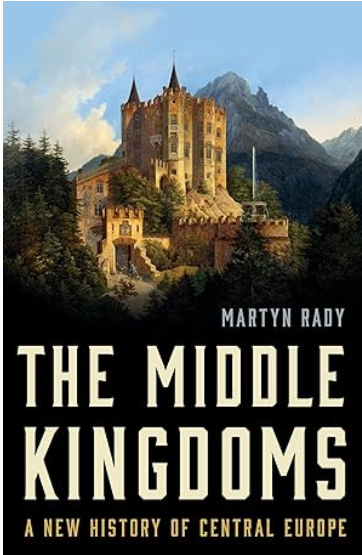
“The Middle Kingdoms: A New History of Central Europe” by Martin Rady explores the historical narrative of Central Europe, from its ancient beginnings to the modern era. The main idea of the book is to provide a comprehensive and nuanced understanding of this region, often overlooked or misunderstood in broader European histories. Here are key points of the book’s focus:
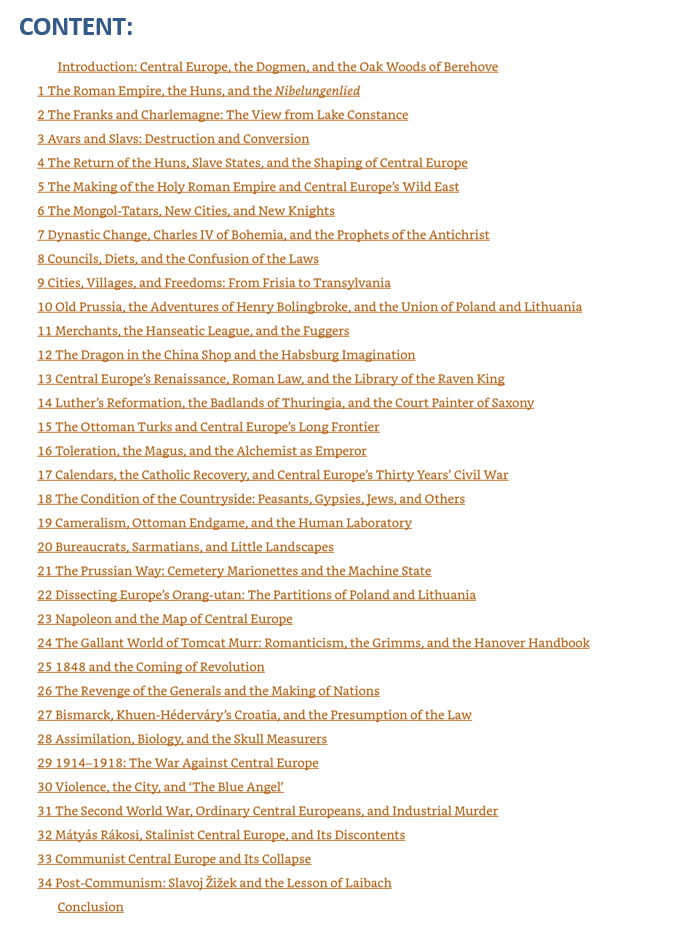
- Geographical and Cultural Definition: Rady challenges traditional views by defining Central Europe not just geographically but through its unique cultural, linguistic, and historical interactions. He includes countries like Poland, Hungary, the Czech Republic, Slovakia, and parts of Austria and Germany in this definition.
- Historical Complexity: The book delves into the complex history of the region, marked by numerous invasions, migrations, empires, and state formations. It covers the rise and fall of various kingdoms, the influence of the Habsburgs, the impact of the Ottoman Empire, and the tumultuous 20th century with its wars and shifts in power.
- Multiethnicity and National Identity: A significant theme is the multiethnic nature of Central Europe, where multiple nationalities, languages, and religions have coexisted, often leading to both rich cultural development and conflict. Rady explores how these identities have evolved, sometimes leading to nationalism and the reshaping of borders.
- Political and Social Transformations: The narrative includes how Central Europe has been a battleground for ideologies, from feudalism to communism, and then to democracy. It examines pivotal moments like the Reformation, the Thirty Years’ War, the Austro-Hungarian Compromise of 1867, the interwar period, World War II, and the fall of communism.
- Cultural Contribution: Beyond the political and military history, Rady highlights the cultural contributions of Central Europe to the world, including literature, music, art, and science, providing a cultural context to the political history.
- Modern Context: The book also considers how historical legacies continue to shape current political, social, and economic realities in Central Europe, providing a backdrop for understanding contemporary issues in the region.
In summary, Martin Rady’s “The Middle Kingdoms” aims to give readers a deeper, more layered understanding of Central Europe, emphasizing its pivotal role in European history while correcting misconceptions and celebrating its unique cultural tapestry.
MY TAKE ON IT:
“Central Europe—the Middle Kingdoms—is a relentless churn of chaos, unlike the West’s democracies like Britain and the Netherlands, which stumble along in their own messy way, or Russia’s unyielding autocratic grip. It’s a fractured mess of small nations—squabbling, splintering, or grudgingly banding together to scrap for dominance. I pin it on a toxic overdose of diversity: cultures, languages, and stubborn attitudes that can’t align on anything lasting. The EU’s heavy-handed dream of a unified superstate only fans the flames, proving top-down control is a delusion here. And the elite’s wild scheme—swamping the region with Muslim immigrants to smother the old Christian-national soul and shore up a loyal voting base—is imploding. Islam doesn’t settle for a seat at the table; it wants the whole damn stage. Even in the West, where democracy’s supposed to be stable, the same Islamic influx exposes the cracks—hardly orderly when borders dissolve and identity erodes. No central authority can brute-force this patchwork into unity without bloodshed; history screams that lesson. Rady’s Middle Kingdoms has me convinced: the only fix is a sharp break from suffocating oversight. Go for a rugged federalism—beyond America’s tame version—where each nation grabs real power over its economy, borders, and who crosses them. Let these jagged pieces trade and coexist, free from Brussels’ overreach. Otherwise, Central Europe stays what it is: a volatile, shattered core, forever lurching toward the next rupture.”
20250216 – The Sweet Spot The Pleasures of Suffering

MAIN IDEA:
GROK:
This book explores the counterintuitive idea that suffering, or the experience of pain and difficulty, can actually enhance human life rather than detract from it. The main idea of the book is that:
- Suffering can be beneficial: Bloom argues that certain forms of suffering, like physical effort in exercise, emotional pain from meaningful relationships, or the challenge of learning something new, can lead to greater satisfaction and pleasure. This contrasts with the common pursuit of constant happiness or comfort.
- The Value of Struggle: There’s an exploration of how overcoming challenges can lead to a sense of achievement, growth, and even joy. This includes discussing how we derive meaning from our struggles, the role of adversity in building character, and how pain can amplify subsequent pleasures.
- Cultural and Personal Narratives: Bloom delves into cultural stories, art, and personal experiences where suffering is not just endured but embraced as part of a fulfilling life. He looks at how we sometimes seek out experiences that are not immediately pleasurable but are rewarding in the long term or in retrospect.
- Psychological Insights: The book uses psychological research to explain why humans might prefer experiences that involve some level of suffering or hardship. It touches on concepts like the “peak-end rule,” where the memory of an event is influenced more by its peaks and endings than by its overall pleasantness.
- Balancing Pleasure and Pain: Bloom does not advocate for needless suffering but rather for a balance where we recognize and sometimes pursue the sweet spot where suffering contributes to a richer, more nuanced experience of life.
Overall, “The Sweet Spot” challenges the simplistic pursuit of happiness by suggesting that a meaningful life often includes, and perhaps requires, elements of suffering and struggle.

MY TAKE ON IT:
For my simplistic mind, the very idea of suffering looks very vague, imprecise, and even somewhat meaningless. Human beings exist within material and informational environments, the impact of which constantly activates some or other circuits of human brains, evolutionally selected to initiate action directed to avoid (suffering) or seek to extend(pleasure) in a given environmental condition. However, unlike bacteria with simple circuits, our complex brain produces a super-complex conscious mind that allows us to remember previous actions and their outcomes, consequently predicting future outcomes. Moreover, this complex mind provides for setting up objectives and planning a complex sequence of actions necessary to achieve them. Unfortunately, the results of the intermediate steps often include conditions we would prefer to avoid (suffering). Therefore, a good life could be achieved not from an attempt to balance pleasure and pain but from a correct evaluation of how much pleasure one will obtain from achieving an objective and how high price in the form of inevitable suffering one is ready to pay. What makes it highly complicated is the dynamic relationship between effort and results when the price paid increases the psychological value of achievement. And, vice versa, if the obtained objective fails to deliver the expected pleasure, humans tend to decrease their estimate of the levels of suffering endured in the process. These dynamic relationships are not absolute and have limitations on both modifications (pain and pleasure), but if the results are close to expectations, the overall life is good.
20250209 – Oligarchy

MAIN IDEA:
The main idea of Jeffrey A. Winters’ book “Oligarchy” is that throughout history, oligarchs have been defined, empowered, and threatened by their wealth. Winters explores the core concept that the primary motive of all oligarchs is wealth defense.
Winters argues that oligarchs respond to threats in various ways, which leads to different manifestations of oligarchy. He categorizes these into four types:
- Warring Oligarchy: Oligarchs are personally armed and directly involved in the coercion that protects their wealth, often acting in a fragmented and individualistic manner.
- Ruling Oligarchy: Oligarchs are more institutionalized, accept some form of disarmament, and engage in the political process to maintain their wealth.
- Sultanistic Oligarchy: A single oligarch or a very small group dominates, often through control of the state apparatus, blending personal wealth with state power.
- Civil Oligarchy: Wealthy elites operate within a legal and democratic framework but still use their economic power to influence politics and protect their wealth.
Winters posits that oligarchy isn’t necessarily displaced by democracy but rather can coexist or even be fused with it. He uses various historical and contemporary examples from the United States, ancient Athens and Rome, Indonesia, the Philippines, Singapore, and medieval Venice and Siena to illustrate these concepts. A significant argument he makes is that the rule of law in many societies is essentially about taming these oligarchs, ensuring that their wealth does not lead to unchecked power.
The book suggests that understanding oligarchy requires looking beyond traditional political theories to see how economic power translates into political influence, often under the guise of democratic processes. Winters’ analysis challenges the notion that democracy inherently counters oligarchic power, instead proposing that democracy can serve as a mechanism for oligarchs to maintain and protect their wealth.

MY TAKE ON IT:
While providing an excellent analysis of the Oligarchy’s struggle to defend and retain its wealth in various circumstances of current and previously existing societies, the author, in my opinion, neglects an essential component: the driving force of the actions of different members of the Oligarchy. He just posits that this driving force is limited to wealth defense. I think that it depends on the manner in which this wealth was acquired. There is a massive difference between a contemporary Russian-type oligarch who acquired wealth by privatizing publicly owned oil production facilities and an American-type oligarch who created a new industry that had never existed before and produced previously unknown but currently hugely valuable goods and services. The defense of wealth is paramount for the former, but for the latter, it is not more than a secondary consideration. For an American-type oligarch, the ability to achieve some far-reaching dream, something like the planet Mars settlement, created with resources under his control, is much more important than the defense of this wealth. Interestingly enough, a significant share of oligarchs in America are Russian-type oligarchs whose wealth is either inherited or created by the transfer of public resources to themselves via some form of governmental corruption.
We now live through a very interesting moment in history. American-type oligarchs now recognize that achieving their dreams is not possible without fighting and winning a war inside American society against Russian-type oligarchs, of which there are plenty in this society. The outcome of this war will decide whether all Americans will live in a wealthy and prosperous society or fall into the misery of a quasi-socialist swamp.
20250202 – Co-Intelligence
MAIN IDEA:
GROK:
The main idea of Ethan Mollick’s book “Co-Intelligence: Living and Working with AI” is centered around the concept of humans and artificial intelligence (AI) collaborating to enhance productivity, innovation, and creativity. Mollick emphasizes that AI should not be seen as a replacement for human intelligence but rather as a complement, creating a synergy he terms “co-intelligence.”
Here are some key points:
- Collaboration Over Replacement: Mollick advocates for engaging with AI as a co-worker, co-teacher, and coach, suggesting that AI can augment human capabilities in various professional and educational settings. This includes using AI for tasks like idea generation, writing, and problem-solving, where AI can handle repetitive or data-intensive tasks, freeing humans to focus on more strategic or creative endeavors.
- Practical Use and Impact: The book provides practical advice on how to integrate AI into daily work and learning processes. Mollick discusses real-world examples of AI in action across different sectors, illustrating how AI can lead to significant transformations in business, education, and personal productivity.
- Ethical and Strategic Considerations: Mollick addresses the ethical dimensions of AI use, including concerns about bias, privacy, and the potential for over-reliance on AI. He stresses the importance of maintaining human oversight to ensure AI systems serve human interests and values, and he explores how AI affects job roles, potentially leveling the playing field for junior workers while challenging traditional hierarchies.
- Future Scenarios: The book also speculates on various future scenarios where AI might evolve, ranging from minimal to exponential growth in capabilities, and what this might mean for human society, work, and identity.
- Educational Implications: In education, Mollick suggests AI could serve as a tool for personalized learning, providing feedback, and simulating real-world scenarios for students, thus democratizing education by making high-quality learning experiences more accessible.

MY TAKE ON IT:
It is a nice review of AI development’s current status and understanding. One thing should be clear: AI will be able to do better everything that humans can do, including all kinds of creative stuff like art, science, and so on. So, the idea of co-intelligence is not really viable. A good initial test was the game of chess. Back in 1996, the specially designed computer won a match against the human champion of the world. For a while after that, a combination of humans and computers did better than either humans or computers alone. However, by now, AI consistently wins all games, so in terms of playing to win, humans have no place. Nevertheless, the game did not die, and human tournaments continued. We still have human chess champions, and we will probably have one for a long time in the future. The only difference is that the game is played for the joy it produces for human participants rather than anything else.
A similar process will occur in all other human activities except one: initiating productive activities by setting objectives to achieve and defining priorities for resource allocation. The reason is simple: only humans know what they want, and since it is changing constantly, no AI could do it for them. Certainly, it is conceivable that humans replicate the process of human development with AI and create superintelligent conscientious creatures. Still, I see no reason for doing it beyond strictly limited research into the nature of conscience.
I think that we already have the template for dealing with it in the form of activities of a few individuals who control vast amounts of resources and apply these resources to satisfy their creativity, curiosity, and visions, whether it is the colonization of Mars or automated transportation, or something else. The difference is that today, there are a few individuals who direct the activities of thousands of people, but tomorrow, all people will be controlling equally productive AI-directed robotic activities.
The only problem to be resolved is resource allocation, and I am convinced that it could be done effectively and efficiently only via a mechanism of private property because only this mechanism prevents the creation of hierarchical structures of humans when individuals at the top use individuals at the bottom as means to their ends. One solution would be extending private property to include a common inheritance of humanity, such as language, culture, know-how, and such, equally to everybody. In this case, individuals that, for whatever reason: inheritance, superior productivity, luck, or whatever else, regenerate resources more efficiently than others will have to provide those others with market-defined returns. This would turn everybody into a capitalist, sending hate of have-nots to have-lots to the dustbin of history.
 Equal Rights Libertarian