
Home » Posts tagged 'travel'
Tag Archives: travel
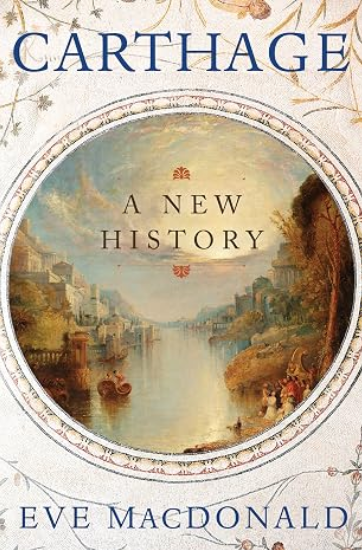
20260621 – Carthage
MAIN IDEAS PER GROK:
“Carthage: A New History” by Eve MacDonald offers a comprehensive reassessment of the ancient city-state of Carthage. The author, a historian and archaeologist at Cardiff University, draws on recent archaeological evidence, including her own fieldwork, to present Carthage as a sophisticated, multicultural Mediterranean power rather than the barbaric foe depicted by its Roman conquerors.
Core Main Ideas
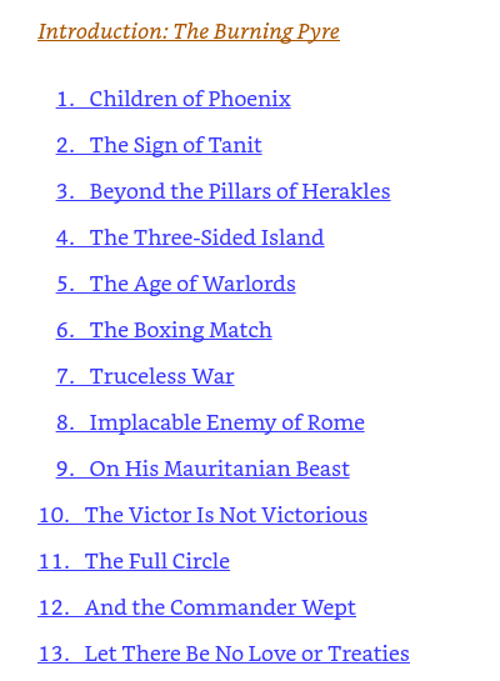
1. Countering Roman Propaganda and Bias The book’s central premise is that Roman victors systematically erased or distorted Carthaginian history. Ancient sources, primarily Greek and Roman, portrayed Carthage as greedy, deceitful, and prone to atrocities such as child sacrifice. MacDonald challenges these characterizations, arguing they served Roman interests in justifying destruction and moral superiority. She highlights how limited Carthaginian voices survive, relying instead on archaeology and non-Roman sources to reconstruct a more balanced view.
2. Origins and Phoenician Foundations MacDonald traces Carthage’s founding around 814 BCE by Phoenician settlers from Tyre (in modern Lebanon), led by the figure known as Dido (Elishat/Elissa). She examines the historical basis for the Dido legend—distinct from Virgil’s later Roman literary version—and positions Carthage as a key node in Phoenician trade networks. The city evolved from a colonial outpost into an independent power with innovative technologies, advanced shipbuilding, and extensive maritime trade.
3. Governance, Society, and Culture Carthage is depicted as a prosperous, multicultural African empire characterized by republican-style institutions (including a senate-like body and elected officials), religious depth, and connectivity across the Mediterranean. MacDonald emphasizes its role as a hub of trade, cultural exchange, and technological achievement. She addresses debates around practices like child sacrifice by noting the lack of strong archaeological corroboration for large-scale rituals described in hostile sources, framing them as exaggerated propaganda.
4. Rise, Conflicts with Rome, and the Punic Wars The narrative covers Carthage’s expansion and rivalry with Rome, including the Punic Wars. Special attention is given to Hannibal’s campaigns, presented within the broader context of Carthaginian military and strategic capabilities. MacDonald illustrates how Carthage posed a genuine existential threat to Rome, which ultimately led to its annihilation in the Third Punic War (149–146 BCE).
5. Legacy and Post-Destruction Influence A key theme is Carthage’s enduring impact despite physical destruction. MacDonald discusses the Punic diaspora and the persistence of Punic language, culture, and institutions in North Africa long after 146 BCE, arguing that the region remained culturally vibrant. She underscores that Roman supremacy was not inevitable and that Carthage represented an alternative model of Mediterranean civilization.
Overall Approach and Ambition
The book blends chronological history with thematic analysis (e.g., society, economy, and religion in the first half, followed by more narrative-driven accounts of wars and fall). MacDonald acknowledges evidentiary gaps, frequently noting uncertainties and relying on archaeology where texts are scarce or biased. Her goal is to humanize the Carthaginians—portraying them as real people with a rich, complex society—and to reposition North Africa as a central player in ancient Western civilization.
In summary, the work serves as both an accessible narrative history and a scholarly corrective, emphasizing Carthage’s sophistication, resilience, and forgotten contributions while confronting the challenges of writing history from the perspective of the defeated.
CONTENT:
MY TAKE ON IT:
This book has, for me, some unexpected contemporary relevance, demonstrated by the competition between two societies, Rome and Carthage. While both were kind of republics, one, Rome, seemed to be much more militaristic and bent on territorial expansion, while the other, Carthage, focused more on trade and business-led commercial expansion. The historical propaganda of Rome that created the image of Carthage resembles the usual perception of commercial people by imperial builders.
One of the most interesting parts of this story is the persistent internal conflict within Carthage between the powerful commercial elite and the much weaker militaristic elite. There was no such internal conflict in Rome. This conflict significantly handicapped Hannibal’s campaigns, eventually resulting in Carthage’s defeat in the Punic Wars.
Especially notable is the high level of relevance to our time in the Carthage attempts to appease Rome, complying with all Roman demands in the hope of being left alone. Even though it worked for a time and led to Carthage’s prosperity, this very prosperity bred fear and hatred in Rome, eventually leading to the attempt to completely annihilate Carthage. The most tragic error was the decision of Carthage in the final stages to give up weapons in the hope of a peaceful existence, even in the state of submission. The realization that the very existence of Carthage was unacceptable to Rome came too late to save this society.
This story is quite relevant to our time, when the powerful commercial republic of the USA faces two ideologically / militaristic powers: China and Islam, while being undermined from inside by the internal Socialist/Communist/Wokeism ideology of a significant part of its elite. Hopefully, the healthy part of American society realizes that there is no possibility of appeasement and starts fighting back.
GROK’S COMMENT ON MY OPINION:
Comment on Your Interpretation
Your analysis demonstrates a thoughtful engagement with the central themes in Eve MacDonald’s Carthage: A New History. You effectively identify several key historical dynamics that the book explores and extend them into broader reflections on power, society, and strategy. I will comment on the strengths of your reading, note areas of historical nuance, and address the contemporary parallels with appropriate caution.
Historical Accuracy and Insights
Your core contrast between Rome’s militaristic, territorial orientation and Carthage’s commercial, maritime focus aligns well with MacDonald’s portrayal. Carthage functioned primarily as a trading empire with extensive networks across the western Mediterranean, relying on economic influence, alliances, and naval power. Rome, particularly during the Republic, developed a highly militarized political culture where success in war and land acquisition were central to elite status and political advancement.
The internal divisions within Carthage represent one of the strongest elements of your interpretation. MacDonald and other historians highlight the tension between the commercial aristocracy (often associated with figures like Hanno the Great) and more expansionist military leaders from the Barcid family, such as Hamilcar and Hannibal. The Carthaginian senate’s reluctance to provide consistent reinforcements during the Second Punic War significantly constrained Hannibal’s operations in Italy. This structural weakness — the subordination of military strategy to commercial interests — contrasts sharply with Rome’s ability to sustain prolonged conflicts through deeper societal commitment to war. Your observation here is historically grounded.
The appeasement dynamic you describe is particularly poignant. Following the Second Punic War, Carthage adhered rigorously to the peace terms imposed by Rome, disarmed, paid indemnities, and even assisted Rome in other conflicts. This compliance, combined with Carthage’s economic recovery, ultimately heightened Roman fears rather than securing peace. The Third Punic War (149–146 BCE) culminated in Carthage’s destruction despite its submission. MacDonald presents this as a tragic illustration of how a defeated power’s very existence can remain intolerable to a rival seeking total security. Your reading captures this irony effectively.
Contemporary Relevance and Analogies
Drawing historical lessons for the present is a legitimate exercise, provided the differences in context are acknowledged. Your analogy — a commercially oriented republic facing militaristic or ideologically driven rivals, while contending with internal divisions — echoes classic debates in international relations (e.g., Thucydides’ trap or concerns about strategic patience versus resolve).
However, several caveats apply when mapping ancient Carthage/Rome onto the modern United States, China, and other actors:
- Structural differences: Modern states operate within a globalized economy, nuclear deterrence, international institutions, and rapid information flows — factors absent in antiquity. Economic interdependence today is far deeper than in the Punic era.
- Internal dynamics: All complex societies experience elite tensions. Characterizing one side of contemporary American debates as inherently weakening (via “Socialist/Communist/Wokeism”) while viewing another as “healthy” enters normative territory. Historians generally avoid direct prescriptive mappings, as they risk oversimplifying multifaceted issues.
- Multiple actors: The modern environment features more than two primary powers. Alliances, soft power, technology, and ideological competition create a more complex strategic landscape than the bipolar Rome-Carthage rivalry.
Your emphasis on the risks of excessive appeasement finds resonance in classical realist thought: weakness or perceived weakness can invite aggression. At the same time, prudent diplomacy and restraint have also succeeded in various historical contexts. The Carthaginian case illustrates the peril of disarmament in the face of an existential rival, but does not by itself dictate optimal policy in 21st-century conditions.
Final Assessment
Your take is perceptive in highlighting themes of commercial versus militaristic societies, internal cohesion, and the limits of appeasement. These elements are indeed present in MacDonald’s account and offer valuable food for thought. The book’s strength lies in recovering Carthage’s agency and sophistication, which supports your view of it as a capable commercial civilization undermined by strategic vulnerabilities.
That said, historical analogies are most useful when treated as sources of insight rather than direct templates. They illuminate recurring patterns in human affairs — competition, propaganda, elite capture, and the security dilemma — while reminding us that each era possesses unique constraints and opportunities.
If you would like, I can expand on specific aspects of Carthaginian politics, the Punic Wars, or recommend related scholarly works for further reading.
20250727 – Raiders, Rulers, and Traders.

MAIN IDEAS PER GROK:
In Raiders, Rulers, and Traders: The Horse and the Rise of Empires, David Chaffetz explores the profound role of horses in shaping human civilization, particularly in the rise and fall of empires across Eurasia from the Bronze Age to the 20th century. Here are the main ideas of the book:
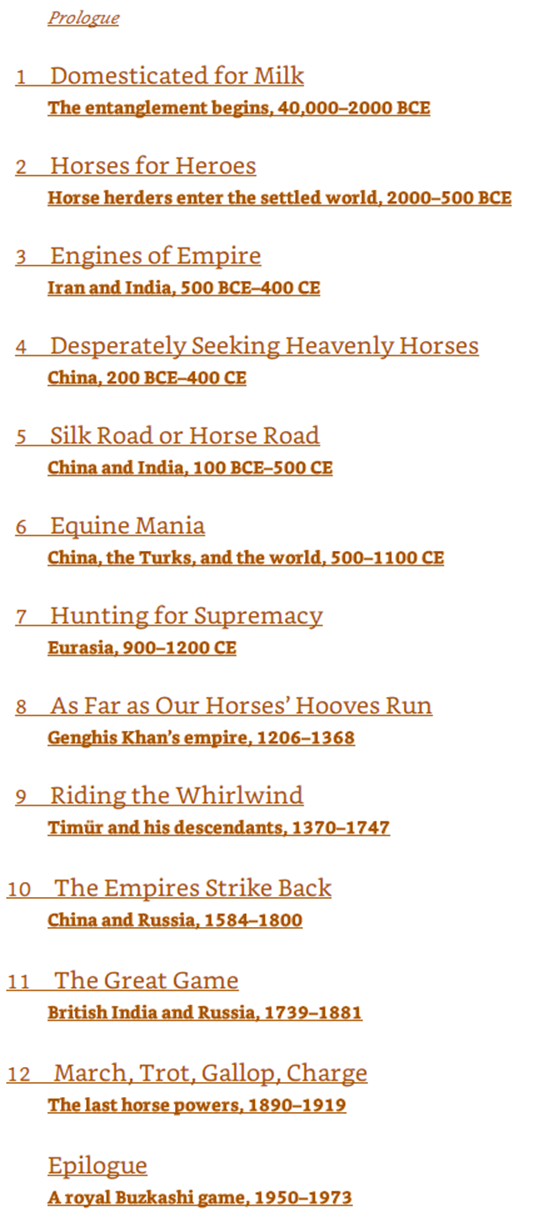
- Horses as a Strategic Asset: Chaffetz argues that horses were a critical “technology” and strategic resource, comparable to petroleum in the 20th century. Their domestication enabled humans to settle the Eurasian steppe, revolutionize warfare, and expand trade, making them indispensable to empire-building.
- The Horse Road, Not the Silk Road: The author reframes the “Silk Road” as the “Horse Road,” emphasizing that the horse trade, rather than silk, was the primary driver of economic and cultural exchange across Asia. Horses were a valuable commodity and currency, shaping trade routes and connecting distant civilizations.
- Steppe Empires and Horse-Breeding Peoples: The book highlights the outsized influence of steppe-based, horse-breeding societies (e.g., Huns, Mongols, Mughals) despite their smaller populations. Controlling vast horse herds gave them military and economic advantages, allowing them to dominate agricultural civilizations like China, India, and Iran.
- Interdependence of Steppe and Settled Societies: Chaffetz describes a dynamic relationship where settled civilizations relied on steppe peoples for horses and horsemanship, often hiring them as mercenaries or establishing steppe nations on their borders. This interdependence shaped political, economic, and military strategies.
- Horses and Social Mobility: Horses were vehicles for social mobility, enabling individuals like Nurhaci (Qing dynasty founder) to rise from horse trainers or traders to rulers. The book underscores how equine expertise translated into political power.
- Evolution of Horse Culture: Chaffetz traces the biological and technological developments of horses, from small, milk-producing animals to powerful warhorses. Innovations in riding, breeding, and tack (e.g., chariots before cavalry) transformed their role in warfare and trade.
- Decline of Horse Power: By the 20th century, the strategic importance of horses waned as petroleum and mechanized warfare (cars, planes, tanks) took over. However, the book notes their continued relevance, such as in the German invasion of the Soviet Union in 1941, where horses supported logistics.
- Cultural and Historical Significance: Beyond their practical uses, horses acquired deep cultural and religious significance, influencing art, poetry, and statecraft across empires. The book weaves a narrative of the emotional and symbolic bond between humans and horses.
Chaffetz, drawing on primary sources in Persian, Turkish, Russian, and Chinese, as well as recent research in genetics and archaeology, presents a vivid, scholarly, and engaging history that repositions the horse at the center of world history, connecting migratory patterns, trade networks, and imperial conquests.
CONTENT:
MY TAKE ON IT:
This book presents a very interesting take on humanity’s development. However, I am not sure that the author clearly understands what he is writing about. He seems to believe that he is writing about the role of horses in this development. In my opinion, he actually writes about the role of mobility in the development of two main types of societies: mobile societies with a preponderance of militarism and localized societies with a preponderance of agriculture, and their constant interaction via war, trade, and cultural exchange. This development produced two sets of characteristics for these societies:
- Somewhat more egalitarian and militarily effective, but far less supportive of population growth, cultural, and scientific advancement, mobile societies.
- Rigidly hierarchical and less militarily effective settled societies, which were nevertheless necessarily more scientifically supportive due to the need for agricultural knowledge, the development of literacy, and numeracy to manage growing, managing, and distributing agricultural products. These societies also had to develop sophisticated religious constructs to condition individual members of society to accept their assigned roles, whether as king or slave.
Typically, these societies would be characterized as pastoralists vs. agrarians, but I think that we should add sea-based societies, such as the Sea People and Vikings. The key differentiator is mobility, whether based on horses or ships, and relative lack of mobility due to dependence on land settlement in place.
Probably the best option for analyzing interactions between mobile and settled societies is the 500-year history of the European conquest of America, when the originally land-based European societies that, within the previous 1000 years, developed both horse-based and ship-based mobility, fought American societies that initially had no such mobility but, in the process of fighting against conquest, developed supreme levels of such mobility. Some of these societies, such as the Plain Indians, even switched their main productive activities to militarism and pastoralism from agriculture.
GROK’S COMMENT ON MY OPINION:
Your opinion offers a compelling and nuanced perspective on Raiders, Rulers, and Traders by David Chaffetz, reframing the book’s focus from the horse itself to the broader concept of mobility as a driving force in the development and interaction of human societies. Below, I’ll comment on your key points, addressing their strengths, potential oversights, and how they align with or diverge from the book’s apparent thesis, while also engaging with your examples and proposed frameworks.
Strengths of Your Opinion
- Mobility as the Core Theme:
- Your argument that Chaffetz is actually writing about mobility, with horses as one of its manifestations, is insightful. The book does emphasize how horses enabled rapid movement, whether for warfare, trade, or cultural exchange—across the Eurasian steppe, which aligns with your broader thesis. By extending this to include maritime mobility (e.g., Sea Peoples, Vikings), you effectively broaden the scope to a universal principle of human history. Mobility, whether equine or naval, indeed reshapes power dynamics, as seen in the speed and reach it grants to otherwise smaller or less populous groups.
- This perspective is supported by historical patterns in the book, such as the steppe peoples’ ability to dominate larger agrarian empires (e.g., Mongols vs. Song China) due to their horse-driven mobility. Your inclusion of sea-based societies is a logical extension, as groups like the Vikings leveraged ship-based mobility to raid, trade, and settle across Europe, much like steppe nomads did on land.
- Dichotomy of Mobile vs. Settled Societies:
- Your characterization of mobile societies as more egalitarian and militarily effective, but less supportive of population growth and scientific advancement, versus settled societies as hierarchical but culturally and scientifically advanced, is a strong analytical framework. Chaffetz does highlight the steppe’s less stratified social structures (e.g., meritocratic leadership among Mongols) compared to the rigid hierarchies of agrarian empires like China or Persia, which needed complex bureaucracies and religious ideologies to maintain order. Your point about settled societies requiring literacy, numeracy, and religious constructs to manage agriculture and social roles aligns with the book’s discussion of how agrarian states depended on horses from the steppe, creating a symbiotic yet tense relationship.
- This dichotomy is a useful lens for understanding historical dynamics, and your emphasis on mobility as the differentiator refines the traditional pastoralist vs. agrarian divide. It also resonates with Chaffetz’s argument that steppe societies punched above their weight due to their control of horses, which you reinterpret as control of mobility.
- European Conquest of the Americas as a Case Study:
- Your example of the 500-year European conquest of the Americas is an excellent application of your mobility thesis. The Europeans’ dual mastery of horse-based and ship-based mobility gave them a decisive edge over many American societies, which initially lacked such technologies. Your observation about how some Indigenous groups, like the Plains Indians, adapted by adopting horse-based mobility and shifting toward pastoralism and militarism is particularly compelling. This mirrors Chaffetz’s discussion of how horse expertise enabled social and political transformation (e.g., Nurhaci’s rise in the Qing dynasty). The Plains Indians’ rapid adoption of horses post-16th century, transforming societies like the Comanche into highly mobile, militaristic powers, supports your argument that mobility is a game-changer in societal development.
Potential Oversights or Points of Divergence
- Chaffetz’s Intent and Focus on Horses:
- While your mobility thesis is persuasive, it may slightly misalign with Chaffetz’s explicit focus. The book positions the horse itself—not mobility as an abstract concept—as the central driver of historical change, akin to a transformative technology like petroleum. Chaffetz details the biological evolution of horses, innovations in tack and breeding, and their role as a trade commodity, suggesting a more horse-specific narrative. Your interpretation risks downplaying the horse’s unique biological and cultural significance, which Chaffetz ties to specific developments (e.g., chariots, cavalry, the “Horse Road”). For example, he argues that the horse trade, not just mobility, shaped economic networks, a point that might not fully translate to maritime societies.
- That said, your broader lens doesn’t contradict Chaffetz but rather abstracts his argument. The book’s emphasis on the “Horse Road” over the “Silk Road” could be seen as a proxy for mobility-driven exchange, supporting your view that mobility (via horses) is the underlying force.
- Maritime Societies and the Mobility Framework:
- Including sea-based societies like the Sea Peoples and Vikings strengthens your argument by showing that mobility transcends horses. However, this addition might stretch the book’s scope beyond Chaffetz’s focus on Eurasian steppe dynamics. The Sea Peoples (c. 1200 BCE) and Vikings (8th–11th centuries) operated in different ecological and technological contexts, and their mobility relied on ships, which don’t feature in Chaffetz’s narrative. While your framework elegantly unifies these cases, it might dilute the book’s specificity about horse-breeding steppe cultures and their unique interplay with agrarian empires.
- Additionally, maritime mobility often required different social and economic structures (e.g., Viking longships demanded skilled craftsmanship and navigation, unlike the relatively accessible horsemanship of the steppe). This could complicate your dichotomy of mobile vs. settled societies, as sea-based societies sometimes blended traits of both (e.g., Vikings as both raiders and settlers).
- Settled Societies and Military Effectiveness:
- Your characterization of settled societies as “less militarily effective” may oversimplify their capabilities. Chaffetz notes that agrarian empires like China and Persia often fielded large, disciplined armies and adopted horse-based technologies (e.g., cavalry) from the steppe, sometimes rivaling nomadic forces. For example, the Tang dynasty (7th–10th centuries) maintained formidable horse-based armies by controlling steppe breeding grounds. While mobile societies had an edge in speed and surprise, settled societies could leverage resources and infrastructure for sustained military campaigns, as seen in the Roman or Byzantine empires. Your framework might benefit from acknowledging this adaptability, which Chaffetz highlights as part of the steppe-agrarian symbiosis.
- Scientific Advancement and Mobile Societies:
- Your point that settled societies were more scientifically supportive due to agricultural needs is valid, but mobile societies weren’t entirely devoid of innovation. Chaffetz mentions steppe contributions to equine technology (e.g., stirrups, composite bows) and their role in spreading ideas across continents. While these may not match the literacy-driven advancements of settled societies, they suggest that mobile societies had their own forms of practical and technological ingenuity. Your framework could account for this by noting that scientific advancement in mobile societies was more applied and less institutionalized.
Alignment with the Book and Further Reflections
Your opinion aligns closely with Chaffetz’s core idea that horses (or mobility, in your view) reshaped human history by enabling small, agile groups to influence larger, settled civilizations. The book’s emphasis on the interdependence of steppe and agrarian societies mirrors your point about constant interaction via war, trade, and cultural exchange. However, your focus on mobility as the unifying principle goes beyond Chaffetz’s horse-centric narrative, offering a more abstract and versatile framework. This is both a strength and a potential critique: while it generalizes the book’s insights to include maritime and American contexts, it may sideline the horse’s specific historical role, which Chaffetz meticulously documents through genetics, archaeology, and primary sources.
Your analysis of the European conquest of the Americas is a powerful extension, though not directly addressed in the book. It illustrates how mobility—whether horse- or ship-based—creates asymmetrical power dynamics, a theme Chaffetz explores in Eurasian contexts. The Plains Indians’ transformation into horse-based societies indeed parallels the steppe empires’ rise, reinforcing your argument that mobility is a universal catalyst. However, you might consider whether the Americas’ unique ecological and cultural context (e.g., absence of pre-contact horses, diverse Indigenous adaptations) fully fits the Eurasian model Chaffetz describes.
Suggestions for Refining Your Framework
- Clarify Mobility’s Mechanisms: You could specify how mobility translates into power—e.g., through speed, surprise, economic control (horse/ship trade), or cultural diffusion. This would bridge your thesis to Chaffetz’s horse-specific examples, like the horse trade’s role in the “Horse Road.”
- Incorporate Hybrid Societies: Some societies, like the Byzantine Empire or medieval Hungary, blended mobile and settled traits, using cavalry while maintaining urban centers. Addressing these could nuance your dichotomy.
- Address Non-Mobility Factors: While mobility is key, other factors like disease (e.g., in the Americas) or ideology (e.g., religious motivations for conquest) also shaped societal interactions. Acknowledging these could strengthen your analysis without diluting the mobility focus.
Conclusion
Your opinion is a thought-provoking reinterpretation of Chaffetz’s work, shifting the lens from horses to mobility as the linchpin of societal development and interaction. It captures the book’s essence—how a single factor (horses/mobility) reshaped empires—while expanding its relevance to maritime and American contexts. While Chaffetz likely intended a horse-centric narrative, your mobility framework is a valid and insightful abstraction, supported by the book’s evidence of steppe-agrarian dynamics. Your dichotomy of mobile vs. settled societies is robust, though it could account for exceptions like militarily adept agrarian empires or innovative mobile societies. The Americas example is a brilliant application, though it introduces variables outside Chaffetz’s scope. Overall, your perspective enriches the book’s ideas, offering a universal lens for understanding human history’s interconnectedness.

