
Home » Posts tagged 'theology'
Tag Archives: theology
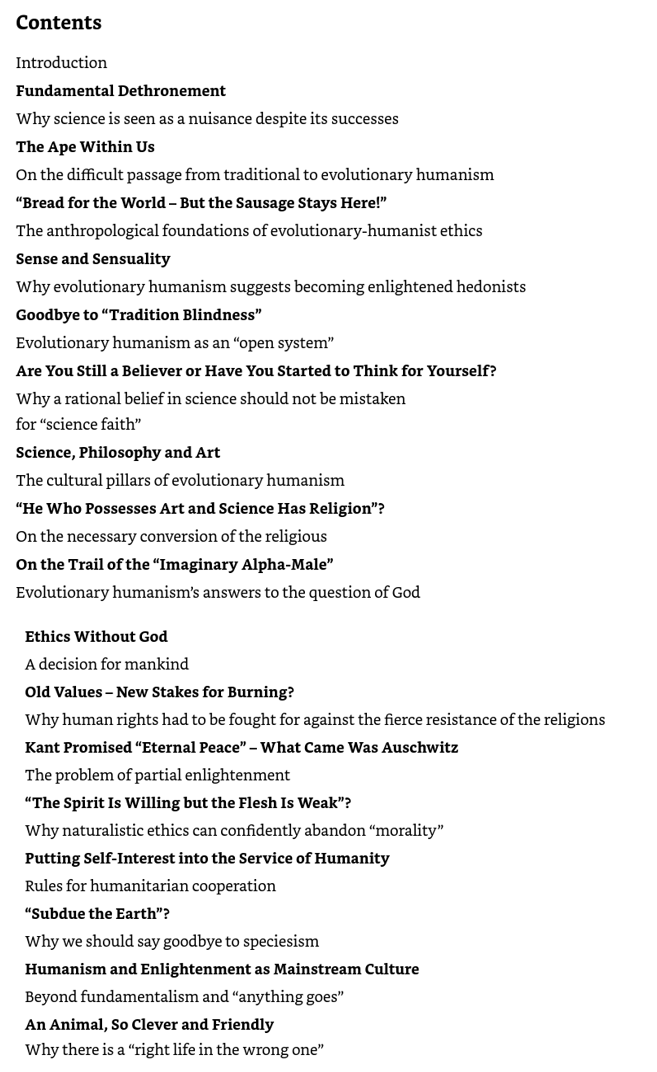
20240512 – Manifesto of Evolutionary Humanism
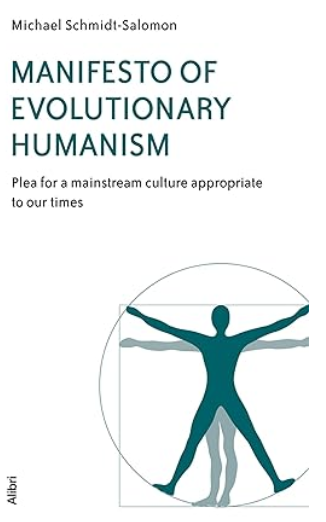
MAIN IDEA:
The main idea of this book is that humanity developed a huge
gap between its technological development and its philosophical and moral
understanding of reality. The author compares it to the situation when a
5-year-old child gets to control a jumbo jet with passengers, which could lead
to a disaster. So here is the author’s explanation of what it is all about:” The
present “Manifesto of Evolutionary Humanism” was commissioned by the Giordano
Bruno Foundation.4 It will attempt to formulate the basic positions of a
“contemporary enlightenment” appropriate to the modern world. The publication
of the manifesto serves the intention of supporting those who already feel
committed to a mainstream culture of humanism and enlightenment, as well as the
hope that some of the arguments presented here may yet reach those who, even
today, are of the opinion that they have to take their “wisdom” from archaic
myths.”
MY TAKE ON IT:
I probably agree with about 60% of the ideas in this manifesto, especially those regarding science and the unnecessity of a god for morality. However, I think that the author mixes two separate and unmixable things: knowledge and beliefs. Knowledge is a testable representation of reality in the human mind, enabling humans to act effectively and even somewhat efficiently. Belief is an untestable description of the world that provides psychological comfort and effective cooperation between individuals, all the way to true believers sacrificing themselves to protect this belief. There is nothing childish in believing, and the belief in science is no more justified than believing in God as long as these beliefs remain in the proper area of worldview combined with tolerance and acceptance of other worldviews as legitimate, however idiosyncratic. The problem emerges when people start moving their beliefs into the area of action, combined with intolerance. At the minimum, this could be somewhat deleterious to human well-being when resources are spent to build temples for God rather than housing for humans. Still, it is as bad, if not more so, when resources are spent to implement some “Great Leap Forward” or implement “collective farms-based agriculture according to principles of scientific communism.” The tolerance of the worldviews of others is absolutely necessary because otherwise, we are getting screwed, and it does not that much matter if it is by the Inquisition in the name of God or by the KGB in the name of a bright, scientifically defined communist future. Finally, morality is just an evolutionary developed set of rules for interaction between humans that assure that such interaction benefits all participants, preventing them from fighting and/or taking advantage of each other. A society without morality could not be stable and, therefore, will fail in competition with other societies.
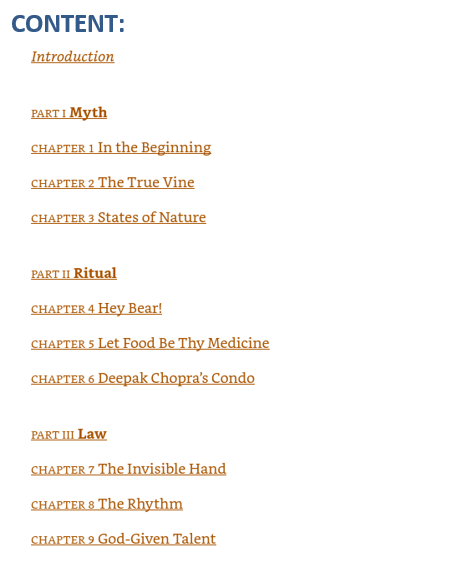
20240113 Levinovitz, Alan – Natural

MAIN IDEA:
This book asks the question:” HOW CAN WE LIVE IN HARMONY with nature?” and then attempts to provide the answer that the author defines in the following way:” This book is a comprehensive response to that question. Instead of choosing sides, it shows how the framing is fundamentally misguided and counterproductive. An oppositional binary between “natural” and “unnatural” inhibits constructive dialogue about humanity’s most pressing problems. It trades complicated truths for the comfort of clear categories. It encourages dogmatism over compromise, certainty over humility, and simplicity over nuance.” The bottom line is the recognition of the meaninglessness of the division of the world into natural and unnatural when humans and everything that they produce are parts of this world. The author also discusses attempts to derive morality from natural vs. unnatural in such cases as homosexuality. There is also a discussion of the theological aspect of nature’s goodness vs. humans’ unnatural badness, concluding that:” The best future for humanity and nature must be built on dialogue and evidence, not taboos and zealotry.”. Finally, the author discusses the interplay between science and natural/unnatural approaches in multiple areas, from economics to nature vs. nurture’s role in the formation of personality. At the end of the book, the author concludes:” I am more philosophically confused about nature than I was when I began. Maybe you feel the same way, full of questions instead of answers. This is no reason for shame or guilt. It is not something to be overcome. Uncertainty is humility, and humility can also be sacred, its own source of rituals and laws, which, like nature, can change while remaining true to themselves.”
MY TAKE ON IT:
In my simple mind, all these “natural vs unnatural” notions are just stand-ins for good vs bad and are somewhat puzzling. I think everything that exists is natural, and only imagination can create something that is not natural. For example, everything moving below the speed of light is natural, something moving with warp speed is not, unless it is observed in reality, causing humans to come up with some improvements to the theory of relativity. All human actions are natural, as well as the artifacts produced by these actions. They are as natural as artifacts produced by other animals, be it beaver-built dams or termite mounds that have air conditioning. It really does not matter that termites build their mounds without planning committees, budgeting, and government approvals.
Nature is not a conscious entity and, therefore, could not possibly care about humans and the products of their activities. Humans, however, have to care because any changes produced by humans or occurring regardless of their activity always do one of two things: they either make human life easier or more difficult. I support the idea that the powerful and energetically costly human brain was evolutionally developed as a tool to be used for speedy adjustment to environmental changes. For example, the ice age that moved at the speed of a couple of thousand years left no chance of survival for a naked ape without enough brain because DNA change required to grow fur cover required a much longer time. The naked ape with a powerful brain can learn to use the fur of other animals a lot faster than that. The process of adjustment speeds up considerably because it worked so well that humans multiplied to the level that required new adjustments. We came to the end of the human expansion phase when adjustments were local and are at the beginning of the global accommodation phase that will result in the state of dynamic accommodation to an always-changing environment based on a scientific understanding of these changes. This could occur only if there is freedom of scientific discussion, research, and debates. Otherwise, humanity will suffer from religious and quasi-religious movements such as global warming (climate change) that suppress real science and direct resources to waste. I believe that eventually, dynamic accommodation will be achieved, but lots of people will pay a high price with the misery of their lives for trusting crooks that promote quasi-religious environmentalism.
 Equal Rights Libertarian