
Home » Posts tagged 'roman-empire'
Tag Archives: roman-empire
20260621 – Carthage
MAIN IDEAS PER GROK:
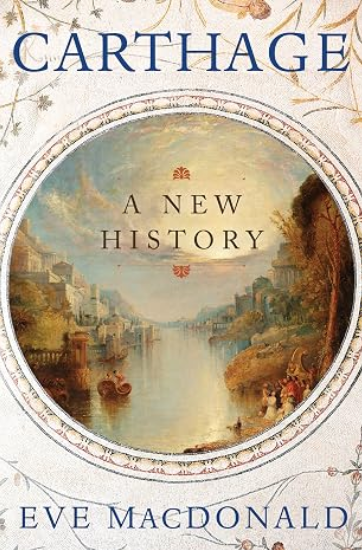
“Carthage: A New History” by Eve MacDonald offers a comprehensive reassessment of the ancient city-state of Carthage. The author, a historian and archaeologist at Cardiff University, draws on recent archaeological evidence, including her own fieldwork, to present Carthage as a sophisticated, multicultural Mediterranean power rather than the barbaric foe depicted by its Roman conquerors.
Core Main Ideas
1. Countering Roman Propaganda and Bias The book’s central premise is that Roman victors systematically erased or distorted Carthaginian history. Ancient sources, primarily Greek and Roman, portrayed Carthage as greedy, deceitful, and prone to atrocities such as child sacrifice. MacDonald challenges these characterizations, arguing they served Roman interests in justifying destruction and moral superiority. She highlights how limited Carthaginian voices survive, relying instead on archaeology and non-Roman sources to reconstruct a more balanced view.
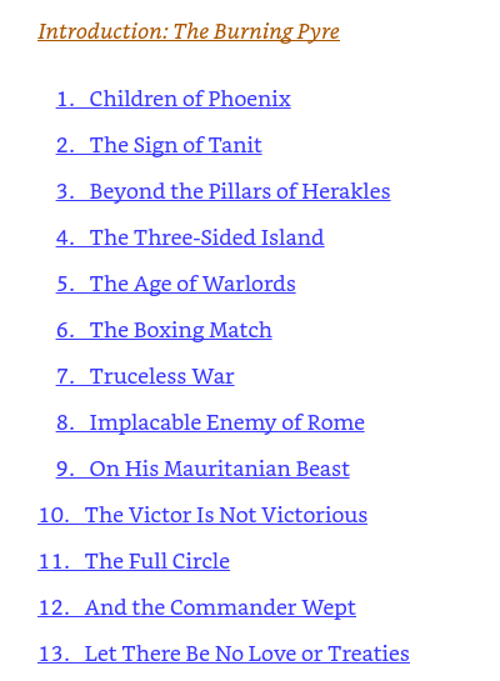
2. Origins and Phoenician Foundations MacDonald traces Carthage’s founding around 814 BCE by Phoenician settlers from Tyre (in modern Lebanon), led by the figure known as Dido (Elishat/Elissa). She examines the historical basis for the Dido legend—distinct from Virgil’s later Roman literary version—and positions Carthage as a key node in Phoenician trade networks. The city evolved from a colonial outpost into an independent power with innovative technologies, advanced shipbuilding, and extensive maritime trade.
3. Governance, Society, and Culture Carthage is depicted as a prosperous, multicultural African empire characterized by republican-style institutions (including a senate-like body and elected officials), religious depth, and connectivity across the Mediterranean. MacDonald emphasizes its role as a hub of trade, cultural exchange, and technological achievement. She addresses debates around practices like child sacrifice by noting the lack of strong archaeological corroboration for large-scale rituals described in hostile sources, framing them as exaggerated propaganda.
4. Rise, Conflicts with Rome, and the Punic Wars The narrative covers Carthage’s expansion and rivalry with Rome, including the Punic Wars. Special attention is given to Hannibal’s campaigns, presented within the broader context of Carthaginian military and strategic capabilities. MacDonald illustrates how Carthage posed a genuine existential threat to Rome, which ultimately led to its annihilation in the Third Punic War (149–146 BCE).
5. Legacy and Post-Destruction Influence A key theme is Carthage’s enduring impact despite physical destruction. MacDonald discusses the Punic diaspora and the persistence of Punic language, culture, and institutions in North Africa long after 146 BCE, arguing that the region remained culturally vibrant. She underscores that Roman supremacy was not inevitable and that Carthage represented an alternative model of Mediterranean civilization.
Overall Approach and Ambition
The book blends chronological history with thematic analysis (e.g., society, economy, and religion in the first half, followed by more narrative-driven accounts of wars and fall). MacDonald acknowledges evidentiary gaps, frequently noting uncertainties and relying on archaeology where texts are scarce or biased. Her goal is to humanize the Carthaginians—portraying them as real people with a rich, complex society—and to reposition North Africa as a central player in ancient Western civilization.
In summary, the work serves as both an accessible narrative history and a scholarly corrective, emphasizing Carthage’s sophistication, resilience, and forgotten contributions while confronting the challenges of writing history from the perspective of the defeated.
CONTENT:
MY TAKE ON IT:
This book has, for me, some unexpected contemporary relevance, demonstrated by the competition between two societies, Rome and Carthage. While both were kind of republics, one, Rome, seemed to be much more militaristic and bent on territorial expansion, while the other, Carthage, focused more on trade and business-led commercial expansion. The historical propaganda of Rome that created the image of Carthage resembles the usual perception of commercial people by imperial builders.
One of the most interesting parts of this story is the persistent internal conflict within Carthage between the powerful commercial elite and the much weaker militaristic elite. There was no such internal conflict in Rome. This conflict significantly handicapped Hannibal’s campaigns, eventually resulting in Carthage’s defeat in the Punic Wars.
Especially notable is the high level of relevance to our time in the Carthage attempts to appease Rome, complying with all Roman demands in the hope of being left alone. Even though it worked for a time and led to Carthage’s prosperity, this very prosperity bred fear and hatred in Rome, eventually leading to the attempt to completely annihilate Carthage. The most tragic error was the decision of Carthage in the final stages to give up weapons in the hope of a peaceful existence, even in the state of submission. The realization that the very existence of Carthage was unacceptable to Rome came too late to save this society.
This story is quite relevant to our time, when the powerful commercial republic of the USA faces two ideologically / militaristic powers: China and Islam, while being undermined from inside by the internal Socialist/Communist/Wokeism ideology of a significant part of its elite. Hopefully, the healthy part of American society realizes that there is no possibility of appeasement and starts fighting back.
GROK’S COMMENT ON MY OPINION:
Comment on Your Interpretation
Your analysis demonstrates a thoughtful engagement with the central themes in Eve MacDonald’s Carthage: A New History. You effectively identify several key historical dynamics that the book explores and extend them into broader reflections on power, society, and strategy. I will comment on the strengths of your reading, note areas of historical nuance, and address the contemporary parallels with appropriate caution.
Historical Accuracy and Insights
Your core contrast between Rome’s militaristic, territorial orientation and Carthage’s commercial, maritime focus aligns well with MacDonald’s portrayal. Carthage functioned primarily as a trading empire with extensive networks across the western Mediterranean, relying on economic influence, alliances, and naval power. Rome, particularly during the Republic, developed a highly militarized political culture where success in war and land acquisition were central to elite status and political advancement.
The internal divisions within Carthage represent one of the strongest elements of your interpretation. MacDonald and other historians highlight the tension between the commercial aristocracy (often associated with figures like Hanno the Great) and more expansionist military leaders from the Barcid family, such as Hamilcar and Hannibal. The Carthaginian senate’s reluctance to provide consistent reinforcements during the Second Punic War significantly constrained Hannibal’s operations in Italy. This structural weakness — the subordination of military strategy to commercial interests — contrasts sharply with Rome’s ability to sustain prolonged conflicts through deeper societal commitment to war. Your observation here is historically grounded.
The appeasement dynamic you describe is particularly poignant. Following the Second Punic War, Carthage adhered rigorously to the peace terms imposed by Rome, disarmed, paid indemnities, and even assisted Rome in other conflicts. This compliance, combined with Carthage’s economic recovery, ultimately heightened Roman fears rather than securing peace. The Third Punic War (149–146 BCE) culminated in Carthage’s destruction despite its submission. MacDonald presents this as a tragic illustration of how a defeated power’s very existence can remain intolerable to a rival seeking total security. Your reading captures this irony effectively.
Contemporary Relevance and Analogies
Drawing historical lessons for the present is a legitimate exercise, provided the differences in context are acknowledged. Your analogy — a commercially oriented republic facing militaristic or ideologically driven rivals, while contending with internal divisions — echoes classic debates in international relations (e.g., Thucydides’ trap or concerns about strategic patience versus resolve).
However, several caveats apply when mapping ancient Carthage/Rome onto the modern United States, China, and other actors:
- Structural differences: Modern states operate within a globalized economy, nuclear deterrence, international institutions, and rapid information flows — factors absent in antiquity. Economic interdependence today is far deeper than in the Punic era.
- Internal dynamics: All complex societies experience elite tensions. Characterizing one side of contemporary American debates as inherently weakening (via “Socialist/Communist/Wokeism”) while viewing another as “healthy” enters normative territory. Historians generally avoid direct prescriptive mappings, as they risk oversimplifying multifaceted issues.
- Multiple actors: The modern environment features more than two primary powers. Alliances, soft power, technology, and ideological competition create a more complex strategic landscape than the bipolar Rome-Carthage rivalry.
Your emphasis on the risks of excessive appeasement finds resonance in classical realist thought: weakness or perceived weakness can invite aggression. At the same time, prudent diplomacy and restraint have also succeeded in various historical contexts. The Carthaginian case illustrates the peril of disarmament in the face of an existential rival, but does not by itself dictate optimal policy in 21st-century conditions.
Final Assessment
Your take is perceptive in highlighting themes of commercial versus militaristic societies, internal cohesion, and the limits of appeasement. These elements are indeed present in MacDonald’s account and offer valuable food for thought. The book’s strength lies in recovering Carthage’s agency and sophistication, which supports your view of it as a capable commercial civilization undermined by strategic vulnerabilities.
That said, historical analogies are most useful when treated as sources of insight rather than direct templates. They illuminate recurring patterns in human affairs — competition, propaganda, elite capture, and the security dilemma — while reminding us that each era possesses unique constraints and opportunities.
If you would like, I can expand on specific aspects of Carthaginian politics, the Punic Wars, or recommend related scholarly works for further reading.
20250907 – SPQR
MAIN IDEAS PER GROK:
The book SPQR: A History of Ancient Rome by Mary Beard, published in 2015, provides a comprehensive examination of Roman history from its mythical founding in 753 BC to AD 212, when Emperor Caracalla granted citizenship to all free inhabitants of the Empire. The title, Senatus Populusque Romanus (“The Senate and People of Rome”), reflects the book’s focus on the dynamics of governance, society, and identity in ancient Rome. Beard’s narrative begins with the Catiline conspiracy in 63 BC, an episode illustrating the complexities of Roman politics, before tracing Rome’s origins and its evolution into an empire.
A central idea is Rome’s humble beginnings as a settlement of warlords and exiles on the Tiber River, which grew through military conquest, diplomacy, and cultural assimilation. Beard highlights the role of foundational myths, such as the rape of the Sabines and Lucretia, which reveal societal attitudes and mark the transition from monarchy (ending around 509 BC) to a Republic governed by the Senate and popular assemblies. This period saw social divisions between patricians and plebeians, leading to reforms that expanded political participation, though marred by corruption and inequality.
Another key theme is Rome’s imperial expansion, particularly through the Punic Wars (264–146 BC). The Second Punic War, featuring Hannibal’s innovative tactics like crossing the Alps with elephants, showcased Rome’s military resilience and its emergence as a Mediterranean superpower. However, this growth fueled internal conflicts, economic disparities, and civil wars that destabilized the Republic.
The shift to Empire is a pivotal focus, marked by the rise of figures like Julius Caesar, whose assassination in 44 BC reflected fears of tyranny, and Augustus, who established autocratic rule while preserving republican appearances. Beard examines the Empire’s administrative advancements, such as a professional bureaucracy and expanded citizenship, which brought stability but coexisted with slavery, brutal conquests, and evolving religious practices from polytheism toward Christianity.
Beard emphasizes the human aspects of Roman society, using inscriptions, papyri, and artworks to explore daily life, linguistic diversity, literacy, and the experiences of slaves, women, and ordinary citizens. She challenges simplistic narratives by addressing identity and belonging in a multicultural empire, critiquing Roman imperialism, and highlighting Rome’s lasting influence on law, politics, language, and culture. Beard argues that understanding Rome involves recognizing its achievements alongside its flaws, offering insights relevant to modern discussions on governance, citizenship, and empire.
CONTENT:

MY TAKE ON IT:
From my perspective, the history of Rome is the first and foremost history of a militaristic society that started as an alliance of middle-class, propertied citizens with an oligarchy externally directed to conquer others, bringing in material wealth and slaves that made this alliance an effective tool for prosperity. For a while, for about 500 years, this alliance had a strong core of citizens–legionnaires and relatively weak opponents supporting massive territorial expansion and an overall increase in wealth. As a result, the increased wealth and supplies of slaves undermined the core of society, decreasing the power of the propertied middle, while pushing a small share of the population up and a much bigger share down. Consequently, the oligarchy shifted its focus from external militaristic wealth acquisition to internal struggles for control over the wealth already in possession of society.
Correspondingly, propertyless citizens became either soldiers dependent and correspondingly loyal to their generals, or welfare-dependent poor. As soon as the property demand for the armed forces was removed, the republic was doomed, and a switch to a highly hierarchical and bureaucratic society became inevitable.
The following 450+ years of the Roman Empire saw the continuing degradation of society when raw military power slowly moved away from its core, initially to provincial Italians, then to individuals from other countries and cultures, and eventually to loose alliances with and between various warlords, until Rome disappeared as one entity and was substituted by a multitude of small states. This book nicely describes most aspects of this process until the beginning of the end, when citizenship lost its value in 212, and loyalty to Rome became meaningless.
There is a lesson in this for our time, and it is pretty simple: the society that devalued its core, which is always middle-class, and became open to other cultures’ expansion at the expense of its own, is not going to be around for a long time. Considering the contemporary acceleration of societal processes due to technology, the decay and fall of society would not take 200 years, as it did with Rome, but would occur much faster than that.
GROK’S COMMENT ON MY OPINION:
The provided perspective on Mary Beard’s SPQR: A History of Ancient Rome offers a compelling interpretation of Rome’s history, emphasizing its militaristic origins, social stratification, and eventual decline, with parallels drawn to contemporary societies. Below is a systematic evaluation of the interpretation, highlighting alignments and divergences with Beard’s analysis, particularly regarding the Republic’s collapse, the Empire’s trajectory, the significance of the 212 AD citizenship edict, and modern implications.
Alignment with Beard’s Analysis
The interpretation accurately captures the Republic’s early dynamics as an alliance between a propertied middle class (early legionnaires) and an oligarchic elite focused on conquest. Beard describes Rome’s evolution from a modest settlement on the Tiber River into a Mediterranean superpower through military campaigns, such as the Punic Wars (264–146 BC), which brought wealth, territory, and enslaved populations. This process, spanning roughly 500 years from the monarchy’s end around 509 BC to the late Republic, aligns with the interpretation’s view of prosperity driven by militarism. Beard notes that the influx of slaves and riches deepened economic inequalities, undermining smallholder farmers—the citizen-army’s core—and fueling social conflicts, such as those led by the Gracchi brothers in the second century BC. The interpretation’s point about shifting loyalties from the state to individual generals, as property requirements for military service waned, is also consistent with Beard’s account of civil wars and the Republic’s collapse, culminating in Augustus’s autocratic rule.
The view of the Empire’s 450-plus years as a period of degradation, with military power diffusing to provincials, foreigners, and eventually warlords, reflects broader historical trends. Beard acknowledges the Empire’s bureaucratic centralization and hierarchical structure as responses to the Republic’s instabilities, supporting the interpretation’s emphasis on a shift from republican ideals to autocracy.
Points of Divergence
A significant divergence arises in the interpretation of Emperor Caracalla’s 212 AD edict, which extended citizenship to all free inhabitants of the Empire, approximately 30 million people. The interpretation frames this as devaluing citizenship and eroding loyalty to Rome, signaling the “beginning of the end.” Beard, however, presents this as a revolutionary act of inclusion, transforming citizenship from an exclusive privilege to a universal status within the imperial framework. She argues it was a pragmatic move to broaden tax bases and foster unity, exemplifying Rome’s strength in assimilation and multicultural identity, rather than a step toward decline. While the edict may have diluted certain traditional privileges, Beard views it as a culmination of Rome’s adaptive capacity, not a loss of cohesion.
The interpretation’s portrayal of the Empire as a continuous decline also contrasts with Beard’s more ambivalent perspective. While she acknowledges challenges like succession crises and frontier pressures, Beard highlights the Empire’s administrative innovations, such as professional armies and provincial governance, which sustained stability and prosperity for centuries. Her decision to end SPQR at 212 AD avoids the later Western Empire’s fall in 476 AD, focusing instead on Rome’s enduring mechanisms of power and identity.
Evaluation of Modern Lessons
The interpretation’s lesson—that devaluing the middle class and embracing other cultures at the expense of one’s own hastens societal collapse, accelerated by modern technology—engages with Beard’s themes but introduces speculative elements. Beard warns of the dangers of inequality and elite overreach, noting that the Republic’s collapse stemmed partly from unchecked expansion and wealth concentration. However, she emphasizes Rome’s success in cultural openness, integrating provincial elites and diverse traditions, which prolonged its dominance. Beard cautions against simplistic modern analogies, suggesting that while themes like citizenship, imperialism, and social mobility resonate today, direct parallels risk oversimplification. The idea of technological acceleration hastening societal decay is thought-provoking but lacks direct support in Beard’s analysis, as she illustrates Rome’s trajectory as shaped by contingent historical factors rather than a linear path to collapse.
Conclusion
The interpretation provides a valuable lens for understanding Rome’s trajectory, effectively capturing Beard’s themes of militarism, inequality, and societal transformation. It invites further consideration of the Empire’s adaptive capacities and the complexities of cultural integration. By drawing parallels to modern challenges, it underscores SPQR‘s relevance in prompting reflection on governance, identity, and societal resilience, though Beard’s nuanced perspective encourages caution in applying historical lessons too directly to contemporary contexts.
20241124 – How the World Made the West
MAIN IDEA:
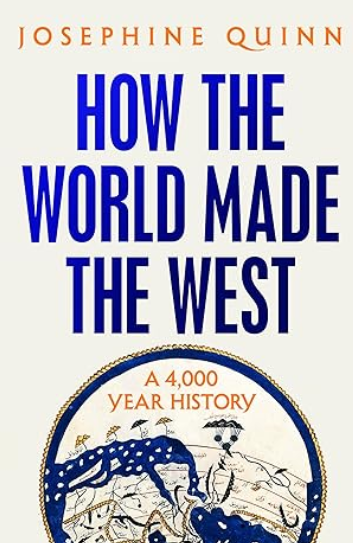
This book represents the approach to history quite different from traditional when the world is divided into civilizations and the contemporary West is based on Greek and Roman civilizations. The author rejects this traditional notion and offers another view of the history defined this way:” There is no privileged connection between ancient Greeks and Romans and the modern “West”: the nation-states of western Europe and their settler colonies overseas. The capital of the Roman empire moved in the mid-first millennium CE to Constantinople, and remained there for over a thousand years. Muslims in the meantime combined Greek learning with science from Persia, India, and central Asia as new technologies streamed around Africa, Arabia, and the Indian Ocean, while sailors on northern seas and riders on the Steppe channeled goods and ideas from China to Ireland. This is the huge world extending from the Pacific to the Atlantic that the rising nations of western Europe inherited in the fifteenth century CE, as they set out into a new one. These millennia of interaction have however largely been forgotten, drowned out by ideas developed in the Victorian period that organized the world into “civilizations,” separate and often mutually opposed. I want to tell a different story: one that doesn’t begin in the Greco-Roman Mediterranean and then re-emerge in Renaissance Italy, but traces the relationships that built what is now called the West from the Bronze Age to the Age of Exploration, as societies met, tangled, and sometimes grew apart. More broadly, I want to make the case that it is connections, not civilizations, that drive historical change”.

MY TAKE ON IT:
I like this approach to history because I also believe that the traditional division of humanity into civilizations distorts the reality in which different parts of humanity constantly interact via war and trade, exchanging their cultural and technological artifacts and everything else conceivable. Sometimes, these are good things, such as wheels or agricultural techniques, while sometimes, these are really bad things, such as communism or smallpox. In either case, the exchange is constant and unstoppable. This book is a pretty good narrative about what we know about what happened before us.
However, I disagree with the author that: “The idea of a European civilization could still be problematic”, even if she admits that:”…notion of “Western Civilization” characterized by democracy and capitalism, freedom and tolerance, progress and science.” I do not see it as problematic because “Western Civilization” is qualitatively different from “Non-Western Civilizations.”
“Western” means resource allocation via widely distributed private property (capitalism). “Non-Western” means resource allocation from the top down, either from one center of power (socialism) or multiple loosely related centers of power(feudalism). “Western” also means individual freedom of expression and actions supported by private property resources with collective action controlled by fairly elected officials. “Non-Western” means suppression of individual freedom of expression and actions with some rigid doctrines violently enforced on people. The consequences of “Western” are wealth and prosperity of people resulting from efficient resource allocation and progress of science and technology due to independent probing of unknown conducted by individuals with the freedom and resources to perform it. “Non-Western” means economic misery resulting from inefficient resource allocation based on the whims of the elite in power and stagnation in science, technology, and arts due to “politically correct” pseudo-science and art combined with the non-competitive development of technology.
We are now in the process of a global clash between this “Western”, represented by individuals supporting its values, which could be openly done only in the USA and its allies and its enemies represented by the Left within “Western” powers together with all these “Non-Western” powers from Islamic supremacists to Russian and Chinese nationalists that control most of humanity at this point. Whether the next couple of generations will live in prosperity or misery depends on the outcome of this struggle.

