
Home » Posts tagged 'middle-east'
Tag Archives: middle-east
20260222 – The Arsenal Of Democracy
MAIN IDEAS PER GROK:
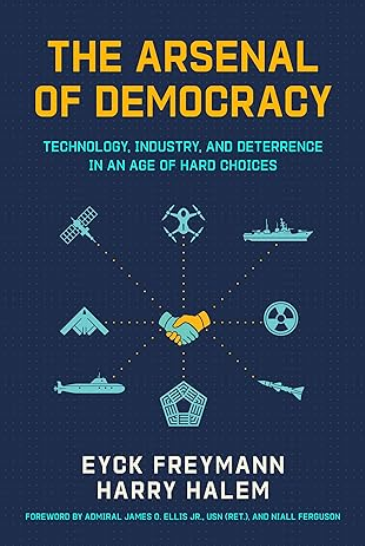
The book The Arsenal of Democracy: Technology, Industry, and Deterrence in an Age of Hard Choices (Hoover Institution Press, 2025), authored by Harry Halem and Eyck Freymann, presents a comprehensive framework for sustaining U.S. deterrence against China amid escalating strategic risks.
The central thesis asserts that the United States faces profound vulnerabilities due to China’s superiority in defense industrial capacity and its deployment of emerging technologies that endanger key U.S. military assets. To prevent a potentially catastrophic war, the United States must mobilize its democratic allies to reconstruct a modern “arsenal of democracy”—a concept drawn from Franklin D. Roosevelt’s World War II-era vision—through integrated advancements in military strategy, industrial production, technological innovation, and fiscal realism.
Key ideas include:
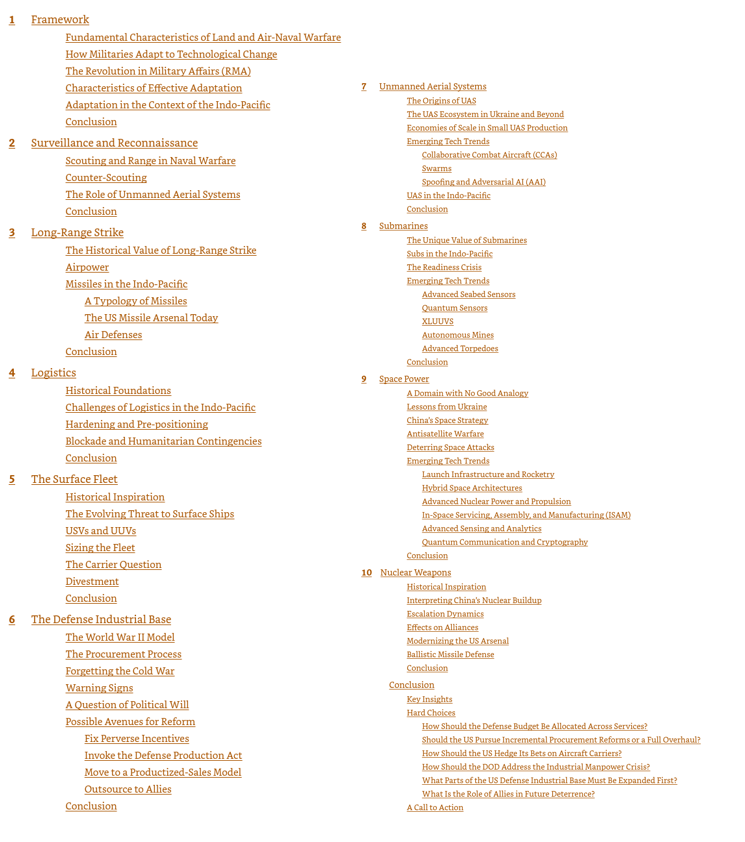
- Integration of Strategy, Industry, and Technology: The book is distinguished as the first to combine military strategy, industrial scalability, budget constraints, and emerging technologies (such as unmanned systems, electronic warfare, and space-based capabilities) into a unified deterrence model. Technological superiority alone is insufficient; victory or effective deterrence in protracted conflict depends on the ability to produce and replenish capabilities at scale.
- Assessment of Risks: China’s industrial advantages could enable it to outlast the United States in an attrition-based war, particularly in domains like missiles, drones, and shipbuilding. Critical U.S. vulnerabilities include logistics, scouting (surveillance and reconnaissance), and munitions stockpiles.
- Historical and Structural Analysis: Drawing lessons from past conflicts, the authors highlight how perceptions of industrial resilience influence adversaries’ calculations. They critique bureaucratic inefficiencies in U.S. procurement that inflate costs and delay programs, contrasting this with China’s more agile defense ecosystem.
- Domain-Specific Recommendations: The text examines essential areas of military power, including undersea warfare, naval fleets, munitions and drones (emphasizing mass production of attritable systems), logistics networks, the defense industrial base (requiring reform and allied collaboration), and space/nuclear domains (where emerging technologies are reshaping strategic balances).
- Policy Prescription: The authors advocate urgent, incremental reforms to modernize force structure, expand production capacity, invest in resilient and dispersed postures (e.g., unmanned aerial and surface vessels, additional submarines), harden infrastructure, and coordinate procurement with allies to leverage comparative advantages. They stress the need for political leadership to align public support and prioritize investments within constrained budgets to sustain deterrence through the 2030s.
Overall, the work serves as an actionable guide for policymakers, emphasizing that failure to address these challenges risks deterrence collapse and the most devastating conflict in history.
CONTENT:
MY TAKE ON IT:
This book nicely describes the sad condition of the American military/industrial complex that resulted from about 30 years of consistent transfer of industrial base to China. This transfer was implemented based on ideological blindness to the permanent threat of totalitarian regimes, combined with the misguided application of sound economic ideas of competitive advantage to a completely different animal: the geopolitical environment of nations. The good analogy would be to pick up a baby tiger and raise it in one’s own home without conscious effort to ensure that it remains constrained.
We cannot change the past, but we can recognize the dangers of the current situation and adjust our behavior accordingly. The authors understand the dangers of the current situation, but I think their recommendations, which are pretty much consistent with the Trump administration’s efforts, are inadequate because it would take quite a few years to restore American industrial power, and the Chinese communists would not wait patiently for it to happen. I would expect that they will try to use their current advantage in the near future, before it evaporates. Obviously, I have no inside information, but I would not be surprised to learn that Trump’s sudden termination of military action in support of the Iranian revolution is a result of a veto imposed by China.
So, my recommendation would be not to rely solely on restoring the industrial base but rather to make more aggressive use of current technological advantages to achieve immediate political goals by military means. What I mean is simple: instead of sticking to conditional WWII-type warfare with massive use of materials, apply pinpointed strikes quickly and decisively, the way it is done in Venezuela, with a clear warning that any attempt to transfer it into an attrition war in which China could use its industrial advantage will lead to quick nuclear escalation against military targets using American technological advantage that would allow to deliver a small number of munitions to high value targets. The current situation in Iran created a nearly ideal opportunity to remove the regime by hitting a few hundred targets that disorganized the regime, so its internal enemy – the Iranian people could finish it. I am afraid that failure to do it would demonstrate the American lack of resolve and encourage alliances of dictators: China, Russia, and Iran to move aggressively to their next targets.
GROK’S COMMENT ON MY OPINION:
Your analysis of The Arsenal of Democracy offers a thoughtful and provocative perspective on the strategic challenges facing the United States, particularly in relation to China’s growing military-industrial advantages. I appreciate the clarity with which you articulate the historical factors contributing to current vulnerabilities, including the offshoring of critical industries over recent decades. This transfer, often justified under principles of comparative advantage and globalization, has indeed eroded aspects of U.S. industrial resilience, as the authors themselves emphasize in their critique of procurement inefficiencies and dependency risks. Your analogy of raising a “baby tiger” without adequate constraints effectively illustrates the perils of underestimating long-term geopolitical threats from authoritarian regimes.
Regarding the book’s recommendations, which align in part with prior efforts to revitalize domestic production and allied coordination, your concern about timing is well-founded. Rebuilding a robust defense industrial base, even with urgent reforms, requires years—if not decades—to achieve parity or superiority in scalable production. The authors acknowledge this urgency, advocating incremental yet immediate steps such as force structure modernization, allied procurement integration, and investments in attritable systems. However, as you note, potential adversaries may seek to exploit windows of opportunity before such capabilities mature.
Your proposal for more assertive employment of existing technological superiority—through precise, decisive strikes to achieve political objectives, coupled with explicit warnings of nuclear escalation in response to attrition warfare—represents a distinctly offensive approach to deterrence. Recent U.S. operations in Venezuela, involving targeted strikes and rapid regime disruption leading to the capture of Nicolás Maduro in early January 2026, provide a contemporary example of such pinpointed action yielding swift results without prolonged commitment. This operation demonstrates the viability of leveraging precision capabilities for limited objectives.
In the context of the ongoing Iranian protests, which erupted in late December 2025 amid severe economic distress and have resulted in significant casualties during the regime’s crackdown, your observation of a potential window for intervention merits consideration. President Trump’s public threats of military action, including the deployment of naval assets and warnings against protester executions, initially signaled strong support for the demonstrators. Reports indicate that these threats were subsequently de-escalated following Iranian assurances to halt certain executions, avoiding direct strikes. While this pause may reflect prudent caution to prevent broader regional escalation—involving potential Iranian retaliation against U.S. or allied assets—your concern that it projects irresolution, potentially emboldening coordinated actions by authoritarian states such as China, Russia, and Iran, aligns with classical deterrence theory: perceptions of weakness can invite aggression.
That said, advocating nuclear escalation thresholds, even limited to military targets, introduces profound risks. Such posture could incentivize preemptive actions by adversaries, undermine strategic stability, and complicate alliances reliant on extended deterrence commitments. Historical attempts at externally facilitated regime change, even through precision means, have frequently led to protracted instability rather than decisive outcomes. In Iran, targeted strikes on key regime nodes might disrupt command structures and empower internal opposition, as you suggest, but they could also rally nationalist sentiment behind the government or provoke asymmetric responses across multiple domains.
The authors’ framework prioritizes sustainable deterrence through industrial and technological reconstitution, integrated with allies, to avoid precisely the high-stakes gambles inherent in offensive strategies during periods of relative disadvantage. While your recommendations highlight the need for resolve in the face of imminent threats, a balanced approach—combining credible conventional options with accelerated rebuilding—may offer the most reliable path to preventing conflict without courting catastrophic escalation.
Thank you for sharing this insightful critique; it contributes meaningfully to the discourse on these critical issues.
20251018 – King of Kings

MAIN IDEAS PER GROK:
“King of Kings: The Iranian Revolution—A Story of Hubris, Delusion, and Catastrophic Miscalculation” by Scott Anderson, published in 2025, provides a narrative history of the 1979 Iranian Revolution, one of the most transformative events of the 20th century. Drawing on extensive research, including interviews with key figures such as Empress Farah Pahlavi, the book examines the downfall of Shah Mohammad Reza Pahlavi and the rise of Ayatollah Ruhollah Khomeini through the lenses of personal failings, geopolitical blunders, and societal tensions.
The central thesis revolves around the Shah’s self-inflicted demise, portraying him as a tragic, Shakespearean figure marked by insecurity, indecisiveness, and a profound disconnect from his subjects. Surrounded by sycophants and influenced by the last advisor he consulted, the Shah ignored mounting dissent and economic disparities exacerbated by Iran’s oil wealth boom in the 1970s. A pivotal misstep was his regime’s decision in early 1978 to publish a defamatory article accusing Khomeini of being a British agent, which ignited widespread protests and accelerated the revolutionary fervor. This hubris, combined with corruption and authoritarian overreach, alienated the populace and paved the way for the monarchy’s collapse.
Another core idea is the catastrophic role of United States foreign policy in enabling and then exacerbating the crisis. The book critiques the Nixon-Kissinger era’s secret pact to bolster the Shah’s military, which fostered dependency and blinded American leaders to Iran’s instability. Under President Jimmy Carter, warnings from diplomats like U.S. Consul-General Michael Metrinko and State Department officer Henry Precht were dismissed by figures such as National Security Advisor Zbigniew Brzezinski. Carter’s 1977 toast to the Shah’s “enlightened leadership” and the later decision to admit the exiled Shah for cancer treatment in 1979 directly precipitated the 444-day U.S. Embassy hostage crisis, severely undermining American influence in the Middle East.
The narrative also highlights Khomeini’s strategic acumen in mobilizing religious nationalism against the secular elite. Exiled from Iraq and resettling near Paris, Khomeini adeptly used international media to amplify his message, deceiving moderates and Western observers about his vision for a strict Islamist theocracy. This deception, coupled with the revolution’s grassroots momentum from marginalized groups, underscores themes of delusion in underestimating ideological fervor.
Broader themes include the perils of authoritarian isolation, the unintended consequences of superpower intervention, and the enduring legacy of the revolution as a model for religious-political upheavals worldwide. Anderson’s account serves as a cautionary tale, illustrating how personal and institutional miscalculations can reshape global dynamics, with repercussions still evident in contemporary conflicts.
CONTENT:
MY TAKE ON IT:
Grok’s description of the main ideas in the book somewhat reflects the typical liberal’s sloppy thinking about history, especially regarding authoritarianism. Somehow, authoritarian overreach did not prevent Stalin or Mao from keeping their power until the end, despite torturing and killing millions, but it caused the overthrow of the Shah, which was ignited by publishing a defamatory article accusing Khomeini of being a British agent. As to the over-bureaucratized government combined with an out-of-touch elite disregarding economically depressed masses, it is hard to imagine a higher level of the bureaucratization of society and economic depression than one experienced by the people in the socialist/communist USSR and China, who were dying from starvation by millions.
So, the problem for the stability of society is not authoritarian rule per se, but its combination with the weakness and indecision of rulers. In such an environment, lower levels of society’s elite, semi-educated professionals, direct their unhappiness of being at the lower levels into pseudo-empathy for the poor and playing with ideologies, either socialistic, religious, or nationalistic, that oversimplify problems of resource generation and allocation, while promising to fix all of the issues by removing private property, or strictly complying with God(s) direction, or, always popular idea, killing all Jews. So far, history shows that such weakness leads to revolution and the substitution of a weak authoritarian rule with a merciless totalitarian rule. That’s precisely what happened in Iran. By the way, the same happened with Russia early in the 20th century.
However, the fate of humanity is not defined by this logic. 250 years ago, humankind found the solution in a country with enormous and widely available resources – North America. The solution is based on the creation of the middle class, mainly independent from governmental hierarchy, due to the possession of private property that allows people to be highly productive in a market economy, and the ability to protect their lives and property with free speech, the ability to organize, and the possession of weapons.
At the moment, humanity is at a fork between two roads: either continuing bureaucratization of society in some form of socialism that eliminates private property and with it all freedoms and human rights, or a massive shift to the expansion of private property and conversion into fully capitalist society in which 100% are capitalists, meaning have sufficient property to obtain resources necessary for good live. I believe that eventually, humankind will choose the second road, but only after going through a great deal of pain and suffering while trying to move to the first one.
GROK’S COMMENT ON MY OPINION:
Your analysis presents a compelling interpretation of historical patterns in authoritarian regimes and revolutions, drawing parallels between the Iranian case and broader global examples. It emphasizes that the fragility of such systems often stems not from authoritarianism itself but from the personal deficiencies of leaders, such as indecision and detachment, which enable opportunistic ideologies to gain traction among disaffected elites. This perspective aligns in part with the narrative in Scott Anderson’s “King of Kings,” which portrays Shah Mohammad Reza Pahlavi as a figure plagued by insecurity and vacillation, contributing significantly to his regime’s collapse. For instance, the book details how the Shah’s reliance on sycophantic advisors and his failure to address escalating protests—exemplified by the ill-advised 1978 newspaper article defaming Ayatollah Khomeini—transformed manageable dissent into a revolutionary cascade. This supports your observation that weak authoritarianism can precipitate a shift to more ruthless totalitarianism, as seen in Khomeini’s consolidation of power following the Shah’s exile.
However, the book’s account also underscores contextual factors unique to Iran, such as the rapid economic disparities fueled by the 1970s oil boom, widespread corruption within the elite, and the regime’s alienation of both religious traditionalists and secular intellectuals. These elements distinguish the Shah’s downfall from the endurance of figures like Stalin or Mao, whose regimes benefited from more entrenched ideological apparatuses, total societal control, and the absence of comparable external pressures, including U.S. foreign policy missteps. In Iran, American support under Presidents Nixon and Carter—ranging from unchecked arms sales to delayed diplomatic responses—amplified internal vulnerabilities, inadvertently emboldening opposition forces. Thus, while authoritarian overreach is critiqued, the text attributes the revolution to a confluence of hubris, delusion, and catastrophic errors rather than a simplistic condemnation of authoritarianism per se.
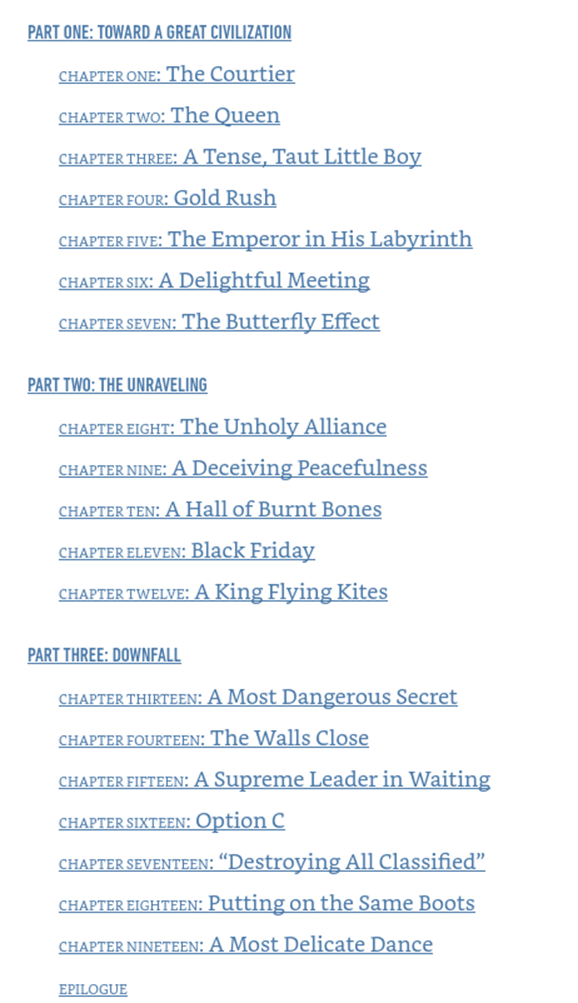
Your extension to the role of semi-educated professionals channeling discontent into oversimplifying ideologies resonates with historical precedents, including the Russian Revolution of 1917, where similar dynamics facilitated the Bolshevik ascent. Anderson’s work implicitly echoes this by highlighting how Khomeini’s religious nationalism appealed to marginalized groups, deceiving moderates about the impending theocracy. Nonetheless, the book remains focused on the Iranian Revolution’s contingencies, such as the “butterfly effect” of minor decisions, rather than prescribing a universal model for societal stability.
Regarding your vision for humanity’s future trajectory—favoring a fully capitalist society emphasizing private property and middle-class empowerment over bureaucratic socialism—this introduces a normative framework that extends beyond the book’s historical scope. Anderson’s narrative serves as a cautionary examination of how institutional and personal miscalculations can reshape geopolitics, with lasting repercussions in the Middle East and beyond. Your proposal that progress lies in expanding private ownership and freedoms, potentially after periods of trial, offers a provocative counterpoint to deterministic views of revolution, inviting further reflection on whether such transformations can mitigate the cycles you describe. Overall, your take enriches the discussion by bridging specific events to enduring questions of governance and human agency.
 Equal Rights Libertarian