
Home » Posts tagged 'europe'
Tag Archives: europe
20250223 – The Middle Kingdoms
MAIN IDEA:
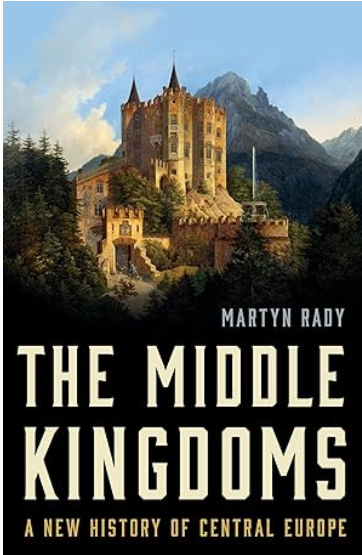
“The Middle Kingdoms: A New History of Central Europe” by Martin Rady explores the historical narrative of Central Europe, from its ancient beginnings to the modern era. The main idea of the book is to provide a comprehensive and nuanced understanding of this region, often overlooked or misunderstood in broader European histories. Here are key points of the book’s focus:
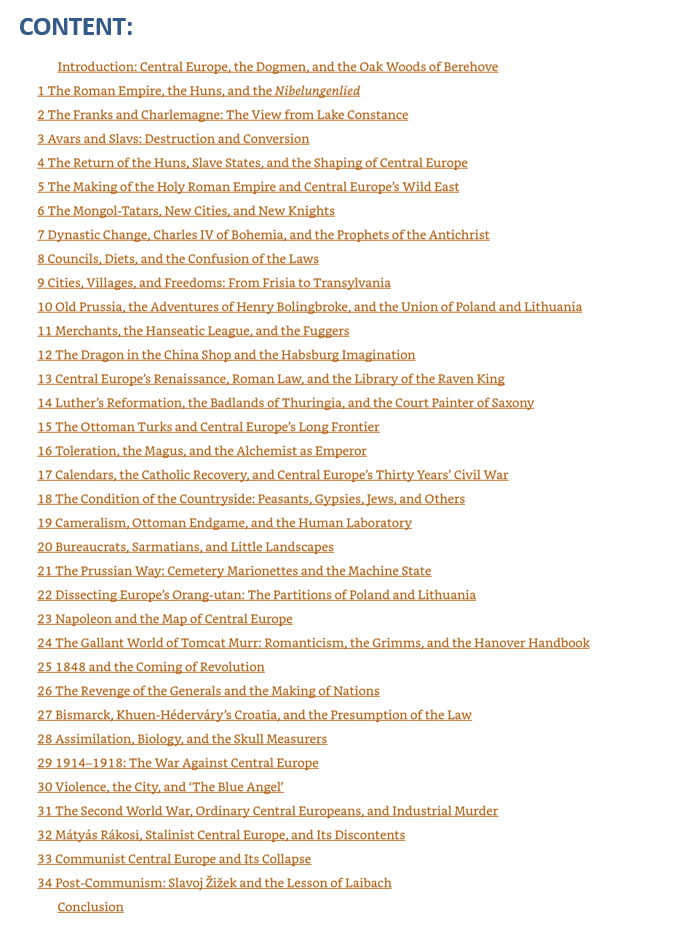
- Geographical and Cultural Definition: Rady challenges traditional views by defining Central Europe not just geographically but through its unique cultural, linguistic, and historical interactions. He includes countries like Poland, Hungary, the Czech Republic, Slovakia, and parts of Austria and Germany in this definition.
- Historical Complexity: The book delves into the complex history of the region, marked by numerous invasions, migrations, empires, and state formations. It covers the rise and fall of various kingdoms, the influence of the Habsburgs, the impact of the Ottoman Empire, and the tumultuous 20th century with its wars and shifts in power.
- Multiethnicity and National Identity: A significant theme is the multiethnic nature of Central Europe, where multiple nationalities, languages, and religions have coexisted, often leading to both rich cultural development and conflict. Rady explores how these identities have evolved, sometimes leading to nationalism and the reshaping of borders.
- Political and Social Transformations: The narrative includes how Central Europe has been a battleground for ideologies, from feudalism to communism, and then to democracy. It examines pivotal moments like the Reformation, the Thirty Years’ War, the Austro-Hungarian Compromise of 1867, the interwar period, World War II, and the fall of communism.
- Cultural Contribution: Beyond the political and military history, Rady highlights the cultural contributions of Central Europe to the world, including literature, music, art, and science, providing a cultural context to the political history.
- Modern Context: The book also considers how historical legacies continue to shape current political, social, and economic realities in Central Europe, providing a backdrop for understanding contemporary issues in the region.
In summary, Martin Rady’s “The Middle Kingdoms” aims to give readers a deeper, more layered understanding of Central Europe, emphasizing its pivotal role in European history while correcting misconceptions and celebrating its unique cultural tapestry.
MY TAKE ON IT:
“Central Europe—the Middle Kingdoms—is a relentless churn of chaos, unlike the West’s democracies like Britain and the Netherlands, which stumble along in their own messy way, or Russia’s unyielding autocratic grip. It’s a fractured mess of small nations—squabbling, splintering, or grudgingly banding together to scrap for dominance. I pin it on a toxic overdose of diversity: cultures, languages, and stubborn attitudes that can’t align on anything lasting. The EU’s heavy-handed dream of a unified superstate only fans the flames, proving top-down control is a delusion here. And the elite’s wild scheme—swamping the region with Muslim immigrants to smother the old Christian-national soul and shore up a loyal voting base—is imploding. Islam doesn’t settle for a seat at the table; it wants the whole damn stage. Even in the West, where democracy’s supposed to be stable, the same Islamic influx exposes the cracks—hardly orderly when borders dissolve and identity erodes. No central authority can brute-force this patchwork into unity without bloodshed; history screams that lesson. Rady’s Middle Kingdoms has me convinced: the only fix is a sharp break from suffocating oversight. Go for a rugged federalism—beyond America’s tame version—where each nation grabs real power over its economy, borders, and who crosses them. Let these jagged pieces trade and coexist, free from Brussels’ overreach. Otherwise, Central Europe stays what it is: a volatile, shattered core, forever lurching toward the next rupture.”
20250105 – Revolutionary Spring: Europe Aflame
MAIN IDEA:
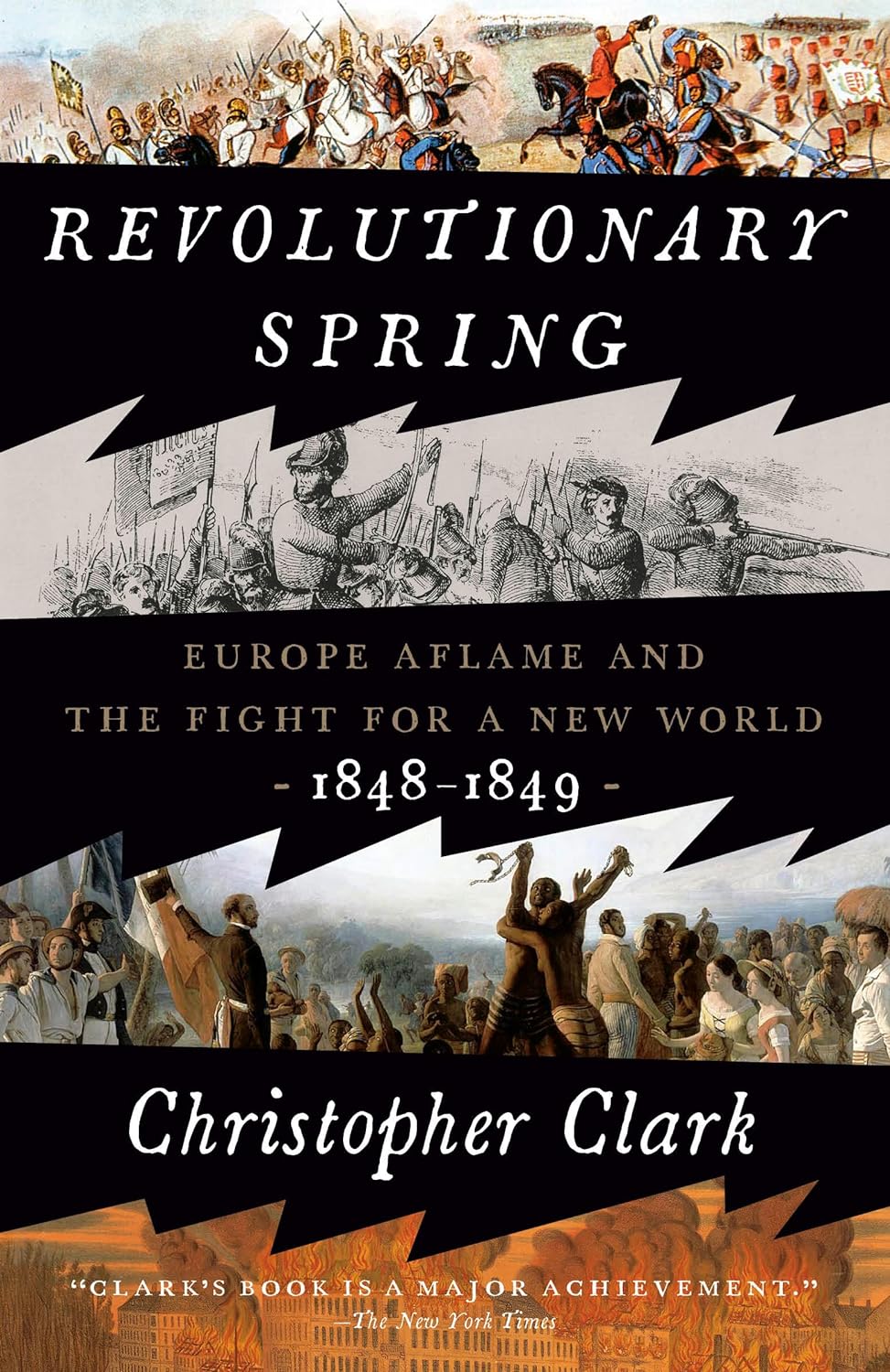
This book describes in great detail the events of the European Revolution of 1848, which, despite failing, nevertheless initiated the dissolution of the World order established after the Napoleonic Wars. Here is the author’s description of the overall sequence of events:
“There were three phases to the events of 1848. In February and March, upheaval spread like a brush fire across the continent, leaping from city to city and starting numerous spot-fires in towns and villages in-between. The Austrian Chancellor, Metternich, fled from Vienna, the Prussian army was withdrawn from Berlin, the kings of Piedmont–Sardinia, Denmark and Naples issued constitutions – it all seemed so easy.”
“Yet the divisions within the upheaval (already latent in the first hours of conflict) soon became glaringly apparent: by May, radical demonstrators were attempting to storm and overthrow the National Assembly created by the February Revolution in Paris, while, in Vienna, Austrian democrats protested at the slowness of liberal reforms and established a Committee of Public Safety. In June, there were violent clashes between the liberal (or in France republican) leaderships and radical crowds on the streets of the larger cities. In Paris, this culminated in the brutality and bloodshed of the ‘June Days’, which killed at least 3,000 insurgents.”
“In September, October and November, counter-revolution unfolded in Berlin, Prague, Vienna and Wallachia. Parliaments were shut down, insurgents were arrested and sentenced, troops returned en masse to the streets of the cities. But, at the same time, a second-phase, radical revolt dominated by democrats and social republicans of various kinds broke out in the central and southern German states (especially Saxony Baden and Württemberg), in western and southern France, and in Rome, where the radicals, after the flight of the Pope on 24 November, eventually declared a Roman Republic. In the south of Germany, this second-wave upheaval was only extinguished in the summer of 1849, when Prussian troops finally captured the fortress of Rastatt in Baden, last stronghold of the radical insurgency. Shortly afterwards in August 1849, French troops crushed the Roman republic and restored the papacy, much to the chagrin of those who had once revered France as the patroness of revolution across the continent. At about the same time, the bitter war over the future of the Kingdom of Hungary was brought to an end, as Austrian and Russian troops occupied the country. By the end of the summer of 1849, the revolutions were largely over.”

MY TAKE ON IT:
Without understanding the revolutions of 1848, it is impossible to understand the events of the following nearly 200 years that featured the development of socialist and communist ideas that practically conquered the world before fully demonstrating their complete inadequacy for rearrangement of society in any workable and humane way. These ideas produced wars, starvation, and misery on a scale unimaginable before, in the process, killing hundreds of millions of people. These ideas came as a reaction to the development of the capitalist industrial economic system, which, while removing limitations on population growth and providing material prosperity, came with lots of inhuman hurdles for a significant part of the population that was moved away from low productivity agricultural system to the bottom of much higher productivity industrial system. It took considerable time before the new arrangement had produced a dynamically adjustable combination of private control over capital, individual and sometimes group control over one’s labor and consumption, and violent interference of the state striving to smooth conflict of interest between different parts of this arrangement.
We are now witnessing the final period of this arrangement, when the implementation of AI systems will result in the automation of all productive activities, making human labor redundant. Over the next 50 to 100 years, a new resource creation and allocation arrangement will have to be developed to provide stability for human existence. Whether this new arrangement will be a freedom-based society that uses technology to provide resources for individuals to pursue their own happiness or it will be a strict hierarchy-based society where psychopaths at the top of the hierarchy pursue their happiness at the expense of the misery of individuals at the bottom remains to be seen.
 Equal Rights Libertarian