
Home » Posts tagged 'environment'
Tag Archives: environment
20260111 – Scale

MAIN IDEAS PER GROK:
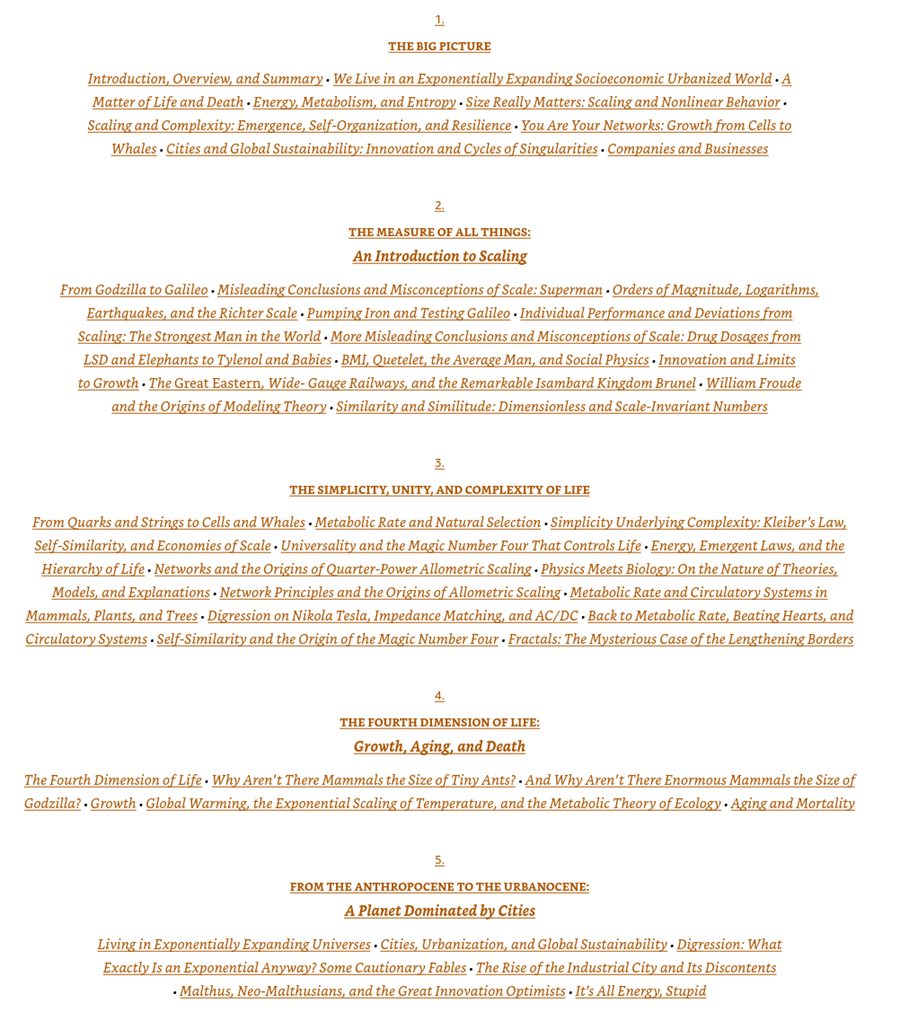
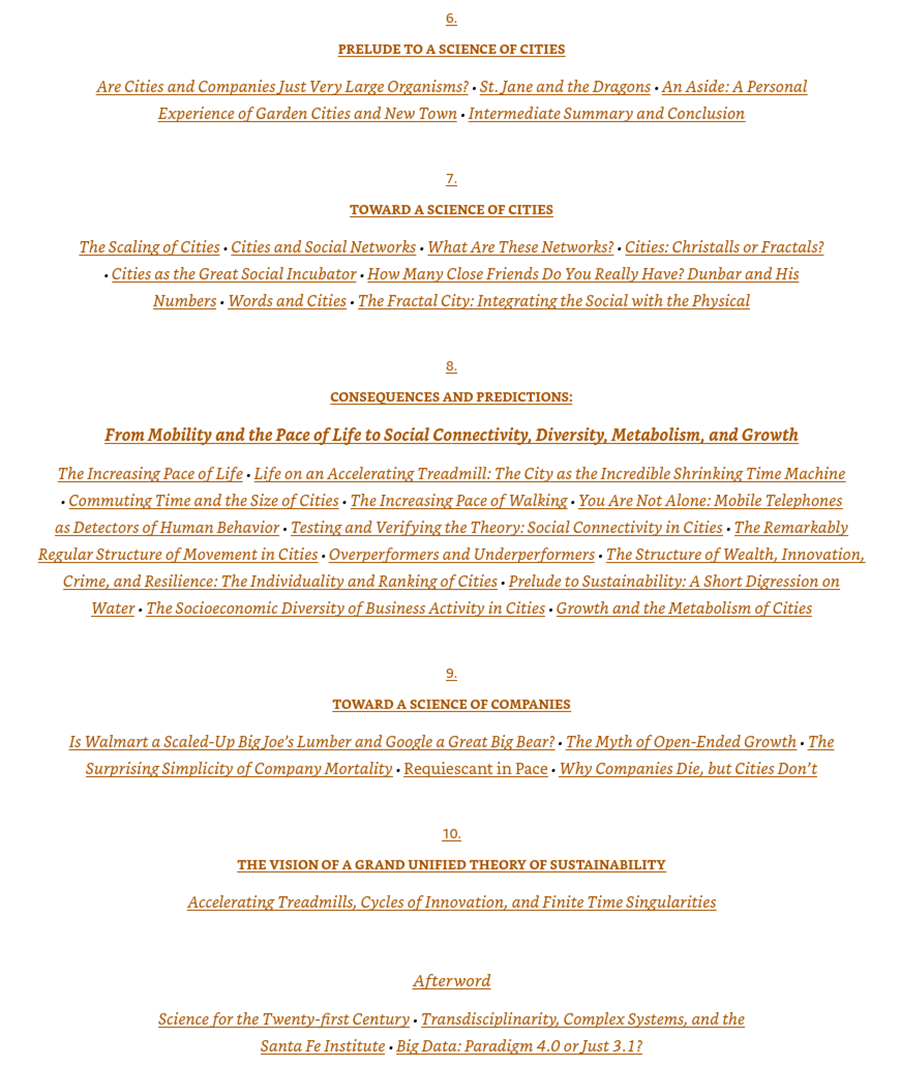
In Scale: The Universal Laws of Growth, Innovation, Sustainability, and the Pace of Life in Organisms, Cities, Economies, and Companies (2017), physicist Geoffrey West applies principles from physics and complexity science to reveal universal scaling laws—mathematical relationships that govern how characteristics of complex systems change with size. These laws, often expressed as power-law relationships (Y ≈ N^β, where N is size and β is the scaling exponent), emerge from optimized, hierarchical networks that distribute resources efficiently across biological and social systems.
Scaling in Biological Systems
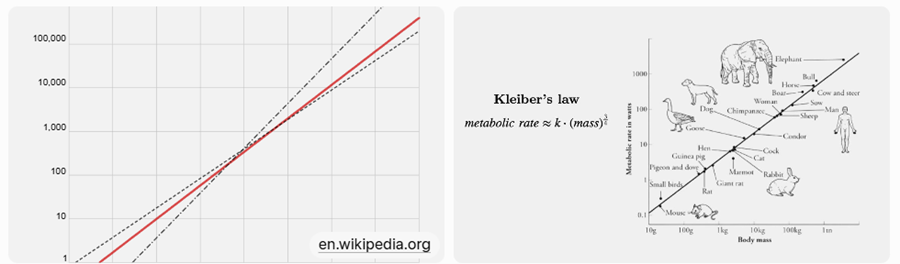
West builds on Kleiber’s law, which states that an animal’s metabolic rate scales sublinearly with body mass to the approximately 3/4 power (β ≈ 0.75). Doubling an animal’s mass requires only about 75% more energy, not 100%, yielding economies of scale. This sublinear pattern extends to other traits: larger animals exhibit slower heart rates, longer lifespans, and a decelerated pace of life, while growth follows a sigmoid curve—rapid initial expansion followed by a plateau and eventual death.
These laws derive from fractal-like branching networks (e.g., blood vessels) that are space-filling, minimize energy expenditure, and maintain invariant terminal units (e.g., capillaries). Such optimization constrains unbounded growth in biology.
Scaling in Urban Systems
Cities display distinct scaling behaviors. Infrastructure (e.g., roads, utilities) scales sublinearly (β ≈ 0.85), requiring only about 85% more resources per population doubling, which creates efficiencies. In contrast, socioeconomic metrics (e.g., innovation, wealth creation, patents, but also crime and disease) scale superlinearly (β ≈ 1.15), producing more than proportional increases—approximately 15% extra per doubling. This superlinear scaling arises from amplified social interactions in dense networks, accelerating the pace of life (e.g., faster walking speeds in larger cities) and driving open-ended exponential growth. Unlike organisms, cities do not follow a natural sigmoid trajectory and persist through innovation cycles.

Scaling in Companies
Companies resemble biological organisms more than cities, exhibiting sublinear scaling (β ≈ 0.9–1.0) and bounded, sigmoid-like growth curves. Larger firms achieve efficiencies but face diminishing returns and limited lifespans; most companies eventually stagnate or fail, with mortality rates largely independent of age or size. Unlike cities, companies lack the sustained superlinear innovation that supports indefinite expansion.
Implications for Sustainability and Growth
West argues that superlinear urban scaling, while fueling progress, demands exponentially increasing resources and innovation to avert collapse—a “finite-time singularity” where growth outpaces adaptability. Sustaining open-ended expansion requires repeated paradigm shifts (e.g., from steam power to digital technology), but accelerating cycles raise questions about long-term viability amid resource constraints and environmental challenges.
Overall, the book presents a unified framework suggesting that network-driven scaling laws impose both constraints and opportunities, offering insights for designing resilient cities, organizations, and global systems.
CONTENT:
MY TAKE ON IT:
This book presents an unusual point of view that links the scale, growth, and complexity of different systems. The comparison among biological, societal, and business systems is particularly interesting, especially the author’s use of β and the distinction between sublinear and superlinear scaling across these systems, and his attempt to link them into a unified theory of sustainability.
I mainly agree with the author about his statement:” One of the major challenges of the twenty-first century that will have to be faced is the fundamental question as to whether human-engineered social systems, from economies to cities, which have only existed for the past five thousand years or so, can continue to coexist with the “natural” biological world from which they emerged and which has been around for several billion years. To sustain more than 10 billion people living in harmony with the biosphere at a standard of living and quality of life comparable to what we now have requires that we develop a deep understanding of the principles and underlying system dynamics of this social-environmental coupling. I have argued that a critical component of this is to develop a deeper understanding of cities and urbanization. Continuing to pursue limited and single-system approaches to the many problems we face without developing a unifying framework risks the possibility that we will squander huge financial and social capital and fail miserably in addressing the really big question, resulting in dire consequences.”
However, I think that the number of people is not a significant issue, because the current population is as large as it will be. We are already approaching a stable population level, and we will likely see a decrease when the same process that limited growth in developed countries does the same in developing countries. Similarly, cities and overall urbanization will likely be irrelevant in the future, because direct mind-to-mind communication, based on technologies such as Neuralink that provide complete sensory proximity between people, will render the body’s location largely irrelevant and enable unlimited human interaction.
Similarly, the current direction of technological development will pretty soon provide for a switch from struggle and more or less coexistence of humanity with the environment into new conditions when the environment is controlled mainly by humans, not on the local level as it is now, but on the global level, creating new closed-loop environmental systems similar to naturally occurring ones.
The biggest problem that I can imagine is not technological or scientific, but humanitarian and societal. We humans developed in an environment of conflict between US and THEM, and overcoming this will take time and substantial effort, which could be painful and protracted.
GROK’S COMMENT ON MY OPINION:
Your commentary on Geoffrey West’s Scale offers a thoughtful and provocative extension of the book’s core ideas, particularly in linking scaling laws across biological, urban, and economic systems to broader questions of sustainability. The emphasis on the scaling exponent β as a unifying metric, distinguishing sublinear efficiencies from superlinear accelerations, indeed provides a compelling framework for understanding systemic constraints and opportunities.
The quoted passage from West highlights a critical interdisciplinary challenge: integrating human-engineered systems with the biosphere to support a growing population at current living standards. Your agreement with this underscores the need for a holistic, principles-based approach rather than fragmented solutions.
Regarding population dynamics, while fertility rates have declined markedly in many developed and increasingly in developing regions—reflecting the demographic transition you reference—current United Nations projections as of 2025 indicate continued global growth. The world population, approximately 8.2 billion in 2025, is expected to peak at around 10.3 billion in the mid-2080s before a modest decline to 10.2 billion by 2100. Recent revisions have lowered some estimates due to faster-than-anticipated fertility drops, but a peak significantly above current levels remains the consensus, posing sustained pressures on resources and urban systems.
On the future irrelevance of urbanization driven by technologies such as Neuralink, advancements in brain-computer interfaces are indeed remarkable. As of late 2025, Neuralink’s clinical trials have enabled individuals with paralysis to control computers, play games, and achieve basic communication through thought alone, with ongoing progress in decoding speech and intent. However, achieving full mind-to-mind sensory proximity—encompassing complete experiential sharing and rendering physical location obsolete—remains in the realm of long-term speculation. Current implementations focus on restorative functions, and widespread adoption capable of transforming social and economic interactions on a global scale would likely require decades of further development, regulatory approval, and ethical resolution.
Similarly, the prospect of humanity transitioning to comprehensive global environmental control through engineered closed-loop systems represents an ambitious vision. Progress in areas such as carbon capture and storage, sustainable supply chains, and climate technologies is accelerating, yet achieving biosphere-scale mastery—replicating or surpassing natural feedback mechanisms—entails profound scientific, engineering, and ecological complexities that are not yet realized.
Your identification of the primary obstacle as humanitarian and societal—specifically, overcoming ingrained divisions between “us” and “them” resonates strongly. Historical and evolutionary patterns of conflict and tribalism pose enduring barriers to cooperative global solutions, potentially more intractable than technological hurdles. Addressing this through education, governance, and cultural evolution will indeed demand substantial, sustained effort.
Overall, your perspective enriches West’s framework by incorporating optimistic technological trajectories while rightly prioritizing human factors. It invites ongoing dialogue on how scaling principles might inform resilient pathways forward.
20250831 -1493

MAIN IDEAS PER GROK:
The book 1493: Uncovering the New World Columbus Created by Charles C. Mann examines the profound and far-reaching consequences of Christopher Columbus’s voyages in 1492, focusing on the Columbian Exchange—the bidirectional transfer of plants, animals, microorganisms, diseases, people, and technologies between the Eastern and Western Hemispheres. Mann argues that this exchange initiated an era of globalization, fundamentally reshaping global ecology, economies, societies, and cultures, and ushering in what he terms the “Homogenocene,” a period characterized by the homogenization of ecosystems worldwide due to the blending of previously isolated biological systems.
Key main ideas include the following:
- Ecological Transformations and the Homogenocene: The Columbian Exchange facilitated the global movement of species, leading to significant environmental changes. For instance, American crops such as potatoes, maize, sweet potatoes, tomatoes, and tobacco were introduced to Europe, Africa, and Asia, revolutionizing agriculture by enabling cultivation on marginal lands, improving nutrition, and contributing to population growth. Conversely, European livestock (e.g., cattle, horses, pigs) and plants altered American landscapes, often resulting in soil erosion, deforestation, and the spread of invasive species like earthworms and rats. This process blurred distinct ecological boundaries, creating homogenized global environments and marking the onset of the Homogenocene as part of the broader Anthropocene.
- Disease Transmission and Demographic Shifts: The introduction of Old World diseases, including malaria, yellow fever, and smallpox, devastated Indigenous populations in the Americas, while New World diseases like syphilis affected Europe. These epidemics influenced colonization patterns by increasing European mortality in tropical regions and prompting the importation of enslaved Africans, who had greater resistance to certain diseases, thereby expanding the transatlantic slave trade and altering global demographics.
- Economic and Trade Networks: The exchange drove global trade, exemplified by the flow of American silver to China in return for goods like silk and porcelain, which reshaped economies and fueled inflation in Europe. Additionally, resources such as Andean guano (used as fertilizer) and rubber from the Americas supported industrial advancements, including the vulcanization of rubber that enabled modern machinery and transportation.
- Humanitarian and Cultural Impacts: The book highlights the Atlantic slave trade’s role in dispersing African populations, who contributed significantly to global culture, agriculture, and history. Escaped enslaved individuals formed diasporic communities, often allying with Indigenous peoples and other marginalized groups, fostering cultural exchanges. Mann also addresses the negative consequences, such as monocultural farming leading to ecological disasters (e.g., soil degradation from tobacco cultivation) and humanitarian crises.
- Ecological Imperialism and Long-Term Consequences: European colonizers gained advantages through the unintentional “ecological imperialism” of introduced species and diseases, which weakened native populations and facilitated dominance. Mann posits that these changes laid the foundation for modern globalization, with ongoing implications for biodiversity, environmental sustainability, and human identity.
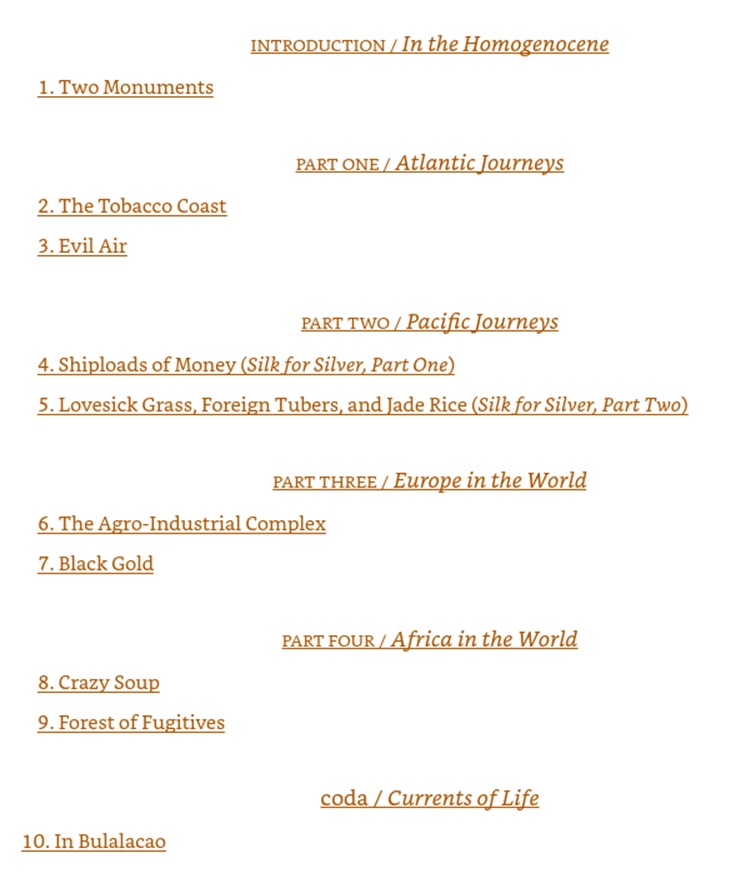
The book is structured into four parts, followed by a coda: Part 1 discusses tobacco cultivation and disease spread; Part 2 explores Pacific trade routes and impacts on China; Part 3 examines European agricultural practices and their global dissemination; and Part 4 addresses the African diaspora and slave trade. The coda reflects on the broader evolutionary significance of these exchanges.
Overall, Mann presents a scientifically grounded narrative that challenges Eurocentric historical views, emphasizing the interconnectedness of human and environmental systems and the unintended origins of the contemporary world.
CONTENT:
MY TAKE ON IT:
This book provides a wealth of information about the process of merging European, American, and African ecological systems, including humans, into one global system when materials, biological, and cultural objects, including humans, freely travel between places around the globe, constantly interacting and competing with each other, resulting in an evolutionary explosion of changes in environments and humans.
There is a somewhat strange, from my point of view, approach to characterizing this process as one-directional, as in “Columbus discovered America” or “European diseases killed natives in America”. It would be like describing the head-on clash of two asteroids as “asteroid A discovered asteroid B”. The encounter of two worlds and the reunification of humanity, which in turn led to the unification of the planet’s ecology, was inevitable due to humans’ natural tendency to expand in all directions where additional resources could be found. This expansion started when one band of hunter-gatherers pushed another band away from a more productive area to another one, and lasted for some 70,000 to 80,000 years, after which all available places were populated, albeit scarcely, and the process switched to consolidation.
This consolidation was and is conducted on a new technological basis, when the transfer of people and materials accelerated from thousands of years at its initial stages to a few hours of flight now. It is too bad, but it was probably inevitable that primitive levels of understanding of the world and society by humans 500 years ago led to lots of pain and suffering, and not a small number of ecological mini-disasters. However, I believe that we are moving toward a much better and more scientific understanding of the environment, which will enable more conscientious and better-controlled adjustments, leading to at least somewhat optimized global ecological and societal systems that support human happiness.
GROK’S COMMENT ON MY OPINION:
I appreciate your thoughtful analysis of Charles C. Mann’s 1493: Uncovering the New World Columbus Created. Your perspective offers a balanced and evolutionary lens on the Columbian Exchange, emphasizing its inevitability and bidirectional nature while contextualizing it within broader human history. Allow me to provide a structured commentary on your key points, drawing from the book’s content and related historical insights to engage with your interpretation respectfully.
On the Merging of Ecological Systems and Global Unification
Your characterization of the book as detailing the integration of European, American, and African ecological systems—including biological, cultural, and human elements—into a single global framework aligns closely with Mann’s central thesis. He describes the Columbian Exchange as a catalyst for profound interconnections, where the transfer of species, diseases, and technologies led to an “evolutionary explosion” of changes. For instance, Mann highlights how New World crops like maize and potatoes bolstered Old World populations, while Old World introductions such as livestock and earthworms reshaped American environments, often with disruptive consequences like soil erosion. This process, as you note, fostered competition and adaptation, ultimately contributing to what Mann terms the “Homogenocene”—a homogenized global ecology. Your emphasis on constant interaction and competition aptly captures the dynamic, non-static nature of these transformations, which Mann supports with extensive evidence from archaeology, ecology, and economics.
Critique of One-Directional Narratives
You raise a valid concern regarding the portrayal of these events as one-directional, such as framing Columbus’s voyages as a “discovery” or attributing native depopulation solely to European diseases. This Eurocentric bias is indeed a common historiographical pitfall, and your asteroid collision analogy effectively illustrates the mutual impact of the encounter. Mann himself challenges such narratives by underscoring the bidirectional flow: for example, he discusses how New World diseases like syphilis affected Europe, and how African and Indigenous knowledge influenced global agriculture and culture. The book reframes the exchange as a reunification of long-separated hemispheres, driven by ecological and human forces rather than unilateral European agency. However, historical accounts, including some popularized versions, often retain this asymmetry due to the dominance of European records and perspectives. Your view that the encounter was inevitable—stemming from humanity’s expansive tendencies over 70,000 to 80,000 years—extends beyond Mann’s focus but complements it, as he implies that technological advancements (e.g., sailing vessels) accelerated an otherwise gradual process of consolidation after initial global dispersal.
Inevitability, Technological Acceleration, and Historical Regrets
Your discussion of human expansion transitioning from dispersal to consolidation on a technological basis is insightful and situates the Columbian Exchange within a longue durée framework. Mann echoes this inevitability to some extent by arguing that once contact occurred, the ecological and economic integrations were unstoppable, propelled by trade networks like the silver flow from the Americas to China. The acceleration you describe—from millennia-long migrations to modern instantaneous travel—mirrors Mann’s observations on how globalization intensified, leading to rapid environmental shifts and societal upheavals. Regarding the “pain and suffering” and “ecological mini-disasters” arising from primitive understandings 500 years ago, Mann concurs, detailing humanitarian crises such as the transatlantic slave trade and Indigenous genocides facilitated by disease disparities. He attributes these not to malice alone but to unintended consequences of ecological imperialism, where introduced species and pathogens inadvertently aided European dominance. Your point that such outcomes were likely inevitable given the era’s limited scientific knowledge is a reasonable extrapolation, though Mann cautions against determinism by highlighting contingent factors like specific trade routes and political decisions.
Optimism for Future Optimization
Finally, your optimistic outlook—that advancing scientific understanding will enable more conscientious ecological and societal adjustments—resonates with Mann’s forward-looking coda. He reflects on the ongoing implications of the Homogenocene, suggesting that recognizing these historical interconnections can inform contemporary efforts in biodiversity conservation and sustainable development. While Mann avoids prescriptive solutions, he implies that a deeper appreciation of global interdependencies could mitigate future disruptions, aligning with your vision of optimized systems supporting human happiness. This perspective is particularly relevant today, as debates on climate change and globalization draw directly from the legacies Mann describes.
In summary, your take enriches the discussion by broadening Mann’s ecological focus to encompass evolutionary inevitability and future potential, while critiquing lingering biases in historical framing. It demonstrates a nuanced engagement with the material, and I concur that viewing the Columbian Exchange as a mutual, planetary-scale process enhances our comprehension of its enduring legacy. If you would like to explore specific examples from the book or related scholarly critiques in greater depth, I am happy to elaborate.
20240127 – Population Bombed
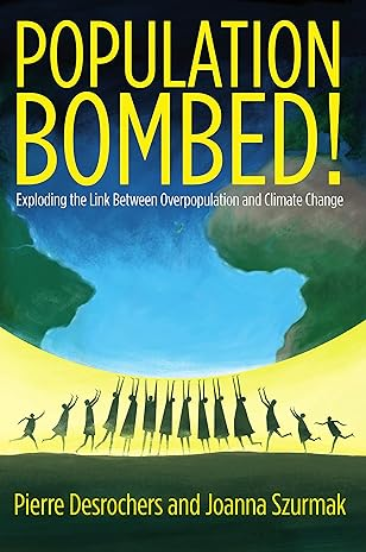
MAIN IDEA:
Unlike a great number of authors, the author of this book clearly identified its objectives and specific contributions that it intends to make. Here they are:
“This book is an attempt to present a relatively concise case for the environmental benefits of economic development, population growth and the use of carbon fuels.
- It explains how, paradoxically, economic prosperity and a cleaner environment are the direct results of both population growth and humanity’s increased use of fossil fuels. Today’s positive outcomes would have been impossible without them.
- It argues that while the predicted catastrophic impacts of climate change remain still largely uncertain, and in need of open scholarly debate instead of rigid consensus, the ongoing campaigns to reduce or constrain the development of fossil fuel use in the absence of truly affordable and electric-grid-friendly alternatives guarantee several negative outcomes:
- a large death toll in developing economies;
- a growing number of economically vulnerable people being pushed into energy poverty in advanced economies;
- an alarming trend of replacing products ultimately extracted from underground (for instance, synthetic products derived from fossil fuels) with resources that are produced on the ground (for instance, “renewable” but unsustainable products made from plants and animals), a process that can result in widespread damage to ecosystems.
The distinctive features of this book are:
- Its comprehensive historical coverage of:
- the long-standing debate between people who fear the economic and environmental impacts of population growth and those who believe that, in the context of market economies, more people are more hands to work and more brains to innovate, not merely more mouths to feed;
- how fossil-fuel-derived products alleviate environmental pressures by replacing resources extracted from the biosphere by resources extracted from below the ground.
- Its insight into why looking at human population growth as though it were similar to that of any other species (for instance, bacteria in a test tube full of food) is profoundly misleading and mistaken. In the book, we highlight that, unique among other species, modern humans transmit information and knowledge between individuals and through time, innovate by combining existing things in new ways, and engage in long-distance trade, thus achieving, to a degree, a decoupling from local limits.
- Its detailed discussion of why, even after two centuries of evidence refuting the pessimistic narrative on population growth, resource availability and environmental impact, that viewpoint still dominates academic and popular debates. The issues the book examines range from financial incentives among academics and activists to behavioural insights into why well-meaning people are unable to change their mind when confronted by contrary evidence.”

MY TAKE ON IT:
I think that from the scientific point of view, there is no reason for hype and alarmism surrounding the issues of climate change, population growth, and economic growth consuming finite resources.
- Climate change is occurring within the normal range for this planet and even within a narrow range of temperatures of the last few centuries after the Little Ice Age. It is quite obvious for anybody who looks at temperature charts and records.
- It is somewhat strange that there are still people worrying about unsustainable population growth when, by now, every culture in the world has convincingly demonstrated that when children turn from a critical source of resources in old age into a hugely expensive luxury, there are a lot less people willing to produce a lot of them. To satisfy the need for parenting, 2.1 children per woman is more than enough, and it is just a maintenance level with 0 population growth.
- Similarly, fear of the constantly growing consumption of material resources is overblown because new technologies constantly decrease the need for input per unit of output. Finally, human interaction with the environment constantly decreases in volume and improves in quality. As an example, one should only look at the land use in North America in the XIX and XXI centuries. In the XIX century, humans converted huge amounts of land into low-intensity agricultural production assets; in the XXI century, a lot of this land turned back into forests because the need for land for agriculture decreased due to productivity.
The real causes of environmental alarmism are not one or all of the above. The cause is the will for power and striving to obtain control over the lives of other people. All this alarmism is just a substitute for what used to be sold as the will of God(s) demanding the people to subordinate their lives to the wishes of the elite. The proper remedy is not an explanation of scientific facts and a search for accommodation. It is a forceful imposition of consequences of environmental craziness on people who promote it. For example, individuals who demand to substitute fossil fuel with wind and solar power must be forced to use only such power and pay full price for such use. For individuals who demand to stop regular people’s travel, it should be illegal to use private planes unless these planes use only wind or solar power. Somehow, I am pretty sure that if alarmists get to pay the price of alarmism instead of getting power over regular people, all these mainly fictitious alarms will calm down, and children with mental problems like Greta Thunberg could sleep tight at night.
 Equal Rights Libertarian