
Home » Posts tagged 'business'
Tag Archives: business
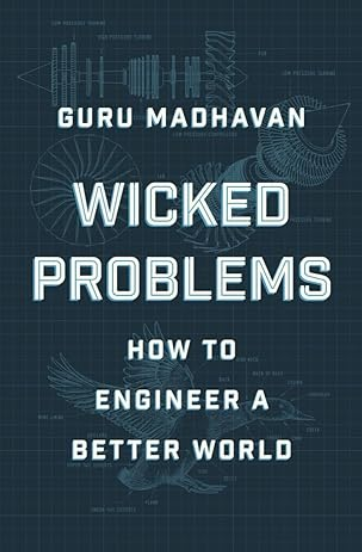
20241110 – Wicked Problems
MAIN IDEA:
The main idea of this book is to analyze two different types of problems: simple problems that could be fixed, such as problems with clocks, and complex problems, such as understanding cloud behavior or societal issues, that are not easily described or fixed and demonstrate the feasibility of applying tools developed by humanity for fixing simple problems such as engineering to manage the complex ones. Here is the author’s description: “This book is double stranded. One strand follows a forgotten engineer; the other examines forgotten uses for engineering. Together, they weave an engineering vision for civics and a civic vision for engineering. While nonfiction, the book’s aspiration may feel like fiction. Engineers, after all, aren’t commonly invoked as pillars of democracy. Yet as we’ll see, engineering does more than tech support. Engineering is a carrier of history, simultaneously an instrument and the infrastructure of politics. It’s among the oldest cultural processes of know-how, far more ancient than the sciences of know-what. And through engineering, civics can gain a more structured, systemic, and survivable sense of purpose. By applying engineering concepts in a civic context, engineering can usefully grow the policy lexicon and enhance its cultural relevance. The usefulness of civics and engineering is often realized only in their breakdowns, much like trust, most longed for in their absence.”
Probably the most important conclusion the author comes up with is that the engineering of “Civicware” should be conducted cautiously and incrementally because it is way too complex, vague, and wicked character to apply relatively rigid engineering solutions:” Two decades before presenting on clocks and clouds, Karl Popper wrote about “piecemeal” social engineering. He argued for open-ended reforms over utopian blueprints. A piecemeal approach is evolutionary and begins by realizing that facts are fallible and contexts change. Yet, such increments require caution. Piecemeal responses can cancel one another out when not coordinated by an overarching principle or guided by a standard set of concepts. And obviously, you cannot optimize a system by optimizing its parts separately. Because wicked systems cannot be planned from the top down, they require an evolutionary approach to selecting and replicating improvements to civic welfare. The concept set of efficiency, vagueness, vulnerability, safety, maintenance, and resilience can facilitate such conscious cultural evolution.”

MY TAKE ON IT:
Engineering is the application of science to real-life problems. As such, it applies only to situations where a set of actions applied to a defined environment always results in the same or statistically consistent outcome. Consequently, it is very difficult but still conceivable to apply it to complex problems such as global climate control despite its wide variety of variables. However, this is never the case with society because society consists of thinking and self-directing entities- human beings, which brings the complexity level to near infinity because of a multitude of feedback loops, which makes the consistent outcome of any experiment nearly impossible. Consequently, to build such an organization of society that would reliably provide opportunities for human flourishing, one should look not at engineering approaches, whether piecemeal or global, but rather at resource allocation to individual humans so they could do with these resources whatever they wish and limit external, violent intervention only to situations when individuals attempt to use their resources to harm others.
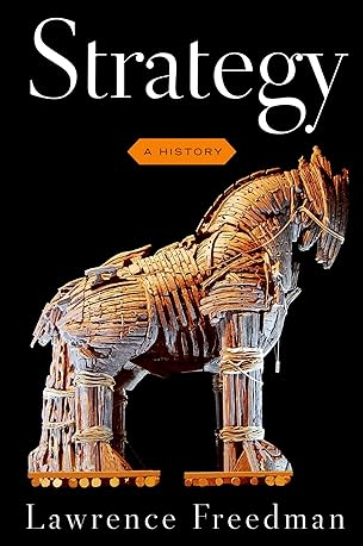
20241027 – Strategy
MAIN IDEA:
Here is the author’s definition of the theme and intentions of this book:
“So the realm of strategy is one of bargaining and persuasion as well as threats and pressure, psychological as well as physical effects, and words as well as deeds. This is why strategy is the central political art. It is about getting more out of a situation than the starting balance of power would suggest. It is the art of creating power.”
“This book describes the development of different approaches, from rigorous centralized planning processes at one extreme to the sum of numerous individual decisions at the other. It shows how in these distinct military, political, and business spheres, there has been a degree of convergence around the idea that the best strategic practice may now consist in forming compelling accounts of how to turn a developing situation into a desirable outcome. “
“As a history, this book aims to provide an account of the development of the most prominent themes in strategic theory—as they affect war, politics, and business—without losing sight of the critics and dissidents.”

MY TAKE ON IT:
It is a great and detailed review of the history of strategy in multiple domains, from organized violence in wars and revolutions to political actions directed either at changing society’s organization or maintaining an existing one. I disagree with the definition of strategy as “the art of creating power” because it does not sufficiently differentiate between strategy and tactics. In my opinion, the art of strategy consists of two parts: the first is to identify and articulate realistically achievable objectives with potentially available resources, and the second is to identify methods and processes required to generate and allocate resources over space and time to achieve these objectives reliably. The actual processes of resource generation, allocation, and application are the domain of tactics.
For example, consider a strategy of fighting off 30,000 Persian troops if one has only 300 Spartans. Historically, the chosen strategy was to use a narrow pass of Thermopylae, where only a few fighters could clash at a time. At first glance, such a strategy makes sense because it greatly diminishes the value of quantitative superiority. However, one step further in thinking would lead to understanding that it is not a valid approach because it does not consider the high probability that after a few hours of battle, the skilled but exhausted Spartans will be killed by less skilled but fresh Persian fighters. It also misses that there was a way around this narrow pass, which the Persians actually used. However, if the strategic decision were not to keep a narrow pass but to divide forces and engage in multiple encounters, each of which would guarantee local superiority of forces, Spartans could win after a hundred or so such engagements over some time sufficient for physical recovery after each engagement, providing tactical skills are sufficient to arrange such engagements.
Similar logic would apply to politics, business, or any other area of strategy, whether the fight is within people’s minds or in the marketplace.
 Equal Rights Libertarian